From Map to Compass: How Sāṃkhya and the Yoga Sūtras Clicked for Me
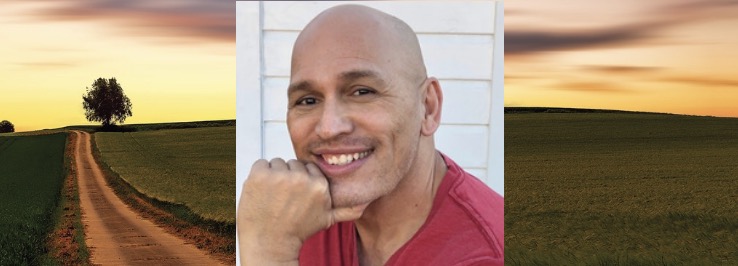
by Kealoha DeLuz

I’ve been diving deep into the Yoga Sūtra for the past six or seven years, and it’s been nothing short of life changing. Patañjali’s framework—the aṣṭāṅga, or eight limbs—offers such profound structure and guidance. For a long time, though, working with the Sūtras felt a bit like navigating without a complete map. I knew the direction, but the foundational why was sometimes elusive. Recently, I started exploring Sāṃkhya philosophy—the tradition closely related to Patañjali’s work—and suddenly, something clicked. Learning about Sāṃkhya helped me understand the roots of these ideas, where they originated, and how they fit together. It’s like having the complete blueprint in front of you. Once I understood the bigger picture, my practice with the Yoga Sūtras felt less like walking in the dark and more like navigating with a clear compass.

Sāṃkhya, often attributed to the ancient sage Kapila, is one of the oldest schools of Indian thought, and it serves as the ultimate philosophical bedrock for yoga. It’s not a religion; it’s a profound, methodical way of analyzing existence through a dualistic view of reality. Sāṃkhya posits two eternal, ultimate principles. First, there is Puruṣa: this is pure consciousness—the unchanging, eternal, and countless individual Selves (the soul). It is the silent witness, the observer of all creation. Second, there is Prakṛti: this is primordial matter—the active, creative principle. It’s the source of everything we can perceive and experience: our bodies, our minds, our emotions, and the entire material world. Prakṛti is dynamic and composed of three fundamental qualities, or guṇas: Sattva (lucidity, balance), Rajas (passion, activity), and Tamas (inertia, darkness). All the suffering we experience, according to Kapila’s wisdom, stems from one crucial error: our mistaken identification of our true self (Puruṣa) with the ever-changing products of Prakṛti. The goal is to achieve kaivalya, or liberation, by realizing the distinct and isolated nature of Puruṣa from the material world.

While Kapila’s Sāṃkhya provides this essential theoretical foundation—the what and the why—it lacks a specific, practical methodology for achieving liberation. This is precisely where Patañjali’s Yoga Sūtra steps in. Patañjali didn’t invent yoga; he brilliantly codified and systematized existing practices, using Sāṃkhya as his philosophical map. His famous definition of yoga, “yogaś chitta vṛtti nirodhaḥ” (Yoga is the stilling of the fluctuations of the mind), directly reflects Sāṃkhya’s principles. The “fluctuations of the mind” are a product of Prakṛti. By stilling them, one creates the necessary condition for discriminative knowledge to dawn, allowing us to experience the authentic, unchanging self, Puruṣa.

Patañjali’s eight limbs of yoga (Aṣṭāṅga Yoga) serve as the practical, step-by-step method to achieve this state. From the external practices of ethical living (yamas and niyamas) and physical postures (āsana) to the internal practices of concentration and meditation (dhyāna and samādhi), the entire path is an applied framework for realizing the metaphysical truth posited by Kapila. In essence, Sāṃkhya is the grand map of reality, detailing the landscape of consciousness and matter. At the same time, Patañjali’s Yoga is the GPS, providing the step-by-step directions to navigate that landscape and reach the destination of liberation. For me, understanding this enduring partnership has made my own journey with the Sūtras exponentially richer and clearer. It truly is a comprehensive and powerful system for self-realization.

Have you experienced a similar moment where understanding the philosophy made the practice “click”? I’d love to hear about it!

2026-03-17T10:36:13-07:00March 17th, 2026|

Coming Full Circle at the IYISF

by Kirana Stover

In the Winter of 1987, I studied in San Francisco. I lived on Guerrero and 22nd St. in a studio apartment with a bed that pulled out of the wall. Just up the street I discovered the Integral Yoga Institute of San Francisco, wonderfully spacious and welcoming. I had met Swami Satchidananda a few years earlier in Richmond, Virginia, when I was still in high school, so when I came upon the Institute, it felt familiar.

I was on a student budget and was offered the chance to do “Karma Yoga” mostly consisting of vacuuming the luxuriant blue rugs, in exchange for yoga classes. I loved the staircase with a secret message in the banister. I remember taking a class upstairs and at the end having a vision of Jesus shedding a tear, which turned into a diamond as it dropped into the palm of my hand.

I often studied in the cafes of the Mission District. There were so many characters in the cafes. One was dressed as a cowboy – with a vest and a hat – who sported a mustache painted on with black eyeliner. He sat at a long wooden table with me while I studied. One day he pulled a tiny piece of paper from his billfold and handed it to me. I was astonished to read the Gayatri Mantra printed there.

Another day while doing my Karma Yoga, Nischala Devi, a swami then, walked in the door. She had just returned from Portugal. I believe I first met Swami Asokananda under similar circumstances. Looking back, I never would have guessed that I would someday visit Quinta da Calma, the place Nischala Devi was returning from or that I would open an Integral Yoga Center near Barcelona. Both Swami Asokananda and Swami Ramananda have visited my yoga center. Swami Divyananda, another San Francisco regular, has been there as well. Such blessings have been showered on me!

In 1999 I returned to San Francisco for a visit and had lunch at the Institute. It was memorable because of the eclectic gathering of guests. I remember one yoga student who sold popcorn and hotdogs at the baseball stadium.

In 2023, I returned to Richmond to be with my mom. She had been diagnosed with metastasized breast cancer and very little time to live. Thanks in great part to my long-time yoga practice – “effort toward steadiness of mind” – I was able to be present with her during this time. My book, Mom’s in There was inspired by the time I spent with her.  She related to the Om Shanti chant in a unique way. During her last weeks she began sharing poetry and during her last days she began using archaic pronouns.

While studying in San Francisco I decided to do my senior thesis about dreams, specifically about how other cultures had used dreams to solve conflict and whether we could do the same. This led me to several numinous experiences over a period of several years. Being with my mom was also numinous.

Why am I writing all of this? Because, as my friend Ulrika Schygulla says, “Living is round”. Life, like God, works in mysterious ways. I am filled with a feeling of grace at the chance to return to the IYI San Francisco next month and share my journey.

Join Kirana Stover —Integral Yoga trainer and director of the Integral Yoga Center in Barcelona, Spain—as she celebrates the publication of her book Mom’s in There with all of you. Through sharing the story of her mother’s passing, Kirana invites others to open up and share their own experiences of loss.

Saturday, November 1 – In-person and online: https://integralyogasf.org/event/satsang-book-event-moms-in-there/ 

2025-10-14T09:24:07-07:00October 15th, 2025|Tags: , , |

Teaching of the Month: Service and Self-Care

by Swami Ramananda

We all probably struggle at times to make wise choices when deciding between taking care of others and taking care of ourselves.  Many of us were raised with a strong work ethic that is reinforced by the “gotta get ahead” mentality of American culture, right along with the sometimes conflicting value placed on sacrifice in Judeo-Christian faiths and the Yogic teaching of selfless service. No wonder we can feel pulled in different directions.

Sri Swami Satchidananda articulates clearly in his book, The Golden Present:  “You yourself should know how much you can give. You cannot give beyond your capacity. If you have done a lot of service that day, and if you are really tired, you should say no. Otherwise you are saying no to your own body or mind.”

A physical capacity is one thing. When we’re dead on our feet, we probably know it. But there’s also a mental capacity, a pschological one to work with. Just how far is it healthy to extend ourselves? If we push ourselves too far, we may find ourselves with unhappy moods arising, dwelling on unhealthy thoughts, saying to ourselves, “Why should I have to do this? It’s not fair.” or the opposite, “I should do this.  I’ll show them how good I am.” Both those ideas  are based on judging and comparing ourselves to others, and are products of the ego—that persona we have unconsciously developed that compels us to look good in the eyes of others. This isn’t who we really are, or what we want to encourage.

Of course, selfless service is a key element of Yoga in action and can be a tremendous source of joy and fulfillment.  But it is meant to consider the well-being of everyone—including ourselves, .It’s not about a form of self-denial.  We can be so focused on” doing the right thing” or promoting a successful image to sustain a reputation that we ignore our own needs.  After periods of self-denial, we may feel resentful and needy, and react to that by making selfish choices.

Even when we do think about our needs in a healthy way,  taking care of ourselves may feel self-indulgent.   It is so important to remember that taking good care of ourselves is not in conflict with service.  It makes it possible to serve with sustained energy, a focused mind and an open heart.

We can all practice finding a balance between service and self-care so that we don’t go overboard by either giving too much or too little.  And, of course, this discernment is aided by a daily meditative practice that builds enough clarity and awareness to catch ourselves falling into overdoing or being self-centered.  Observing our habitual tendencies, we can learn to see when we need to show more compassion for ourselves or could reach out more often to lend a hand.

Fortunately, we have countless opportunities to practice service and self-care every daywhether we are driving, listening to a friend, checking out at the grocery store or working with others. Clearly, the best motivation for serving others comes from experiencing for ourselves the feeling of compassion flowing through our hearts, and the natural sense of joy that arises from giving freely.  Ultimately, we are all learning, one act of kindness at a time, that loving each other and loving ourselves are actually the same thing.


Join Swami Ramananda for his upcoming workshop, Deepening Your Yoga Practice, On and Off the Mat a 3-part course, online and in-person, 3 Thursdays; Feb 13, 20 & 27.  Together we will explore how to experience maximum benefits from even a short daily Yoga practice on the mat, and how the teachings of Yoga can be integrated into our daily activities.

Swami Ramananda C-IAYT, E-RYT 500, is the Executive Director of the Integral Yoga Institute in San Francisco and a gr.eatly respected senior teacher in the Integral Yoga tradition, who has been practicing Yoga for over 45 years. Ramananda offers practical methods of integrating the timeless teachings and practices of Yoga into daily life, and transforming the painful aspects of human experience into steps toward realizing one’s full potential.

He leads all levels of Yoga teacher trainings and programs around the globe. Ramananda co-developed the Stress Management Teacher Training program and has trained many teachers to bring Yoga into corporate, hospital and medical settings. He a founding board member of Yoga Alliance and is a co-founder of The Spiritual Action Initiative which brings together individuals committed to working for social justice for all beings and for the care and healing of our natural world. His warmth, wisdom and sense of humor have endeared him to many.

2025-03-10T10:46:36-07:00February 1st, 2025|Tags: , , , |

Ahimsa As a Way of Life

by Swami Ramananda

Ahimsa is a Sanskrit word that translates as “without injury” or “nonviolence” in English. It’s a principle in Hindu, Buddhist, and Jainist philosophy that involves causing the least amount of harm possible to all beings. It’s the first ethical principle given as a practice in the eight-limbed path described in the Yoga Sutras of Patanjali. There are endless ways for us to incorporate this intention into our lives – I’ll share some of my reflections and efforts here.

One of the first ways I began to practice Ahimsa was with my diet.  I embraced a vegetarian diet as a young person, wanting to avoid causing unnecessary harm to any living creature.

Recently, I began to eat a vegan diet after learning in detail how the dairy industry causes so much suffering to cows. But I see that when it is inconvenient for me, I too easily give up that commitment and consume some dairy product – case in point: pie at Thanksgiving. Reflecting on this makes clear how limited my commitment has been, and how easy it is to rationalize disregarding a spiritual principle for a little pleasure.

Another important way that I am trying to practice Ahimsa is in communication.  I have found the teachings of Non-Violent Communication especially helpful in practicing mindful listening and speech. I really appreciate the idea of listening carefully without interpreting the facts and jumping to conclusions. I also believe an important aspect of this practice is to not take to heart the comments that are spoken when someone is upset.  If I can remain neutral and refrain from being triggered, I can better ascertain what timing and response will bring the most benefit to a relationship.

In the last 6 or 7 years,  my vision of how Ahimsa can be observed has been enlarged. I began to think more about the subtler energies that we all bring into being through even our thoughts, as well as our words and actions.  I have been considering how the feelings of compassion or ill-will that I cultivate become my contribution to the collective consciousness of our world.  This understanding makes me feel that I am responsible, first of all, for making peace in my heart by practicing regularly Hatha Yoga and meditation. These practices have made it possible for me to calm and clear my mind, and give me at least a chance to carry compassion in my heart as I go about my day.

In meditation, I have been cultivating an awareness of the ego — the me-centered thoughts that identify me as this separate entity with beliefs and desires that pertain only to me.  I am attempting to see how these habitual ways of seeing myself as separate pervade the way I interact with others, making it easy to identify them as either allies that support my personal desires, or obstacles to those desires.  I am beginning to see how even in very small ways I end up being friendly and loving to those whose behavior is supportive, and indifferent or even unfriendly to those whose behavior is not aligned with my desires.  Catching myself and interrupting that tendency is another form of this practice.

I do believe that regular meditation practice and the glimpses of freedom I experience are supporting the subconscious mind in a new way of seeing things, and that new values and beliefs can emerge from experiencing a sense of connection with all of nature.

I hope this evolution in my relationship with my own mind is laying the foundation for practicing Ahimsa as a gift, not just a way of feeling good about myself or building a spiritual identity.  I envision that my efforts are integrating precepts like Ahimsa more and more fully into my consciousness in a way that will one day make them a natural response to life, implying a concurrent freedom from needing something from outside myself to feel secure and at peace.

At this point, one of the most difficult places for me to practice Ahimsa, and even to recognize when I am not practicing, is with myself.  I readily push myself to my limits in my service and always feel compelled to do more.  This tendency is so familiar and feels so natural that it’s hard to catch it until I really suffer from it.  I have improved from the days when I would go for long stretches sleep deprived and stressed, but I still struggle to remember that I can serve from a much deeper place, be more fully present, when I am rested and clear.

Clearly, I have not yet learned to value my state of being, staying grounded in the source of connection and peace within, as much as keeping the to-do list down to some imaginary place that seems manageable.  At least becoming aware of this is a start and it helps me to remember that those around me that I wish to serve as a leader and teacher, don’t need to see another example of a stressed-out person trying to do more instead of being fully present.

One last intention is to see the practice of Ahimsa as a gift. I see all the Yogic teachings as gifts in the form of principles that initiate the process of awakening, that bring ever subtler awareness of my behavior and its effects.  In this same way, I see the suffering as a gift, the teachings and teachers as gifts, and even this body/mind that lives and breathes on its own as a gift.  My prayer is to make good use of these gifts and offer as little resistance as possible to the process of realizing the truth.

You can join Swami Ramananda for the following programs* this month.

*By donation/free


Swami Ramananda C-IAYT, E-RYT 500, is the Executive Director of the Integral Yoga Institute in San Francisco and a greatly respected senior teacher in the Integral Yoga tradition, who has been practicing Yoga for over 45 years. Ramananda offers practical methods of integrating the timeless teachings and practices of Yoga into daily life, and transforming the painful aspects of human experience into steps toward realizing one’s full potential.

He leads all levels of Yoga teacher trainings and programs around the globe. Ramananda co-developed the Stress Management Teacher Training program and has trained many teachers to bring Yoga into corporate, hospital and medical settings. He a founding board member of Yoga Alliance and is a co-founder of The Spiritual Action Initiative which brings together individuals committed to working for social justice for all beings and for the care and healing of our natural world. His warmth, wisdom and sense of humor have endeared him to many

2024-12-03T09:14:09-08:00December 3rd, 2024|
Go to Top