Preventing Cognitive Decline Through Small Lifestyle Changes
by Claudia Bartsch

Cognitive decline and the developement of diseases like Alzheimer’s are often accepted as a natural progress of aging. Many of us fear that it might affect our loved ones. Currently, there are no effective drugs that can stop or prevent progressive diseases like Alzheimer’s disease, yet most mainstream research and medical treatments are currently drug based.
 
The Alzheimer’s Research and Prevention Foundation (ARPF), founded by Dharma Singh Khalsa, has done over twenty years of intense research and shown that lifestyle changes have an enormous impact on the prevention of cognitive decline and Alzheimer’s disease – even if the genetic predisposition, in particular genes called Apoe E2 aand Apoe E4, are present. Our daily choices indeed have the power to turn genes on or off, a fact that, unfortunately, is not widely known yet.
 
ARPF developed an approach to prevention that is drug-free and has proven to be highly effective. It is based on four pillars.
  1. Diet (mostly plant based, rich in vitamin, minerals, healthy fats; low in sugar alcohol and red meat.)
  2. Physical and mental exercise (regular physical exercise can reduce the risk of Alzheimer’s by 50%.)
  3. Stress management.
  4. Spiritual fitness (purpose, meaning, connection.)
 
Sounds familiar, right? Dr. Dean Ornish’s program for heart health is based on the same four pillars and they are recommended by many others for general health and well being. Our bodies and brains simply function better if we address the four pillars properly. Yet, it often seems incredibly challenging to adhere to what we intuitvely know. Our food choices are too abundant, confusing and tempting, our lives are too busy, filled with too many urgencies, never quite enough time to relax or focus on what is important to us.
 
Changing our lifestyle seems initially simple, but the problem is that it’s not meant to be for a month or a year but for the rest of our lives. The style in which we live our lives – that can sound daunting and overwhelming.
 
For me personally, yoga and meditation practice has been the greatest support system. It gave me the structure and discipline to make slow but permanent changes. It taught me to keep promises I had made to myself, not always immediately but step by step, practice by practice, day by day. Over time I realized that the practice wasn’t just helpful to make those daily, healthy choices but that my identity had actually changed. I did not have to force or motivate myself anymore because I had become a person who takes care of herself naturally. Being accountable and proactive in respect to my own health became an expression of self-love and self-appreciation.
 
Recently, I discovered another quite powerful tool: Behaviorial Science: I learned that motivation and willpower really do not work. Instead, I learned to not work against my minds’ programming and reward system. Accepting my minds’ ingrained mechanisms and following very pragmatic steps allowed me to outsmart these programs. And the biggest secret was to start very SMALL, to be less ambitious, less demanding, less driven.  Instead I practiced being steady and consistent – Just like Patanjali suggested in the Yoga Sutras 🙂
 
If you would like to learn more about this, please join me on October 26th at 11 a.m. for Preventing Cognitive Decline through Small Lifestyle Changes,  a workshop full of information, practical approaches and experiential practice.
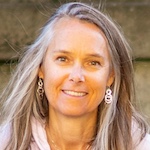
Claudia Bartsch has been teaching yoga for 17 years. With over 1,500 hours of training she offers an in-depth understanding of yogic practices and techniques and how to apply them for healing, integration and transformation. In 2011 she bridged her interest in Western psychology and the yogic path and became a certified Phoenix Rising Yoga Therapist. Additionally, Claudia is a certified Stress Management Educator, a trained Reiki and Shiatsu Practitioner. In her work, she offers a unique blend of the various branches of yoga, hands-on body and energy work empowering her clients to move towards greater resilience, well-being and health. Please visit her website for more information:claudiabartsch.com
2024-10-15T12:10:45-07:00October 15th, 2024|

Teaching of the Month: Contentment – Making Peace with the Present

by Swami Ramananda

Contentment is a deceptively simple concept that offers tremendous benefit if we fully embrace its practice.

Sensory pleasures give rise to countless desires, none of which bring lasting satisfaction. Instead, they all reinforce the prevailing messages of our culture telling us that something pleasurable is a means to happiness.  Thus, the present moment is continually warped by anticipation over the next thing to do or get, and is never enough as it is.

Contentment, referred to as Santosha in the Yoga Sutras of Patanjali, is not so easy to master because the habit of wanting and achieving is so deeply ingrained in us.  It does not mean that we give up having goals and striving for them, or give up enjoying sensory experiences.

Contentment does mean that we are at peace with what we have now and with ourselves as we are, even as we strive to learn and grow.  It does mean that we can enjoy the process of pursuing our goals, giving ourselves fully to them, without fear of failure.

I really like this idea but I struggle to practice it when my to-do list gets too big for my comfort, or when some challenging issue remains unresolved.  At such times, I can’t seem to help feeling that I’ll be happier after I finish a project or after this issue is resolved.  I find myself pushing my limits, working longer hours, ignoring my resolves for getting exercise and enough sleep, and or doing everything with a simmering stew of anxiety on the back-burner of my mind.

It has really helped me to make a conscious effort to practice contentment.  One way is to start my day, after my morning meditation, affirming that my essential nature is joy, and this joy is independent of anything that happens.  It feels really good to assert this truth and really try to feel it, reminding my mind that nothing can make me happy or sad.

I encourage everyone to use this month to experiment with contentment by pausing and reflecting, “Can I be at peace with this moment as it is?”  “Do I really have to have ____________ before I can be happy?”

This will certainly be challenging in some situations, but when we do succeed to feel for ourselves moments of a natural inner contentment, we’ll be inspired to keep practicing.  The more we learn to stay in touch with this innate peace, the more our lives will become a joyful balancing act, riding the waves of change.


You can join Swami Ramananda, Diana Meltsner and Eric Gustafson Cultivating Compassion and Forgiveness, 7-day Meditation & Raja Yoga, ONLINE, Mon.- Sun., October 14-20, 7:15 am – 8:00 am PDT

Or Deepen your in your own practice and guide your students to go deeper in theirs by joining Swami Ramananda, Diana Meltsner, and guest teacher Rich Panico M.D., for Meditation Teacher Training – ONLINE, NOV 14–DEC 19, 2024 & JAN 7–FEB 4, 2025

Swami Ramananda C-IAYT, E-RYT 500, is the Executive Director of the Integral Yoga Institute in San Francisco and a greatly respected senior teacher in the Integral Yoga tradition, who has been practicing Yoga for over 45 years. Ramananda offers practical methods of integrating the timeless teachings and practices of Yoga into daily life, and transforming the painful aspects of human experience into steps toward realizing one’s full potential.

He leads all levels of Yoga teacher trainings and programs around the globe. Ramananda co-developed the Stress Management Teacher Training program and has trained many teachers to bring Yoga into corporate, hospital and medical settings. He a founding board member of Yoga Alliance and is a co-founder of The Spiritual Action Initiative which brings together individuals committed to working for social justice for all beings and for the care and healing of our natural world. His warmth, wisdom and sense of humor have endeared him to many.

2024-10-02T09:15:12-07:00October 1st, 2024|Tags: , , , |

Sankalpa : Intention

Wise to resolve, and patient to perform.” Homer

“Your success and happiness lies in you. Resolve to keep happy, and your joy and you shall form an invincible host against difficulties.” –Helen Keller

“Resolve to be thyself: and know that he who finds himself, loses his misery.” –Matthew Arnold

“No matter what situation we find ourselves in, we can always set our compass to our highest intentions in the present moment.”
Jack Kornfield
 

Sankalpa – A Deeply Held Intention Aligned with One’s True Purpose

“Rod Stryker, founder of ParaYoga, explains that the chief architect of life is the mind. To create the life we are meant to live, we must draw the mind again and again to our dharma, our deepest intentions, and the qualities of the Divine within.

A sankalpa is a statement that does this for us. Stryker explains that kalpa means vow, or “the rule to be followed above all other rules.” San, he says, refers to a connection with the highest truth. Sankalpa, then, is a vow and commitment we make to support our highest truth. “By definition, a sankalpa should honor the deeper meaning of our life. A sankalpa speaks to the larger arc of our lives, our dharma—our overriding purpose for being here.” The sankalpa becomes a statement you can call upon to remind you of your true nature and guide your choices.”

Excerpted from an article “How to Create a Sankalpa”  by Kelly McGonigal

2024-09-16T18:04:48-07:00September 16th, 2024|

Sound Healing: The Medicine of the Future

by Bettina Neumann

In the last century, Edgar Cayce predicted that the medicine of the future would be sound and music. Sound Healing can be traced back 40,000 years. In ancient times, it was thought to promote relaxation and ward off evil spirits. In modern times, research shows that healing sounds and music are linked to many benefits, such as lowering stress, boosting immune function, reducing digestive issues, and balancing the nervous system—all of which ancient cultures knew instinctively.

Sound healing uses specific frequencies to balance the nervous system, enabling it to counter chronic overwhelm and anxiety. Specific frequencies entrain the brain so that it falls into sync with the sound wave, calming your mind and bringing you back to balance.

My first personal experience with sound healing was when I was  traveling in India. I strained my knee, and walking was painful. After one hour of a one-on-one sound healing session, the pain was almost gone. I was curious and wanted to know more, so I studied it.


The  vibrations of sound healing instruments penetrate deep into the tissues and bones, improving blood circulation and metabolism and regulating muscle tension.

The best known instruments in sound healing are the gong, crystal bowls, Tibetan crystal bowls, chimes, the voice, and percussion instruments. Many people expect  to lie down on a mat and simply absorb the sounds in a sound healing session, mostly in groups. However, I encourage people to interact with the sounds, movements, and voice,  immersing the whole body in the sound waves and frequencies.  

One-on-one sound healing sessions are good for working with pain/tension relief,  muscle stiffness and balancing the nervous system. Tuning forks and other sound healing instruments can invigorate lost vibrations, which may have made you  feel stuck or unbalanced. This frees up what is stuck, so that energy can flow freely.

  Bettina Neumann is a licensed physical therapist, a certified CranioSacral Therapist, a certified integrative sound healer, a practitioner of health rhythms, a Tamalpa teacher training graduate, and a teacher in training with the 5Rhythms. She founded Aurras Transformation and Rising Sun Physical Therapy. Her life experience as a mother and cancer survivor led her to her passion for expressive dance, movement, art, and ritual, which she calls her medicine. However, her healing journey and nature’s elements are her most consequential teacher. Thirty-five years as a physical therapist made her firmly believe the body can heal itself. Holistic, intuitive, evidence-based medicine and methods helped thousands of patients recover from cancer, lymphedema, chronic pain, and pelvic floor dysfunctions. She combines her experience, tools, and intuition to guide people through transformative journeys and open up the opportunity to lead a joy-filled life.

She offers experiences online and in-person in the greater Bay Area and San Francisco. She seeks opportunities to expand her lifework into communities nationally and worldwide and build bridges between illness and wellness.

Join Bettina in-person this month for Awakening your Inner Rhythms – A Sound Healing Journey on Saturday, December 16 from 7:00 pm – 8:30 pm PST. Space is limited, please sign up in advance! Thank you.

2023-12-10T11:32:36-08:00December 10th, 2023|
Go to Top