Seva – Dedication and Devotion in Action
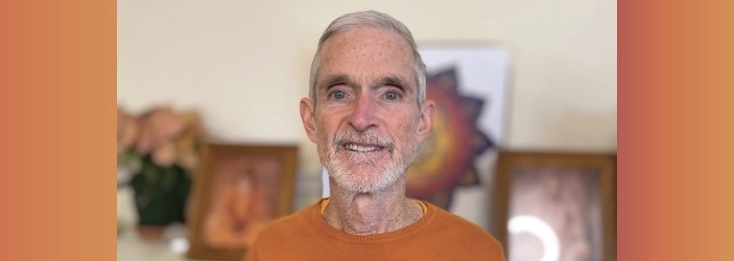
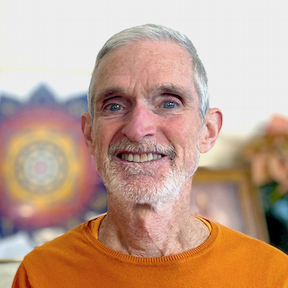
Swami Ramananda

by Swami Ramananda

The saints and sages of many faiths are dynamic examples of how spiritual awakening is accompanied by a natural impulse to serve humanity. After experiencing the interconnection of all of life, many of these great beings were moved by a profound compassion to dedicate their lives to the relief of suffering. All of the many faith traditions also recognize the importance of Seva, or selfless service, as one of the primary means by which we grow on the spiritual path and experience that full awakening.

But the messages of our culture instill in us the illusion that we are all separate beings, each needing to pursue happiness as individuals. This easily leads to comparing ourselves and competing with each other for the things and achievements that seem to create a happy life. And the world economy feeds on this illusion by offering us happiness in the form of the marketplace—an endless variety of things to buy. Thus, many people find themselves living in a relentless cycle of earning and consuming that, sooner or later, leaves them feeling frustrated and incomplete, cut off from everything that really gives life meaning.

The teachings of Yoga offer a completely different paradigm. Serving others is seen as a unique spiritual path—Karma Yoga—a practice in which actions are performed with a focused mind, a caring heart, and no concern for personal gain. This intention can be incorporated into literally anything we do and it deepens as we become less dependent on the outcome of our efforts and experience a newfound freedom from tension and expectations.

What a relief it is for me to focus fully on my work projects, free of worry, knowing that agonizing over the results only diminishes my skills. Then it can be more like play. Sri Swami Satchidananda put it this way: “Do your best, leave the rest.”

Perhaps the most powerful way this practice develops is from the joy we derive from giving ourselves wholeheartedly in service to someone or some higher purpose. Many people who work in service of others find tremendous fulfillment in the act of serving, giving, or even praying for others. Such experiences go beyond theory—they enable us to feel a deep sense of connection and belonging, a purpose for living that is larger than ourselves, and the flow of love that is a natural expression of our true nature.

An equally powerful approach to seva is devotion, service as an offering to God. Since we don’t easily recognize the Divine in each other—and the idea of a spiritual consciousness is so abstract—people throughout history have found countless symbols, names, and forms to represent this ineffable Presence that dwells within everything. This form, be it a deity, spiritual principle like peace, or a picture of a saint, can help us cultivate a higher form of love. Love directed toward God in any form inspires us to feel protection and comfort, to access an ever-present Grace and inner strength, and rise above the illusion of separation.

Yoga offers techniques to cultivate this deep love, which are collectively known as Bhakti Yoga. These practices include chanting the names of the Divine to feel its Presence (Kirtan), creating an altar and making heartfelt offerings (Puja), and performing actions with reverence and devotion (Seva).

When we perform duties as an offering to a beloved personification of the Divine, we give our very best. In the Bhagavad Gita, Sri Krishna says, “Perfection in action is Yoga.” When we strive to see ourselves as instruments of the Divine—the hands of God at work in the world—we access and allow ourselves to be guided by an inner strength, much greater than our own. We let go of our personal desires without force or denial by willingly surrendering to a Higher Will.

The intention to serve a Higher Will inevitably leads us to serving our families, neighbors, and communities. As Mother Theresa beautifully experienced and taught, we serve God by serving the Divinity in each other, in all of nature. Seva is a practice, and if we practice seeing and serving God in all, we gradually erase the imaginary boundaries we have come to believe in.

2026-02-02T08:21:23-08:00February 2nd, 2026|Tags: , , , , , |

Coming Full Circle at the IYISF

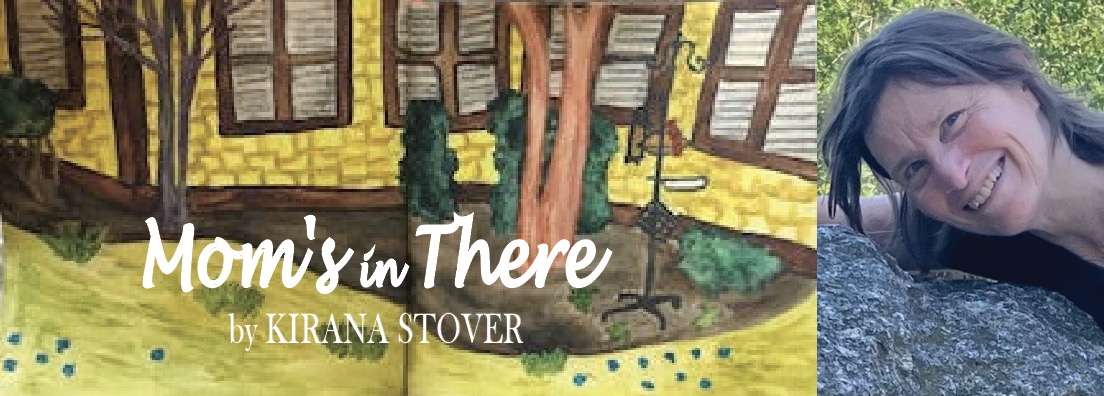
by Kirana Stover

In the Winter of 1987, I studied in San Francisco. I lived on Guerrero and 22nd St. in a studio apartment with a bed that pulled out of the wall. Just up the street I discovered the Integral Yoga Institute of San Francisco, wonderfully spacious and welcoming. I had met Swami Satchidananda a few years earlier in Richmond, Virginia, when I was still in high school, so when I came upon the Institute, it felt familiar.

I was on a student budget and was offered the chance to do “Karma Yoga” mostly consisting of vacuuming the luxuriant blue rugs, in exchange for yoga classes. I loved the staircase with a secret message in the banister. I remember taking a class upstairs and at the end having a vision of Jesus shedding a tear, which turned into a diamond as it dropped into the palm of my hand.

I often studied in the cafes of the Mission District. There were so many characters in the cafes. One was dressed as a cowboy – with a vest and a hat – who sported a mustache painted on with black eyeliner. He sat at a long wooden table with me while I studied. One day he pulled a tiny piece of paper from his billfold and handed it to me. I was astonished to read the Gayatri Mantra printed there.

Another day while doing my Karma Yoga, Nischala Devi, a swami then, walked in the door. She had just returned from Portugal. I believe I first met Swami Asokananda under similar circumstances. Looking back, I never would have guessed that I would someday visit Quinta da Calma, the place Nischala Devi was returning from or that I would open an Integral Yoga Center near Barcelona. Both Swami Asokananda and Swami Ramananda have visited my yoga center. Swami Divyananda, another San Francisco regular, has been there as well. Such blessings have been showered on me!

In 1999 I returned to San Francisco for a visit and had lunch at the Institute. It was memorable because of the eclectic gathering of guests. I remember one yoga student who sold popcorn and hotdogs at the baseball stadium.

In 2023, I returned to Richmond to be with my mom. She had been diagnosed with metastasized breast cancer and very little time to live. Thanks in great part to my long-time yoga practice – “effort toward steadiness of mind” – I was able to be present with her during this time. My book, Mom’s in There was inspired by the time I spent with her.  She related to the Om Shanti chant in a unique way. During her last weeks she began sharing poetry and during her last days she began using archaic pronouns.

While studying in San Francisco I decided to do my senior thesis about dreams, specifically about how other cultures had used dreams to solve conflict and whether we could do the same. This led me to several numinous experiences over a period of several years. Being with my mom was also numinous.

Why am I writing all of this? Because, as my friend Ulrika Schygulla says, “Living is round”. Life, like God, works in mysterious ways. I am filled with a feeling of grace at the chance to return to the IYI San Francisco next month and share my journey.

Join Kirana Stover —Integral Yoga trainer and director of the Integral Yoga Center in Barcelona, Spain—as she celebrates the publication of her book Mom’s in There with all of you. Through sharing the story of her mother’s passing, Kirana invites others to open up and share their own experiences of loss.

Saturday, November 1 – In-person and online: https://integralyogasf.org/event/satsang-book-event-moms-in-there/ 

2025-10-14T09:24:07-07:00October 15th, 2025|Tags: , , |

Celebrating Community; Karma Yoga

Free

We appreciate advance registration.

Join us for a few hours of fun, food, and meaningful connection as we explore how to transform our work into spiritual practice. We’ll begin with a brief talk and discussion on the practice of Karma Yoga, led by Swami Ramananda. This will be followed by an opportunity to support our beautiful building through mindful service—cleaning the Institute’s classrooms, hallways, and outdoor areas with awareness and joy.

We’ll conclude our time together with an extended deep relaxation and a nourishing meal. During the meal, we will honor the dedicated Karma Yogis who have generously supported the Institute over the past few years.

Work done in the right attitude becomes consecrated; becomes a sacred act. A life consecrated in doing selfless acts will become a divine life.” – Swami Sivananda


Swami Ramananda, C-IAYT, E-RYT 500, is the Executive Director of the Integral Yoga Institute in San Francisco, C-IAYT, and a greatly respected senior teacher in the Integral Yoga tradition who has been practicing Yoga for over 45 years. Ramananda offers practical methods of integrating the timeless teachings and practices of Yoga into daily life and transforming the painful aspects of human experience into steps toward realizing one’s full potential.
He leads beginner, intermediate and advanced-level Yoga teacher training programs in San Francisco and offers a variety of programs in many locations in the U.S., Europe and South America. Ramananda co-developed the Stress Management Teacher Training program with Swami Vidyananda, has trained many teachers to bring Yoga into corporate, hospital and medical settings, and has taught mind/body wellness programs in many locations. He is a certified Yoga therapist and founding board member of the Yoga Alliance, a national registry that supports and promotes yoga teachers as professionals. He co-founded The Spiritual Action Initiative (SAI), which brings together individuals committed to working for social justice for all beings and for the care and healing of our natural world. His warmth, wisdom and sense of humor have endeared him to many.

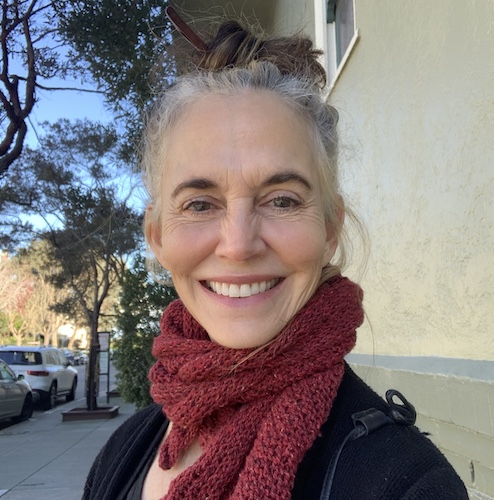
Kia Meaux. I have been a dedicated student of yoga since 1989 beginning with my first teacher, Richard Freeman in Boulder, CO. I began teaching my alignment-based vinyasa flow classes in 1998 here in San Francisco and then eventually opened my own yoga studio, Kaya Yoga in 2006. Due to Covid I closed my yoga studio in 2022 and currently only teach yoga online. My interest has moved more towards meditation and the practice of deeply contemplating “What Am I? I am currently a Resident of the Integral Yoga Institute in San Francisco where I have the great fortune to manage the daily organization of the house.

Raama Das, C-IAYT, is a former director of the Integral Yoga® Teachers Association and has been instructing Integral Yoga since 2009. He is a lead trainer for the Integral Yoga 200-hour Teacher Training at Yogaville and co-presenter for the 200 and 500-hour Yoga Alliance programs at Heal Me Institute in Fredericksburg. Raama recently received certification as a Yoga Therapist through the International Association of Yoga Therapists (IAYT), having studied Yoga programs for specific health conditions, including, anxiety, depression, cancer, heart disease, arthritis, and addiction. He is also certified as a teacher of Intermediate Hatha, Raja Yoga, Meditation, Stress Management, Yin Yoga, and Yoga for our Elders. Raama has studied and served extensively at the Integral Yoga Academy at Yogaville and managed the Integral Yoga Therapy Program. In addition, he has participated in many months of deep Tantric and classical Yoga sadhana (practice) at the Scandinavian Yoga and Meditation School in Sweden under the direction of Swami Janakananda. He currently serves as Institute Manager at the Integral Yoga Institute San Francisco.

Teaching of the Month: Service and Self-Care

by Swami Ramananda

We all probably struggle at times to make wise choices when deciding between taking care of others and taking care of ourselves.  Many of us were raised with a strong work ethic that is reinforced by the “gotta get ahead” mentality of American culture, right along with the sometimes conflicting value placed on sacrifice in Judeo-Christian faiths and the Yogic teaching of selfless service. No wonder we can feel pulled in different directions.

Sri Swami Satchidananda articulates clearly in his book, The Golden Present:  “You yourself should know how much you can give. You cannot give beyond your capacity. If you have done a lot of service that day, and if you are really tired, you should say no. Otherwise you are saying no to your own body or mind.”

A physical capacity is one thing. When we’re dead on our feet, we probably know it. But there’s also a mental capacity, a pschological one to work with. Just how far is it healthy to extend ourselves? If we push ourselves too far, we may find ourselves with unhappy moods arising, dwelling on unhealthy thoughts, saying to ourselves, “Why should I have to do this? It’s not fair.” or the opposite, “I should do this.  I’ll show them how good I am.” Both those ideas  are based on judging and comparing ourselves to others, and are products of the ego—that persona we have unconsciously developed that compels us to look good in the eyes of others. This isn’t who we really are, or what we want to encourage.

Of course, selfless service is a key element of Yoga in action and can be a tremendous source of joy and fulfillment.  But it is meant to consider the well-being of everyone—including ourselves, .It’s not about a form of self-denial.  We can be so focused on” doing the right thing” or promoting a successful image to sustain a reputation that we ignore our own needs.  After periods of self-denial, we may feel resentful and needy, and react to that by making selfish choices.

Even when we do think about our needs in a healthy way,  taking care of ourselves may feel self-indulgent.   It is so important to remember that taking good care of ourselves is not in conflict with service.  It makes it possible to serve with sustained energy, a focused mind and an open heart.

We can all practice finding a balance between service and self-care so that we don’t go overboard by either giving too much or too little.  And, of course, this discernment is aided by a daily meditative practice that builds enough clarity and awareness to catch ourselves falling into overdoing or being self-centered.  Observing our habitual tendencies, we can learn to see when we need to show more compassion for ourselves or could reach out more often to lend a hand.

Fortunately, we have countless opportunities to practice service and self-care every daywhether we are driving, listening to a friend, checking out at the grocery store or working with others. Clearly, the best motivation for serving others comes from experiencing for ourselves the feeling of compassion flowing through our hearts, and the natural sense of joy that arises from giving freely.  Ultimately, we are all learning, one act of kindness at a time, that loving each other and loving ourselves are actually the same thing.


Join Swami Ramananda for his upcoming workshop, Deepening Your Yoga Practice, On and Off the Mat a 3-part course, online and in-person, 3 Thursdays; Feb 13, 20 & 27.  Together we will explore how to experience maximum benefits from even a short daily Yoga practice on the mat, and how the teachings of Yoga can be integrated into our daily activities.

Swami Ramananda C-IAYT, E-RYT 500, is the Executive Director of the Integral Yoga Institute in San Francisco and a gr.eatly respected senior teacher in the Integral Yoga tradition, who has been practicing Yoga for over 45 years. Ramananda offers practical methods of integrating the timeless teachings and practices of Yoga into daily life, and transforming the painful aspects of human experience into steps toward realizing one’s full potential.

He leads all levels of Yoga teacher trainings and programs around the globe. Ramananda co-developed the Stress Management Teacher Training program and has trained many teachers to bring Yoga into corporate, hospital and medical settings. He a founding board member of Yoga Alliance and is a co-founder of The Spiritual Action Initiative which brings together individuals committed to working for social justice for all beings and for the care and healing of our natural world. His warmth, wisdom and sense of humor have endeared him to many.

2025-03-10T10:46:36-07:00February 1st, 2025|Tags: , , , |
Go to Top