Teaching of the Month – Forgiveness – Freeing the Heart from the Past
by Swami Ramananda

The month of September contains two of the most important holy days in the Jewish tradition, Rosh Hashanah and Yom Kippur. Rosh Hashanah begins a 10  day period of introspection and repentance that culminates in Yom Kippur, known as the Day of Atonement. These holy days remind us that seeking forgiveness and offering forgiveness to those that have offended us, are two of the most important ways to free our hearts from the past and the psychic knots that can restrict our ability to give and receive love. With this in mind, we decided to practice forgiveness for the month of September.

I am going to write here about the process of forgiving others, which can be very difficult, but can also be very healing. If we have been deeply hurt, we may have no interest in forgiving someone or it may seem impossible. But an inability to forgive usually means carrying inside a toxic energy of anger and ill-will that darkens the heart and keeps us connected to the very person from whom we may wish to be free.

Correctly understood, forgiveness is a conscious process of releasing resentful feelings. It frees us from being emotional victims of others, allows our hearts to breathe, and moves us one step closer to experiencing the natural flow of compassion that arises when blockages are removed.

Forgiveness does not mean condoning someone’s behavior, allowing them to be irresponsible or abusive, or letting them back into our lives. It does not mean being nice to the person you forgive–or even talking to them. Because it’s primarily an inner process, we can practice forgiveness and still take appropriate action to correct someone, set boundaries to protect ourselves, or even press charges.

A significant obstacle to forgiveness is the presence of anger, rage, grief or fear that may prevent us from acting skillfully. We may be more comfortable directing our fury toward someone than facing those painful feelings within ourselves. Inflicting suffering on others may feel good or justifiable temporarily, but it won’t heal our wounds or offer real peace to our hearts.

Resolving painful emotions requires that we acknowledge them without shame or self-judgment. Emotions are meant to move through us. In order to feel safe enough to experience them, we may need support, particularly if our own mindfulness is not strong enough to be fully present to our pain without getting lost in it. As we untie these emotional knots, we recover our perspective and clarity, and often see the hard lessons that our suffering has taught us.

This effort to reflect on and release painful feelings lays a foundation for the process of forgiveness. As we learn to face our own impulses and reactions, it becomes easier to understand the actions of others. Forgiveness then becomes a practice of looking beneath the surface of a person’s behavior to acknowledge the deeper spiritual essence that is worthy of our respect.

Looking deeply, we may recognize that many of our interactions with each other are unconsciously based on protecting our self-image, trying to control the ever-changing world around us and win the acceptance of others. We can practice having compassion for the ways that we all suffer from our attempts to arrange for happiness, reminding ourselves of the innate goodness within, like the light beneath a lampshade. We can also acknowledge the ways we may have hurt others when we’ve been preoccupied with our own safety and desires, and in this spirit of compassion, forgive ourselves for these mistakes.

Forgiving ourselves is a significant step toward understanding the actions of others that have hurt us. We can practice looking with eyes of compassion and releasing bitterness from our hearts, seeing both someone’s behavior and their deeper spiritual Self. It may help to envision such a person as a child, full of hopes and dreams and shaped by the various traumas of human life.

Forgiveness might become easier when we understand that those who made us suffer are no doubt suffering themselves. And we may need to practice numerous times breathing into our hearts, letting go of our anger and trusting that their own suffering will bring them the lessons they need to heal and be whole.

As we make this effort to forgive, we move from responding to another person’s ego-identity to acknowledging their true nature. We begin to erode the confines of our own ego and release the armor around our hearts, accepting ourselves and others as we are.  We begin to experience a deeper source of happiness—one that comes from knowing our connection with all of life–and to feel the natural impulse to love and give that engenders a profound peace.


You can join Swami Ramananda & Swami Asokananda for Satsang: Awakening Our Hidden Strengths Sat. SEP 9 @ 11:00 am – 12:30 pm PT.

Or, join Swami Ramananda for A Study of Yoga & Eckart Tolle a 3-part workshop Mondays: SEP 11, 18 and 25th @ 6:00 pm – 7:00 pm PT , or his new monthly series called Tuesday Tea Time starting on Tue. SEP 12 @ 11:15 am – 11:45 am PT.
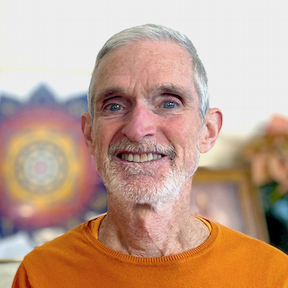
Swami Ramananda C-IAYT, E-RYT 500, is the Executive Director of the Integral Yoga Institute in San Francisco and a greatly respected senior teacher in the Integral Yoga tradition, who has been practicing Yoga for over 45 years. Ramananda offers practical methods of integrating the timeless teachings and practices of Yoga into daily life, and transforming the painful aspects of human experience into steps toward realizing one’s full potential.

He leads all levels of Yoga teacher trainings and programs around the globe. Ramananda co-developed the Stress Management Teacher Training program and has trained many teachers to bring Yoga into corporate, hospital and medical settings. He a founding board member of Yoga Alliance and is a co-founder of The Spiritual Action Initiative which brings together individuals committed to working for social justice for all beings and for the care and healing of our natural world. His warmth, wisdom and sense of humor have endeared him to many.

2023-09-01T09:53:39-07:00September 1st, 2023|

Teaching of the Month – Kindness


“What wisdom can you find that is greater than kindness?” —Jean-Jacques Rousseau

“Kindness is the only service that will stand the storm of life and not wash out. It will wear well and will be remembered long after the prism of politeness or the complexion of courtesy has faded away.” —Abraham Lincoln.

Always be a little kinder than necessary.” —James M. Barrie

“Kindness can become its own motive. We are made kind by being kind.” —Eric Hoffer

(Metta- the Pali word for benevolence, loving-kindness, friendliness, amity, good will, and active interest in others.)

The Practice of Mettā by Luang Por Sumedho

There is a great lack of mettā in the world today because we have overdeveloped our critical faculties: we constantly analyze and criticize. We dwell on what is wrong with ourselves, with others, with the society we live in. Mettā, however, means not dwelling in aversion, but being kind and patient even to what is bad, evil, foul or terrible. It’s easy to be kind to nice animals like little kittens and puppies. It’s easy to be kind to people we like, such as sweet little children, especially when they are not ours. It’s easy to be kind to old ladies and men when we don’t have to live with them. It is easy to be kind to those who agree with us politically and philosophically and who do not threaten us in any way. It is much more difficult to be kind to those we don’t like, who threaten us or disgust us. That takes much more endurance.

First we have to start with ourselves, so in traditional Buddhist style we always start the practice of mettā by having mettā for ourselves. This does not mean we say: ‘I really love myself, I really like me.’ When we practise mettā towards ourselves, we no longer dwell in aversion to ourselves. We extend kindness to ourselves, to our conditions of body and mind. We extend kindness and patience even to faults and failings, to bad thoughts, moods, anger, greed, fears, doubts, jealousies, delusions – all that we may not like about ourselves.

Collected in the Ajahn Sumedho Anthology Vol 1 – Peace is a Simple Step

2023-08-17T09:48:43-07:00August 17th, 2023|

How It Feels to Turn 70

by Swami Ramananda

It seems like any birthday that ushers us into a new decade​ brings with it a whole spectrum of feelings, and that is what happened for me last week. Turning 70 gave rise to that culturally influenced feeling​, “OMG​! I’m getting old.“ But I’m grateful that I also found it easy to see through that thinking by marveling how I feel so much the same. Isn’t it true that ​in some core place inside​, we sense ​something, maybe just vaguely, that​ is unchanging even as we acknowledge the passing of time. I plan to keep tuning into that timeless presence within as I explore this next decade.

The other major theme that has emerged for me in these past few weeks, is a feeling of profound gratitude for all the blessings I have received in these 70 years.  First of all, I think of the transformative teachings of Yoga that completely changed my life, and my guru, Sri Swami Satchidananda, for the way he made those teachings accessible and practical. Then, there is the opportunity I have had to meet and share these precious teachings with so many fellow teachers and students of Yoga all over the world. In this past week, I have received so much love and support from the vast network of our international spiritual family.

Reflecting back, I was fortunate to have the support of my loving family that I’m still very close to. At a very young age, I had the opportunity to live at Yogaville in the years that Satchidananda Ashram and the LOTUS shrine were first being built. The 20 years I spent at the Integral Yoga Institute in New York taught me so much about the importance of regular spiritual practice and a supportive community to keep one’s spiritual life in focus when surrounded by all the temptations of modern life. The past 12 years living here in San Francisco have equally contributed to my personal growth, giving me a tremendous opportunity to experience the joy of serving with a loving and dedicated spiritual family.

I am also grateful for the teachings and practices of Integral Yoga that have gradually transformed the way I understand myself and interact with the world around me. Gradually and organically, I have deepened my connection to an internal source of contentment and peace. By looking deeply within with compassionate and accepting awareness, I have been able to shine light into the dark corners of my psyche where old, unconscious beliefs have compelled me to seek happiness in unhealthy ways. Exposed, these old mental patterns that were etched into my mind have dissipated, leaving me much freer to experience joy and rest in an inner sense of oneness with the whole web of life.

Getting older has also inspired me to refocus on what is really important – how best to use my time and energy since they obviously are limited. It’s become clearer to me that I want to dedicate myself to that which is of utmost importance to me – sharing the teachings of Yoga in any way that I can. For example, it’s been suggested to me for some years now that I write a book about one of my favorite topics – how to integrate the teachings of Yoga into daily life. In the past, it has never felt like the right time. But now, a few things have fallen into place and I feel inspired to undertake this effort, sharing as best I can how Yoga can become a way of life. A good friend from my time in New York, Chandra Sgammato, has helped me submit a book proposal to Integral Yoga Publications.

One of the most fulfilling aspects of my life over the last 30 years has been to travel and share the profound teachings of Yoga to spiritual aspirants all over the world. By reducing the time I spend on administration and running the day-to-day operation of the Institute, I hope to be more available to lead graduate level teacher training programs, workshops and satsangs, and to support Yoga centers and sanghas wherever there is a need. While I am not adept at navigating the ever changing technology that we are compelled to employ these days, I feel it is my dharma to share the timeless teachings that have the potential to transform our daily lives. This is how I intend to focus my energies for the remainder of my life.


Join Swami Ramananda in celebration of his 70th trip around the sun for a Birthday – Brunch Potluck, in-person Saturday, August 12, 11am – 1:00 pm.

In lieu of gifts, we ask that you donate to Ramananda’s GoFundMe page to help raise funds to support him in shifting his focus from daily administrative tasks to sharing Yogic wisdom to a broader community. Read more


Swami Ramananda, C-IAYT, E-RYT 500, is the Executive Director of the Integral Yoga Institute in San Francisco, C-IAYT, and a greatly respected senior teacher in the Integral Yoga tradition, who has been practicing Yoga for over 45 years. Ramananda offers practical methods of integrating the timeless teachings and practices of Yoga into daily life, and transforming the painful aspects of human experience into steps toward realizing one’s full potential.
He leads beginner, intermediate and advanced level Yoga teacher training programs in San Francisco, and offers a variety of programs in many locations in the U.S., Europe and South America. Ramananda co-developed the Stress Management Teacher Training program with Swami Vidyananda, has trained many teachers to bring Yoga into corporate, hospital and medical settings, and has taught mind/body wellness programs in many locations. He is a certified Yoga therapist and founding board member of the Yoga Alliance, a national registry that supports and promotes yoga teachers as professionals. He is a co-founder of The Spiritual Action Initiative (SAI) which brings together individuals committed to working for social justice for all beings and for the care and healing of our natural world. His warmth, wisdom and sense of humor have endeared him to many.
2023-08-10T09:47:24-07:00August 10th, 2023|

Can We Share Yoga with Those Who Resist It?

by Chandra/Jo Stagmmato

My discovery of Yoga and meditation when I was 18 and a college freshman began to change me from an angry and troubled teenager who hated phys ed to a balanced adult comfortable in my body. It took years, of course, for the practices to take hold. But I stayed with them, or, more accurately, returned to them in my 20s and 30s and 40s whenever I needed to be rescued from my negativity and destructive habits.

Then in my mid-40s, I stumbled into Integral Yoga. The Hatha Yoga classes were a revelation. I knew the basic poses but the more subtle practices of deep relaxation and pranayama were newer to me. Never had I felt so peaceful and free, so spacious in body and mind as I did floating out of Integral Yoga. I became a teacher and ended up working at Integral Yoga Institute of New York for more than 20 years where I studied the Sutras and the Gita, read the Golden Present on a daily basis and applied the teachings of Yoga to how I conducted my life, at least most of the time.

Sharing these practices and teachings with willing students is joyous and easy. More challenging is trying to convince some of the people in my life that the valuable lessons I learned about peaceful interactions and healthy lives might make their lives better–and mine easier if they would only become Yogis! I was certain if only my husband would do just a few poses (selected by me, of course!) each day, his back pain would subside, and if he would only adopt some Raja Yoga teachings, we would argue less. If one of my oldest friends would calm down and practice some pranayama (“I already breathe!” she angrily replied to my admittedly sometimes pushy suggestions), her hips and shoulders would feel better and she would stop being angry and resentful in her life.

Bottom line: nothing worked on either of these dear people. Furthermore, my equanimity was actually sometimes a source of friction between us. In advocating for peace and health and comfort and love, I was perceived as a bit superior and off-putting.

What can we do as Yoga teachers and enthusiastic, dedicated practitioners to address the desire to share, the frustration of resistance, and the courtesy of honoring people where they are?

Here’s what I do, with varying degrees of effectiveness depending on the day. First, I go deeper into the practices of Integral Yoga that have literally transformed my own life. The daily practices. My body and mind depend on them and on the rare days that I miss, I am reminded why these are called “daily.”=

Second, I try to look at every situation through the lens of all of the teachings to explore how I feel, what my mind is bringing up, and how I can use the great tool of a deep breath before responding to anything. With this foundation, I try to be humble, not a model or icon, but simply an example of the value of these teachings. When people say to me, oh, you look good, or, oh, you seem happy and relaxed, I have finally learned to merely say, “That’s because I practice Yoga.” Following this sentence, I clamp my mouth shut to avoid saying, “You should try it.”

Though I can’t seem to get my folks to practice asana or breathe or meditate, I have had some success in improving our communication utilizing the skills of Yoga. It’s easier now for me not to retort to a sharp remark with another one, not to visibly wear my feelings on my face, and even not to silently think a harsh thought. It’s easier for me to listen and to carefully choose my words when trying to convey something that is important to me in the hopes that the clarity and precision we learn in Hatha practice can also apply to spoken thoughts. This almost always softens the other person because it takes two to fight.

Talking simply about stretching as a generic idea without using the word Yoga made some inroads with my husband. I notice he stretches more, not in any organized way, of course, but at least there’s a stretch now and then. As for my friend, I bought her a gift certificate for one session with a wellness practitioner who is also a Yoga Therapist, though again I did not use the word. She feels somewhat obligated to go. When she thanks me, I will say the best thanks would be for her to book a second (and third) session.

Questions for reflection:

  1. Please share your own experiences in trying to share Yoga?

  2. Why do we think people are so resistant to something we know is so good?

  3. What can we do to accept people where they are rather than where we want them to be?

Chandra/Jo Sgammato is a certified beginning and intermediate level Integral Yoga instructor, who is also certified in Therapeutic Yoga with Cheri Clampett. She has served in many capacities at the Integral Yoga Institute of New York since 1999, including most recently as the Executive Director. Chandra currently serves on the Integral Yoga Global Network and the Integral Yoga Therapy Certification Governing Board. She is the founder of IYI’s Yoga At School™ program, whose mission is to bring the health-enhancing, peace-inducing practices of Integral Yoga into New York City public schools, and the director of the organization’s Yoga At Work® program.  A former book publishing executive and bestselling author, she has done extensive research on the inspiring founding, history and worldwide reach of Integral Yoga. With her belief that Integral Yoga IS Yoga Therapy and Yoga Therapy IS Integral Yoga, Chandra is honored to help facilitate the certification of more Yoga Therapists through this program.

2023-07-31T11:11:03-07:00July 31st, 2023|
Go to Top