Teaching of the Month: Gratitude

With gratitude I remember the people, animals, plants, insects,
creatures of the sky and sea, air and water, fire and earth, all
whose joyful exertion blesses my life every day.
With gratitude I remember the care and labor of a thousand
generations of elders and ancestors who came before me.
I offer my gratitude for the safety and well-being I have been given.
I offer my gratitude for the blessings of this earth I have been given.
I offer my gratitude for the family and friends I have been given.
I offer my gratitude for the company I have been given.
I offer my gratitude for the teachings and lessons I have been given.
I offer my gratitude for the life I have been given.
– Jack Kornfield, The Wise Heart

On Thanksgiving Day, we thank the Lord for providing us with all our needs. We should be thankful always; but, if we forget, then at least this one day should be kept aside especially for that. All of the nicest things that we have come from God. God has provided us with everything. Even our bodies, our intelligence. The earth on which we live. The plants, the seeds, the food, the fruit. God has given us everything.

Nature and God are one and the same. Nature is another name for God. So, sometimes if you don’t feel comfortable with the name ”God,” you can say, “Nature provided everything.” We should be thankful to the nature; is it not so? We should be thankful to the Mother Nature, Mother Earth, Mother Sky, Mother Rain, Mother Wind.

Thanksgiving Day is a special day to remember to be thankful always for all the things we have. Not just to God, but to everyone. We always give and take, give and take, give and take; therefore we should be thankful to each other, and to each and everything in Nature—and, ultimately, to that one great power, the one great intelligence that we call God. It’s not possible for us to return in kind all that we get from Nature. How can we fulfill our obligation? It’s impossible. The only way is to remember and to be grateful.

Not only should we be thankful to everything, but everything should be thankful to us also. We should see that all the things are thankful to us by behaving properly, treating them well. We should see that we don’t hurt anyone, we don’t harm anyone, or anything. Let all those beings be thankful to us also. Everything. Even your book, for example. If you throw the book aside, the book won’t thank you. If you take good care of the book, read it gently, and close it gently, see that the covers are well kept, then the book also will be thanking you. So, let us keep this idea in our lives and see that we always give thanks to others.

by Swami Satchidananda, from the November, 2008, IYTA Newsletter

Please join us at Integral Yoga San Francisco for Thanksgiving programs on November 23rd. We look forward to seeing you!
Sri Swami Satchidananda (lovingly called “Sri Gurudev” by his students) founded the Integral Yoga Institute in 1966.

2023-11-09T18:42:33-08:00November 9th, 2023|

Teaching of the Month : Self-Reflection as a Spiritual Practice

by Swami Ramananda

As the daylight hours shorten in the northern hemisphere this time of year, it’s natural to spend more time indoors. Plant and animal life alike pause from growing and withdraw from activity. We too benefit from periods of rest and reflection as a preparation for the next seasons of growth, and with the surges in COVID-19 cases, retreating from interactions has become critical to our health.

As spiritual aspirants, pausing to reflect on our behavior, and the thoughts and motives behind it, are an essential part of the spiritual path. Increased self-awareness enables us to disentangle ourselves from the habitual thought patterns that cloud our vision.  Then we can uncover the roots of our suffering and expose the unconscious beliefs that are the seeds for frustration and struggle.

There are significant obstacles to reflecting this way. Taking an honest look at the difficult moments in our lives can be challenging. Allowing ourselves to feel the sorrow or anxiety in our hearts is painful and can make us feel ashamed or depressed. For many of us, acknowledging our struggles threatens the image we are trying to live up to and project to others.

Instead of stopping to reflect on a moment of discomfort, we may simply divert our attention to some form of entertainment or escape, like checking messages or social media. In this digital age, our senses are constantly drawn outward by our numerous devices, making it easy to ignore feelings of angst or upset, and leaving no time to understand the reasons behind them.

One way to support an effort to sincerely look at ourselves is to talk with a trusted friend or therapist, someone with whom we can be completely honest. We may need the safety of their genuine care to allow ourselves to look in the dark corners of our hearts and allow ourselves to explore painful emotions. When we are able to release our anger or grief, we can often see the unhealthy expectations or desires that gave rise to it.

For example, we all like compliments and it can be insightful to see how easily we become angry or hurt when we are criticized. Looking objectively, we can see how our desire to be liked or admired compels us to go to great lengths to make ourselves look good or protect our self-image.

Writing regularly in a journal is another beneficial practice for self-reflection. Knowing it is only for our eyes, we can train ourselves to bare our souls without fear. We can experiment with giving a voice to our confusing feelings to see what lies beneath the compulsive behaviors that even we may not understand. What hidden need might compel me to twist the truth, fall again into an addictive habit, take more than my share, or blurt out some hurtful words?

A regular meditative practice makes it possible to stand apart from our own minds with enough mental strength and clarity to ask such questions. Meditation develops the neutral awareness needed to analyze our behavior without identifying with or rationalizing it. Only with such mindfulness will we be able to catch ourselves before reacting on impulse and slow down enough to make a conscious choice instead.

Making conscious choices is the only way we can expect to keep our balance and maintain a positive frame of mind in a world full of ever-changing circumstances beyond our control. We empower ourselves not by successfully controlling things around us, but by choosing to think and act guided by the deeper voice of the Self that keeps our hearts open and free of selfishness.

Taking time to reflect need not only apply to difficulty. Reflecting on the many gifts we have received keeps the difficulties in perspective and reminds us of how blessed we are. Keeping the big picture in mind – knowing we are safe, relatively healthy, and have more than adequate food and shelter – exposes the petty nature of many of our problems.

And if we are serious about wanting to experience the unchanging peace that is our birthright, we must welcome the suffering that challenges us to seek it. Looking deeply, we have the opportunity to see how much of our pain is self-inflicted, often from clinging to things that don’t last. Letting go of our efforts to arrange for some form of external happiness, we are free to experience the natural joy that comes from accepting what life brings us. Letting go of judgment, we are free to more fully extend loving acceptance to ourselves and each other.

Join Swami Ramananda for some upcoming events: Satsang: Life Can Be Fun, Sat. November 4 @ 5:30 pm – 6:30 pm PDT or his monthly Tuesday Tea Time Series, Tue. November 14 @ 11:15 am – 11:45 am PST.

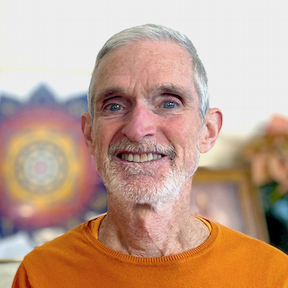
Swami Ramananda, C-IAYT, E-RYT 500, is the Executive Director of the Integral Yoga Institute in San Francisco, C-IAYT, and a greatly respected senior teacher in the Integral Yoga tradition, who has been practicing Yoga for over 45 years. Ramananda offers practical methods of integrating the timeless teachings and practices of Yoga into daily life, and transforming the painful aspects of human experience into steps toward realizing one’s full potential.
He leads beginner, intermediate and advanced level Yoga teacher training programs in San Francisco, and offers a variety of programs in many locations in the U.S., Europe and South America. Ramananda co-developed the Stress Management Teacher Training program with Swami Vidyananda, has trained many teachers to bring Yoga into corporate, hospital and medical settings, and has taught mind/body wellness programs in many locations. He is a certified Yoga therapist and founding board member of the Yoga Alliance, a national registry that supports and promotes yoga teachers as professionals. He is a co-founder of the Spiritual Action Initiative (SAI) which brings together individuals committed to working for social justice for all beings and for the care and healing of our natural world. His warmth, wisdom and sense of humor have endeared him to many.

2023-10-11T21:03:04-07:00October 11th, 2023|

Yoga and Unity: Ripples for Change

by Kamala Itzel Hayward

In life, many of us find ourselves navigating the world based on societal constructs and internalized beliefs. We may view ourselves as limited beings bound within the temporal and spatial confines of the body and mind. The passing of time may drive us, making us feel perpetually bound to the past or anxiously anticipating the future, making it difficult for us to live in the present. There may be a persistent sense of lack—a feeling that we’re inherently flawed or missing something essential—which can lead us to question our existence, causing confusion and a feeling of detachment. All this can contribute to a pervasive feeling of “otherness” that dominates our lives, leading us to believe that we’re isolated entities, separate from the world and others. This sense of who we are stands in stark contrast to what Yoga teaches us: that our true, unconditioned nature is one of interconnectedness and wholeness.

The first time I stepped into an Integral Yoga class as an adult, I was acutely aware of how others perceived and treated me differently based on my various social identities: Black, cis-woman, able-bodied, and so on. But within the four corners of my mat, as I moved through each of the elements of that Integral Yoga class, I experienced a profound awakening to my unconditioned beingness—spacious, timeless, perfect, clear, connected, complete, and inherently whole, transcending the confines of societal labels and perceived limitations.

I came into direct contact with one of the foundational paradoxes of Yoga: we are human beings, in human bodies, having human experiences—which includes layers of societal constructs, personal narratives, and perceived limitations. And, at the same time, we are, at our essence, spacious, timeless, and inherently whole. And just as a single drop of water can create ripples across a large expanse of water, this moment of unity profoundly changed me and the course of my life.

As the primary gateways to this practice for many, Yoga spaces provide a rare opportunity for each one of us to experience that gift.

My experience of many Yoga spaces, however, has been quite different.

While many Yoga spaces speak of unity in their teachings, they don’t seem to fully grasp the lived humanness of their students. One example of this is when Yoga spaces operate in such a way as to attract a homogeneous demographic of students and teachers, inadvertently excluding those who don’t fit a specific mold, which all too often is that of a white, young, thin, flexible, able-bodied, cisgender woman who uses brand-name fitness gear. This not only contradicts Yoga’s fundamental teachings of unity and interconnectedness but also undermines the potential for Yoga spaces to be a sanctuary of true inclusivity and oneness.

When Yoga spaces don’t operate in a way that is inviting to a wide range of humanity—when they ignore the realities of the world and the varied ways different human beings experience it—such spaces are communicating, either overtly or subtly, that Yoga isn’t for everyone. That if you don’t fit that very narrow band of demographics, Yoga isn’t for you.

But the truth is that Yoga—the practice of recognizing the infinite, universal spirit that resides within and around each and every one of us—is for everybody.

There are many ways that Yoga spaces can work to shape themselves into a sanctuary in which every individual—regardless of their racial, social, or economic background, or of any other label or identity they may hold—can find belonging, validation, and access to the core tenets of Yoga. One way the Integral Yoga Institute San Francisco has done so is through its creation of a scholarship-based Black, Indigenous, People of Color (BIPOC) 200-hour Basic Yoga Teacher Training.

This teacher training was first hosted by IYI SF in 2021, made possible by the support of community members and Integral Yoga sangha members who contributed generously in the form of donations, spreading the word, and love and encouragement.

The news of the success of the 2021 training traveled out like ripples through the community, drawing enough additional support to hold a second training in 2022. With your support, these ripples can expand even further, allowing IYI SF to host a third scholarship-based BIPOC Basic Yoga Teacher Training in 2024 and also offer BIPOC scholarships for advanced Yoga teacher trainings as well.

One way you can support the continuation of the scholarship-based BIPOC Teacher Training is by attending the first BIPOC Scholarship Retreat, Ripples For Change. Scheduled for Saturday, October 21, 9:30am-6:00pm, this one-day retreat offers Hatha Yoga, drumming and dance, Yoga Nidra, sound bath, poolside activities, henna, crystal readings, and much more! 100% of the profits will go toward the BIPOC scholarships fund, which makes the BIPOC basic Yoga teacher training—as well as BIPOC participation in other advanced Yoga teacher trainings—accessible to people who wouldn’t otherwise have the financial means to participate.

Even if you’re not available to attend the retreat, you can still donate here to help fund scholarships to help eliminate financial barriers to BIPOC participation in any of Integral Yoga SF’s Yoga teacher trainings.

We embrace the profound unity that Yoga teaches when we understand that our collective liberation is intertwined. As civil rights activist Fannie Lou Hamer pointed out, “Nobody’s free until everyone is free.” In supporting the BIPOC TT scholarship fund, you affirm that our shared freedom is grounded in our oneness. You help to ensure that even more people have the opportunity to awaken to their boundless essence, breaking free from societal confines and truly experiencing the universality of spirit. Each gesture of support isn’t just making a singular difference—it’s helping to create ripples for change.

Thank you, Om Shanti, Shanti, Shanti.

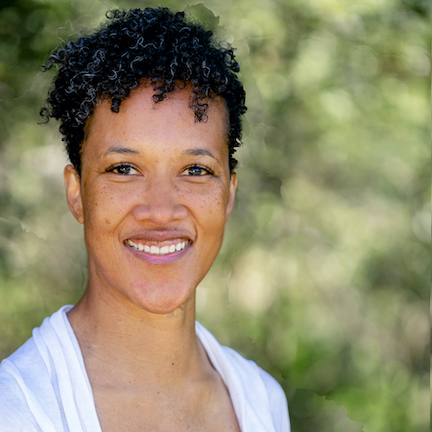
After practicing law for 13 years, Kamala Itzel Hayward left her successful legal career to pursue social justice work through the lens of mindfulness and wellness. Today, she is a Yoga teacher, Yoga therapist, and Yoga teacher trainer. In addition to sharing Yoga and other transformational practices, Kamala is also a mindful communication trainer, an antiracism educator, and a fierce and compassionate advocate for love. You can learn more about Kamala at attunedliving.com

2023-09-29T11:09:11-07:00September 29th, 2023|

On Forgiveness

By Swami Karunananda

Reprinted from the August, 2013 IYTA Newsletter

There’s a saying, “To err is human, to forgive is divine.” Mahatma Gandhi was once asked how he could put up with all the injustice and cruelty in the world. He responded, “I’m such a scoundrel myself, I have compassion for all the other scoundrels in the world.” When we consider our own weaknesses and mistakes, and how hard it is for us to change, shouldn’t we be more compassionate and forgiving to others? Sri Gurudev used to say that when we point a finger of accusation at someone else, there are three fingers pointing back at us, and there’s one, the thumb, standing up— like God—witnessing everything.

Sri Patanjali in the Yoga Sutras speaks of tapas, which means accepting pain as help for purification. All the annoyances and difficulties, injustices and ordeals, make us strong. We are like gold being purified. The problems chip way at the dross in our personalities so that the true gold in us, our divine image, can shine forth. A saintly person once described it this way: “There are two types of people in the world: the saints and the saint-makers.” In other words, there are those who are sent to inspire us, and those who come to purify us. So, the next time you start to get annoyed at someone who pushes all your buttons, thank them instead for showing you your weaknesses and helping you to grow stronger.

The Tirukkural advises: “At all times put up with the excesses of others; to forget them at once is even better.” You may ask, “How is it possible to forget when someone has wronged you?” There’s a story about a spiritual teacher, who, as a boy, had a classmate that treated him very cruelly. Years later, the former classmate came to visit the teacher, where he was received with much kindness. After a while, he asked the teacher, “Don’t you remember how badly I treated you when we were boys?” The teacher gently replied, “I distinctly remember forgetting it!”

Forgiveness is an act of choice. It is not about denying, condoning, or excusing hurtful actions. Rather, it is the letting go of resentment or revenge, even when they seem warranted, and offering instead mercy and love. By so doing, we release the past and let go of negative thoughts and feelings. We become unstuck and can move on in our lives. Energy that was tied up within us becomes available for positive, creative endeavors. Relationships are healed, and we, too, are healed.

Forgiveness and healing are linked. In speaking of forgiveness, the Holy Bible says: “Forgive us our trespasses as we forgive those who trespass against us.” When we forgive others, the spirit of forgiveness flows through us, and we, too, receive the benefit. It’s like using a funnel to transfer honey from one vessel to another: the funnel also gets the sweetness. We transfer the honey of divine forgiveness to another, and we, too, are forgiven.

I once met a woman who, twenty years prior, had been diagnosed with terminal liver cancer. As she was about to undergo aggressive therapy in the hospital, she began to reflect: “Maybe I’m going to die soon, but I don’t want to die like this.” She left the hospital and rented a small cabin. She spent her days visualizing being filled with forgiveness and letting go of anger. That was her entire treatment protocol. Little by little, she felt her strength return. Within a year, she returned to her home and resumed her work. And today, decades later, she is leading a healthy, dynamic life.

Consider the alternative: We hold on to feelings of anger, resentment, and betrayal and make our lives miserable. These negative feelings poison our system and set the stage for serious illnesses. In Chinese medicine, for example, liver problems are associated with anger. If we cling to our pain, to the wrongs we feel we have suffered, we build walls around our hearts. We imprison ourselves and feel the agony of separation, loneliness, and alienation. It’s as if we shut our windows and doors and then cry that we can’t see the Light.

Forgiveness issues can occur on three levels. First, there are the people or events that we need to forgive. Next, there are those from whom we need to seek forgiveness. Lastly, we may need to forgive ourselves for perceived weaknesses or failures. The following exercises offer some suggestions on how to proceed.

Forgiveness Exercise #1

Here is a good exercise to inspire you to forgive others. Begin by purchasing a bag of potatoes. Next, make a list of every person or situation you have not forgiven. For each entry on your list, place one potato in a sack. Carry that sack with you wherever you go for one week. Physically, you will feel the burden, and that pales compared to the subtle energy drain on your system caused by all grievances and unresolved issues you are carrying. After some time, the potatoes may even start to mold and rot. Then, you’ll get a glimpse of how this inner fermentation is preventing you from experiencing the divine fragrance within.

Forgiveness Exercise #2

We may also need to ask for forgiveness. Asking for forgiveness, along with sincere repentance, can heal us, as well as our relationships. Sri Gurudev addressed this point when speaking about reversing cancer. He said if you want to heal the body, you need to burn out the karma that caused the problem. Even if you don’t know what you did, there is something you must have done to create the situation. To burn out the karma, do a lot of repentance. If you know whom you hurt, go to that person and ask forgiveness. If you don’t know what you did, or if it’s not possible to contact them anymore, mentally ask for forgiveness. You could even place a picture of the individual before you and offer your prayers in that way. By such actions, you can purge negative karma and reduce suffering in your life.

Forgiveness Exercise #3

Sometimes, it’s easier to forgive others than it is to show the same compassion toward ourselves. We can be our own toughest critic and judge. Many years back, when I was living at Yogaville West in Lake County, California, I was troubled by an interaction that had occurred with a guest several years before. There’s a saying in the Hindu tradition: “Atithi Devo Bhava,” which means, “Treat the guest as God.” God comes to the home in the form of a guest. On one occasion, I had not been very kind or gracious to a visitor, and every time I sat to meditate, remembrance of that event flashed through my mind and disrupted the sitting. One day, burdened and frustrated in this way, I came up with a plan. I couldn’t go to them. So, I decided to design a penance for myself to be executed over the course of a month as an act of atonement. It was challenging, but, with some effort, doable. In my heart, I asked God to please accept my penance.

Those were the “pioneer days” of the IYI. We had little in the way of financial resources and lived very frugally; rarely did we have special treats. The room I occupied was in a solitary location, not frequented by others. With some difficulty, I completed the month. On the very last day, when I returned to my room that night, there was a surprise awaiting me. In the center of my altar, wrapped in gold, was a huge piece of chocolate! I took it as a sign that my penance had been accepted.

We are the ones that forge the chains that bind us, and we also hold the keys to set ourselves free. Forgiveness is one of those master keys. Use it, and watch the love and light in your life grow ever brighter.
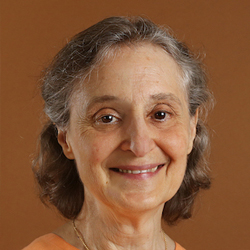
Swami Karunananda is a senior disciple of Sri Swami Satchidananda, the founder of Integral Yoga, Satchidananda Ashram, and the Integral Yoga Institutes and Centers. With over forty years experience teaching all aspects of Yoga, Swami Karunananda is one of Integral Yogas master teachers. She specializes in programs that focus on the science of meditation, the philosophy of Yoga, Yoga breathing techniques for better health and well-being, and personal transformation.

2023-09-11T20:58:24-07:00September 11th, 2023|
Go to Top