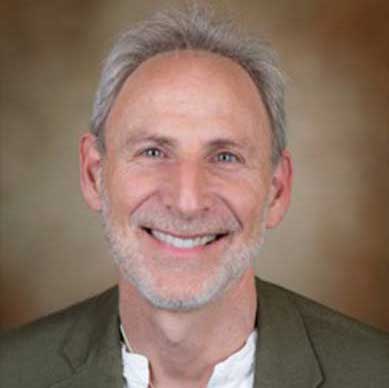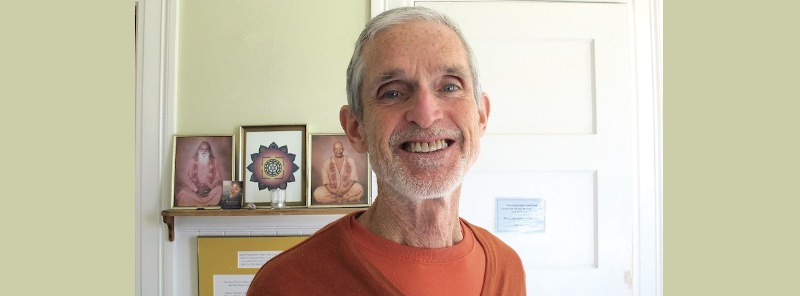
About Marilyn Russell

This author has not yet filled in any details.
So far Marilyn Russell has created 16 blog entries.

Yoga and Relationships

Part 1 Learning to Love
Applying the teachings of Yoga to our relationships can be a potent way to learn and grow on the spiritual path.  Yoga teaches us that there is a natural, unchanging peace within us all.  When we experience that internal source of deep contentment, we also feel our interconnection with all of life and a natural love and compassion for each other.

When we lose touch with that inner sense of fulfillment, we look outside, often to each other, as a source of happiness.  We all may discover at times that we are unconsciously depending on others to feel good about ourselves or to feel safe enough to open our hearts.  Loving someone becomes contingent on feeling sure that she/he loves us.  Sri Swami Satchidananda would tease us about this form of love, calling it a business arrangement.

The love and support of others is not something we can control and count on to always be there.   So the more we depend on what others think or feel, the more we set ourselves up for disappointment and suffering.  Though we may have heard the teaching that nothing from outside ourselves can make us happy, we come face to face with that truth in our relationships.

Of course, we all enjoy the heart to heart connections we make with each other – deep friendship and intimate love are beautiful and powerful aspects of human life.  What we must learn is to love without looking for something in return, experiencing the joy of giving love. When a mother loves her baby, she doesn’t expect anything — the experience of opening one’s heart fully to another is itself fulfilling.  We are all learning, often from the pain of our unhealthy attachment to others, to love in this selfless way.

_______________________________________
Part 2 Maintaining Equanimity in Relationships
Just as we learn to open our hearts in relationships with those we love, we must also learn in our difficult relationships.  If we dislike someone that we find annoying or shun those that are struggling, we also suffer from closing our hearts with negativity.  The Yoga Sutras of Patanjali clearly advises us to cultivate an inner response of compassion to someone who is suffering.

In this context, a compassionate mindset does not dictate specific behavior.  It means that we keep our hearts open to the suffering of others.  Compassion may take many forms — anywhere from lending a helping hand to offering a prayer, acting with kindness or listening with empathy.  This practice keeps our hearts at peace, knowing that we too struggle when challenges arise.

The Yoga Sutras also address situations in which a person’s behavior is hurtful toward us or others.  Rather than judging or condemning such a person, we can cultivate equanimity of mind.  We may avoid such a person or set boundaries to protect ourselves, but we can refrain from developing anger or bitterness which have no real benefit, and act as a poison in our hearts.

Even when such behavior is directed at us, we can learn to not take it personally, so that someone else’s actions do not ruin our efforts to remain at peace.  We may still choose to correct a person’s inappropriate behavior, but without malice toward the person who is likely suffering in some way.

This last relationship is especially challenging since it is easy to be swept away by anger or resentment.  But the benefit of cultivating equanimity even in the most difficult circumstances holds immense potential for us. We can learn to live with peace in our hearts no matter what behavior we encounter.  Even a little progress allows for the natural flow of love and compassion outward through the heart, which is one of the most fulfilling expressions of our true nature.

2025-09-09T18:10:23-07:00September 10th, 2025|Tags: , , , , , , |

Unraveling Our Conditioning

by
Kia Meaux

There is a constant force shaping our experience that we usually don’t recognize: we are often “at the effect” of everything we encounter. The reactions that arise within us in response to these experiences are called the “effect.” For example: we might see a steaming cup of coffee. We experience the effects of this encounter as: craving, a rush of energy, and the internal thought “I need that.”

We typically don’t realize that we are controlled by our own biases and reactions to everything we come across. Every perception—whether dramatic or subtle, physical or mental—affects us in some way.

One of the key roles of the mind is the ability to decide what is beneficial and what is harmful for us. This allows us to steer clear of negative experiences and embrace positive ones. However, much of this decision-making happens automatically, without conscious thought.

This process plays a dual role: not only does it help us navigate life, but it also shapes the very sense of who we are. Because of this, the origins of these decisions often remain hidden from our awareness. What we do feel, though, are their consequences. By closely examining these consequences, we can begin to uncover the deeper patterns or “programs” that drive our behaviors and responses so persistently.

It can be a very powerful practice to begin noticing everything you are at the effect of and understanding what the effects are. The more fully we observe the ways we automatically react to events, the better chance we have for slowing down such impulses and making more conscious choices.

2025-08-12T15:02:17-07:00August 13th, 2025|Tags: , , , , |

Healing Your Life

By Dr. Marc Halpern

In 40 years of travel and teaching, I’ve never met anyone who was not in need of, or engaged in, healing. Suffering is as a much a part of life as any other facet such as joy or love.  In all my experience, I’ve found that there are two things everyone wants; optimal health and peace of mind. Both are quite elusive. The physical realm is constantly changing. When things are going well, we are happy. But then, life changes and we are suffering. Change is life.

Ayurveda translates as the “science or knowledge of life”. This remarkable body of wisdom offers humanity the opportunity to live life without suffering – a tall order indeed. Ayurveda is the healing side of Yoga. These two bodies of wisdom are intricately entwined. Yoga is the spiritual side of Ayurveda. Together, they offer the promise of reaching our full physical, emotional, and spiritual potential.

There is little in the physical and emotional realm that cannot be healed. Healing, however, is complicated and often an uphill climb. It takes work and commitment. Ayurveda provides the roadmap leading to wellness. If we are willing and able to do the work, Ayurveda assures us that healing is inevitable. Where there is harmony, there is health. Where there is disharmony, there is disease or suffering. Ayurveda is a way of life that is in harmony with every aspect of nature. When we live in harmony, we maximize the potential of the body and mind to heal. Healing is assured within the laws of nature.

In my book, Healing Your Life – Lessons on the Path of Ayurveda, I explore the healing journey and provide guidance for the person seeking to heal themselves. I also share my own healing journey. I was crippled back in 1987 with one of the first cases of Lyme Disease in California. It left me bedridden for months and sick for about 7 years. This illness also transformed my life. It was the best, worst experience of my life. Healing serious illnesses can be that way. Ayurveda and Yoga Nidra were the two keys to my healing.

In the course we’ll take key aspects of that knowledge and explore it deeply though discussion and contemplation, exploring the physical, emotional, and spiritual journey. You’ll learn about the causes of suffering and how to remove them. You’ll also learn about your constitution and the  current state of your doshas. You’ll learn how Ayurveda and Yoga intersect in the understanding of the mind and how both of these sciences are utilized for healing. We’ll explore the importance of digestion to your well-being. Ayurveda teaches that all diseases begin with poor digestion. Healing the digestive system is paramount even when suffering is elsewhere in the body or the mind. We’ll talk about removing toxins from the body and of course, about what a proper diet looks like. Lifestyle is always near the root of any condition. Our lifestyle in the United States leave a lot to be desired. We’ll explore creating a healthier lifestyle, one that truly supports your well-being.

Whether we are healing from arthritis, cancer or depression, the fundamental path is the same. The human body is remarkable. It has the capacity to make the molecules we need to restore our health. This is the best medicine. To achieve this, living in harmony with nature is the key. Ayurveda provides the guidance. Come join me in-person or online, September 20th – 21st,  for a weekend of deep personal exploration into the depths of your healing journey. Have faith and know that healing IS possible.

Join Dr. Marc Halpern for Healing Your Life – An Ayurvedic and Yogic Journey, 2-day course ONLINE & IN-PERSON, Sat. & Sun. SEP 20- & 21

2025-08-05T16:59:45-07:00August 5th, 2025|Tags: , , , , |

Discrimination, Equanimity, and Service

By Swami Ramananda

At a Satsang at the Integral Yoga Institute in Buenos Aires years ago, I led a discussion about three essential elements of spiritual life: Discrimination, Equanimity and Service. The reflections shared that day brought out the complementary nature of formal spiritual practice and the effort to embody the teachings in daily life.

Discrimination, or Viveka, is the power of discernment and a potent tool for freeing ourselves from suffering. Sutra 2.26 of the Yoga Sutras of Patanjali states this is the means to liberation. One way to understand suffering is that we experience it when we react to life based on our conditioned identities and limited self-understanding. We tend to live under the illusion of separateness, believing we must protect ourselves and manipulate life to find happiness.

For example, if I subconsciously interpret criticism as a threat to my self-worth, I am likely to respond defensively or dismiss it as invalid. I may even feel justified in rejecting it. In doing so, I limit my response-ability—my capacity to respond consciously to what is actually happening in the moment. I cut myself off from genuine connection, which is precisely what the heart longs for.

Discrimination is the ability to see clearly and to be present with life as it is, without the distortion of mental filters. A neutral, balanced mind can distinguish between what may be temporarily painful—like criticism—but ultimately beneficial, and what offers no true value. Discrimination helps us recognize when to take action to effect change and when to accept what is beyond our control.

Equanimity is a helpful translation of the word upeksha, used in Sutra 1.33 of the Yoga Sutras. It implies a state of mental balance, even in the face of adversity. Sri Swami Satchidananda often described equanimity as the unshakable steadiness that Yoga practice makes possible. He loved to illustrate this with the image of a surfer—one who develops such inner steadiness that they invite bigger and bigger waves, embracing life’s challenges with joy.

Service, or Seva, is both a beginning and an end of the spiritual path. As we begin to practice Yoga, its transformative power is realized when we apply it in everyday life. Initially, this may mean simply striving to maintain our inner peace and respond to life more thoughtfully—yet even that is a service to a world in desperate need of peaceful hearts.

A comprehensive Yoga practice naturally includes some effort to serve others, as it is through this that we align our actions with our true nature. Consider the following benefits of service:

  • In serving, we refrain from causing harm—sometimes a significant improvement over our habitual behavior.
  • Through our interactions, our weaknesses are revealed, and our strengths are expressed. We “rub and scrub” each other.
  • We begin the shift from a “me-centered” mindset to a “we-centered” one, as we open our hearts to others.
  • Service makes apparent the need for consistent spiritual practice—to quiet and clarify the mind so we can respond from awareness, not habit, and genuinely consider the well-being of others over our own comfort.

Meditation may be the most effective means for developing this kind of nonjudgmental, nonreactive awareness—of both our inner landscape and the world around us. With this clarity, we can discern the difference between our conditioned reactions and the spontaneous impulses of compassion that arise from the spiritual Self. It is a real challenge to be present enough to catch ourselves mid-rationalization of selfish behavior—or in the act of mentally tearing ourselves down, which benefits no one.

With regular meditation, we gradually begin to experience ourselves as separate from our thoughts and emotions. This allows us to act with greater skill. I don’t mean that emotional reactions will cease, but that we’ll become more aware of them, and more capable of observing others with clarity. This is where true transformation begins: in our ability to choose our responses rather than react automatically.

For instance, when I notice hurt or anger arising in response to criticism, I can consciously choose to breathe deeply and pause, rather than shut down or lash out. I can choose to listen more attentively and tune in to the speaker’s intentions. Are their words offered with a genuine desire to help me grow, or is there something else behind them?

In this sense, meditation may complete a tripod with discrimination and service—three complementary elements of spiritual life, each one supporting and strengthening the others. Equanimity, then, can be seen as the fruit of these practices. The steadiness of mind cultivated through meditation enhances our discrimination, which in turn refines our capacity to serve. Service gives us the opportunity to apply our practice in daily life, exercise our discernment, and discover a new joy—not from acquiring, but from opening our hearts and giving.

The deeper our experience of truth, the more our lives naturally become acts of service—as we’ve seen in saints from every tradition. Service is also a hallmark of spiritual maturity. And it’s a wonderfully accessible starting point, because anything we do can become service when we infuse it with the intention to benefit others. Each day offers countless opportunities. No matter how we may struggle in one moment, the next moment offers us a fresh chance to begin again.

2025-07-07T09:10:11-07:00July 7th, 2025|Tags: , , , , |
Go to Top