
About Marilyn Russell

This author has not yet filled in any details.
So far Marilyn Russell has created 16 blog entries.

Service and Self-Care
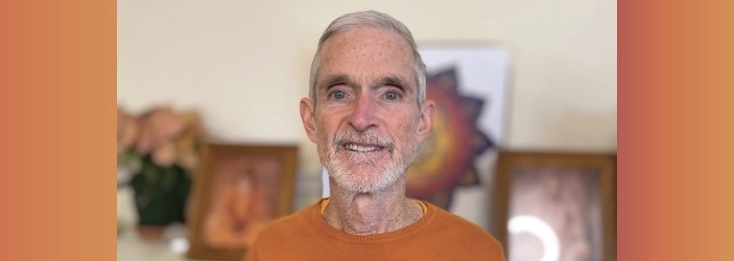
Swami Ramananda

For the month of December, our Institute residents have chosen to focus on the practice of “service and self-care.” It’s a powerful pairing, because many of us struggle to discern when to extend ourselves in service and when to honor our own genuine needs. We grow up absorbing mixed messages: a strong work ethic shaped by the “keep pushing” culture of American life, ideals of sacrifice embedded in Judeo-Christian traditions, and the Yogic emphasis on selfless service. It’s no wonder we often find ourselves conflicted.

Depending on our mental state, we may slip into unhealthy narratives such as, “Why should I have to do this? It’s not fair,” or its opposite, “I should do this—this will prove how good I am.” Though they appear different, both arise from comparison, self-judgment, and the ego’s desire to secure approval. This ego-driven striving can make service feel like a performance rather than a natural expression of compassion.

Selfless service is indeed a cornerstone of Yoga in action, and when understood properly, it brings deep joy and meaning. But true service never asks us to abandon our own well-being; it includes us in the circle of care. When we override our needs out of obligation or image-maintaining, we inevitably drift toward exhaustion, resentment, and compensatory self-centeredness. In this way, self-denial can feed the very ego patterns we hoped to transcend.

Conversely, when we consider our needs with clarity and honesty, it may feel unfamiliar or even self-indulgent. Yet an infant naturally expresses its needs without hesitation, reminding us that honoring our well-being is not selfish—it is simply human. Caring for ourselves is what allows us to serve with steadiness, spaciousness, and wholehearted attention.

Sri Swami Satchidananda expresses this wisdom beautifully in The Golden Present: “You yourself should know how much you can give. You cannot give beyond your capacity. If you have done a lot of service that day, and if you are really tired, you should say no. Otherwise you are saying no to your own body or mind.”

Finding the right balance between service and self-care is an ongoing practice. Meditation and daily awareness help us recognize when we are drifting toward over-extension or sliding into self-absorption. As we observe our tendencies with compassion, we learn when to soften toward ourselves and when to stretch outward to support others.

Life offers endless chances to practice this balance—while driving, listening, shopping, or collaborating with others. And we discover that the purest motivation for service comes from the direct experience of compassion naturally flowing through the heart. Ultimately, we are all learning, one act of kindness at a time, that loving each other and loving ourselves are actually the same thing.
2025-12-06T10:49:11-08:00December 6th, 2025|Tags: , , |

Gratefulness

Swami Ramananda

by Swami Ramananda

Imagine waking each morning with a palpable sense of gratitude — simply for being alive, for having another opportunity to engage in the great adventure of life. Imagine approaching every moment with gratefulness as the very foundation from which you meet the world.

In a time when we witness so much suffering and injustice, this may seem difficult to envision. It’s easy to lose heart, grow cynical, or retreat into self-protection. All the more reason we need a practice that restores perspective, renews our intention for growth, and strengthens our capacity to help transform this troubled world.

Practicing gratefulness can truly reshape our lives. It invites us to see each day as another chance to learn, to awaken, to love more fully. Every interaction becomes an opportunity to recognize our limitations and selfish tendencies, and to open our hearts wider.

This practice is rooted in present-moment awareness — the capacity to notice the daily miracles that so often escape our attention: the glory of sunrise, the smile of a baby, a hummingbird hovering midair, the comforting embrace of a friend.

Yet gratefulness is more than listing the blessings of the day. It is an appreciation for all that life brings — the joys and the sorrows, the light and the shadow, the bliss and the heartbreak. Rather than resisting pain, we can practice welcoming it as a messenger, pointing us toward what needs healing. Even if it doesn’t come naturally, we can experiment with the faith — echoed by many wisdom traditions — that everything which comes to us serves our highest good.

As Rumi wrote in The Guest House:
“The dark thought, the shame, the malice,
meet them at the door laughing, and invite them in.
Be grateful for whoever comes,
because each has been sent as a guide from beyond.”

Gratefulness also means learning to be content with life’s plateaus — those times when visible progress seems to stall. We often reserve gratitude for moments of success or celebration, yet its deeper power lies in sustaining us through the long stretches of quiet effort, when no applause comes.

This practice includes remembering all those whose efforts have shaped our path — our parents, ancestors, teachers, and the great spiritual masters who devoted their lives to transmitting the light of Yoga, including the founder of Integral Yoga, Sri Swami Satchidananda.

Thus, gratefulness is not merely an inner feeling of appreciation; it calls for a response. When we pause to reflect on the immensity of our blessings and allow our hearts to fill, a natural impulse arises to give back.

We can express gratitude through simple words of thanks, but also through our way of living — through service, mindfulness, and devotion. We can never repay the gift of life, the earth that sustains us, or the grace that allows us to seek awakening. Yet we can dedicate ourselves daily to the practices that dissolve the confines of ego and reveal the peace of the Self. We can listen to the quiet voice of conscience and follow its guidance to serve where we are needed.

In this way, gratefulness becomes an inexhaustible source of nourishment, inspiring us to persevere on the spiritual path despite the distractions of modern life. It gives us the courage to embody the values our world most desperately needs.

If we cannot be at peace with what we have now, can we truly expect peace from what we may gain later?

Perhaps the highest form of gratitude is not found in what we say, but in how we live. When we pause to see the magnitude of all we have been given, our hearts overflow naturally in service. May we each, in our own way, express our thankfulness by making peace within ourselves and sharing that peace with all around us.

2025-11-05T10:21:24-08:00November 5th, 2025|Tags: , , |

Coming Full Circle at the IYISF

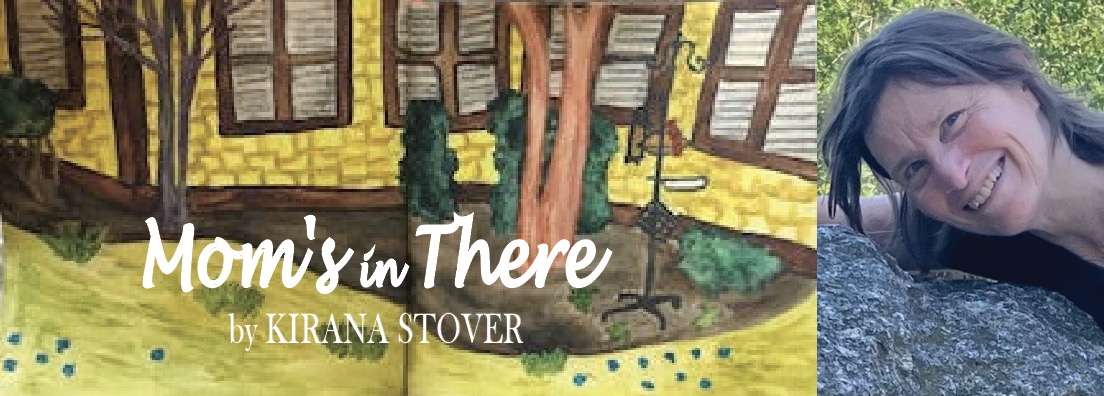
by Kirana Stover

In the Winter of 1987, I studied in San Francisco. I lived on Guerrero and 22nd St. in a studio apartment with a bed that pulled out of the wall. Just up the street I discovered the Integral Yoga Institute of San Francisco, wonderfully spacious and welcoming. I had met Swami Satchidananda a few years earlier in Richmond, Virginia, when I was still in high school, so when I came upon the Institute, it felt familiar.

I was on a student budget and was offered the chance to do “Karma Yoga” mostly consisting of vacuuming the luxuriant blue rugs, in exchange for yoga classes. I loved the staircase with a secret message in the banister. I remember taking a class upstairs and at the end having a vision of Jesus shedding a tear, which turned into a diamond as it dropped into the palm of my hand.

I often studied in the cafes of the Mission District. There were so many characters in the cafes. One was dressed as a cowboy – with a vest and a hat – who sported a mustache painted on with black eyeliner. He sat at a long wooden table with me while I studied. One day he pulled a tiny piece of paper from his billfold and handed it to me. I was astonished to read the Gayatri Mantra printed there.

Another day while doing my Karma Yoga, Nischala Devi, a swami then, walked in the door. She had just returned from Portugal. I believe I first met Swami Asokananda under similar circumstances. Looking back, I never would have guessed that I would someday visit Quinta da Calma, the place Nischala Devi was returning from or that I would open an Integral Yoga Center near Barcelona. Both Swami Asokananda and Swami Ramananda have visited my yoga center. Swami Divyananda, another San Francisco regular, has been there as well. Such blessings have been showered on me!

In 1999 I returned to San Francisco for a visit and had lunch at the Institute. It was memorable because of the eclectic gathering of guests. I remember one yoga student who sold popcorn and hotdogs at the baseball stadium.

In 2023, I returned to Richmond to be with my mom. She had been diagnosed with metastasized breast cancer and very little time to live. Thanks in great part to my long-time yoga practice – “effort toward steadiness of mind” – I was able to be present with her during this time. My book, Mom’s in There was inspired by the time I spent with her.  She related to the Om Shanti chant in a unique way. During her last weeks she began sharing poetry and during her last days she began using archaic pronouns.

While studying in San Francisco I decided to do my senior thesis about dreams, specifically about how other cultures had used dreams to solve conflict and whether we could do the same. This led me to several numinous experiences over a period of several years. Being with my mom was also numinous.

Why am I writing all of this? Because, as my friend Ulrika Schygulla says, “Living is round”. Life, like God, works in mysterious ways. I am filled with a feeling of grace at the chance to return to the IYI San Francisco next month and share my journey.

Join Kirana Stover —Integral Yoga trainer and director of the Integral Yoga Center in Barcelona, Spain—as she celebrates the publication of her book Mom’s in There with all of you. Through sharing the story of her mother’s passing, Kirana invites others to open up and share their own experiences of loss.

Saturday, November 1 – In-person and online: https://integralyogasf.org/event/satsang-book-event-moms-in-there/ 

2025-10-14T09:24:07-07:00October 15th, 2025|Tags: , , |

Caring, Useful, and Supportive Members of the Community

Swami Ramananda

by Swami Ramananda

At the close of our morning meditations, the residents of the Institute reaffirm the intention we hold for our spiritual growth while living together in community. For the month of October, we chose a phrase from this affirmation as our focal practice: “to be caring, useful, and supportive members of the community.”  This intention, however, extends far beyond the Institute. It is relevant to anyone who interacts regularly with family, co-workers or friends. Practiced sincerely, it can deepen our awareness of our interconnectedness and of the many ways we can contribute positively to the world around us.

These three words—caring, useful, supportive—invite us to approach others with an open heart, mindful of their well-being and the needs of the whole. We express caring when we genuinely wish for others’ happiness, appreciate their strengths, overlook their shortcomings, forgive their mistakes and take time to listen with understanding.

When we observe behavior that may cause harm, this intention reminds us to offer feedback with care. That means choosing the right time, speaking humbly from our own experience without judgment and remaining open to the other’s perspective. Such conversations can be challenging, but when grounded in sincerity and humility, they often deepen trust and foster mutual growth.

To be useful in community means actively seeking to contribute to the shared values and efforts of the group. Beyond our personal tasks, we find ways to serve—supporting our families, assisting co-workers or stepping in where help is needed. At the Institute, this takes the form of shared responsibilities such as cleaning, doing dishes or caring for our space together. Usefulness also appears in less tangible ways: offering prayers for peace, giving others opportunities to shine or cheerfully stepping in when someone falls short.

Ultimately, being caring, useful, and supportive reflects a shift from me-centered to we-centered living—a movement toward realizing that loving others is, in essence, loving ourselves. My teacher, Sri Swami Satchidananda, expressed this beautifully: “Real love is possible only when you see everything as your own expression. All others are none other than you; they just appear to be different. When we rise above the worldly limitations, we will find that the essence is the same.”

This practice is not about adding new obligations but about cultivating a way of being. To be caring, useful, and supportive is to remember our shared humanity and to live in harmony with it. Each small act of kindness, service or understanding becomes a step toward a more compassionate world—one in which we recognize that the good we offer to others is also the good we offer to ourselves.

2025-10-05T18:39:37-07:00October 6th, 2025|Tags: , , , , |
Go to Top