
Who Gets to Speak and Sing?
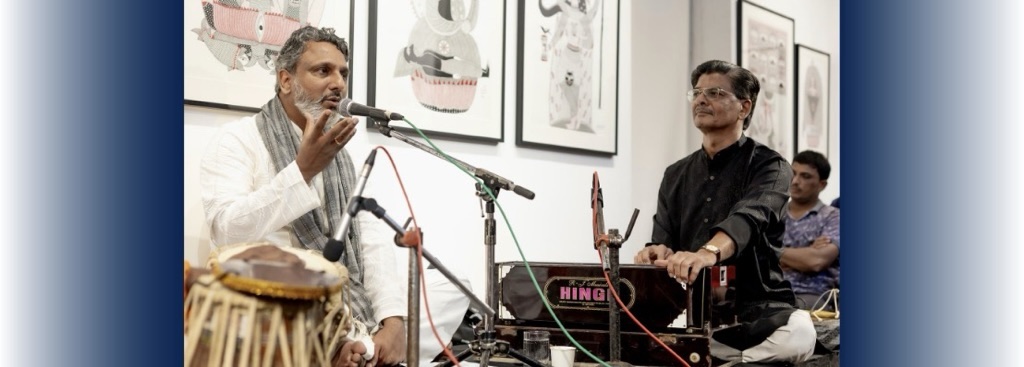
by Vivek Anand
A song is sung, and as a lyric it is also written. It is written in a voice. This voice tells us who is speaking, declaring their sentiments to the world. Whose voice gets heard the most? Sometimes we hear a lover or a devotee, one who praises, complains, laments. Sometimes we hear an anonymous voice which describes a beautiful or painful world, a voice which aspires for a better earth or heaven. And then sometimes we hear the call of a bird, the groan of the earth, the cry of the one who is crushed, a taunt by someone taking a risk in criticizing a king.
Sometimes the clay speaks to the potter:
Maati kahey kumhaar se, tu kyon raundhey mohey?
Ik din aisaa aayegaa, main raundhongi tohey!
And what does the potter’s clay say? In the above song by the 15th Century mystic Kabir, the raw clay says to the one kneading it: Why do you crush me? The day will come when I will crush you! The tables have been turned, and we are reminded that our human forms are ephemeral, that one day we too will be clay. In another song Kabir writes: Ghat ghat me panchhi boltaa. In every clay pot the bird speaks. He reminds us that despite our varying shapes, a bird, perhaps the same one, calls out from each beating heart.
The material being wrought by the craftsperson is not always expected to speak! In the Daoist text the Chuang-Tzu, translated by Stephen Mitchell, there is this line in a story about accepting ones transformation without comment:
When a skilled smith is casting metal, if the metal should leap up and say, ‘I insist upon being made into a Mo-yeh (famous sword)!’ he would surely regard it as very inauspicious metal indeed.
Songs such as a thumri, a romantic or seductive song sung by courtesans to their patrons, often have a teasing or taunting tone; they sometimes voice a complaint. This complaint is often about the unfeeling and heartless lover or about a king.
Sometimes a courtesan sings a thumri, and complains about the lover being gone all night, about the lover being cruel towards the one who pines for them. But the singer can also ask about the insensitivity of the powerful towards others who suffer:
In pairon taley, kaun kuchlaa jaa rahaa hai, morey rajaji?
Koi dekhey paavan paanv, dekhey ek nirdosh jeev ka ghaanv
Mori najariya, morey Nataraja, mori maiyya.
In the above version, a somewhat subversive thumri written by me, the singer asks the authority figure – king, a god or goddess: who are these feet squelching, pressing into the earth, my raja? Some see holy feet, but my eyes see the wound of an innocent being, my Lord of Dance, my Mother.
The question is about iconography, stories and societal practices such as caste and discrimination in which a figure is portrayed as being vanquished by the powerful, and where this is always valorized. The tradition has many answers, some metaphorical, some leaning on context. The uncomfortable questions can still be asked, both from within the traditions and from outside them, by those who benefit from the hierarchies and by those who are targeted by them.
The tone of the questioning singer is respectful, yet challenging. It is a humble inquiry perhaps. A worthy teacher is certainly to be approached humbly, but as in the Bhagavad Gita Chapter 4, Verse 34, part of the service includes asking questions, prashna.
Swami Chinmayananda’s translation of the verse goes:
Know that by long prostration, by question, and service, the wise who have realised the Truth will instruct you in (that) Knowledge.
Tad viddhi pranipaatena pariprashnena sevayaa
Upadekshyanti te jnaanam jnaaninas tattva darshinah
In other songs which I sing an anonymous person asks the kokila songbird to sing because the honeyed season has arrived, asks it to make the earth resound with its call. Or, one sings of the beautiful dark god, Shyam Sundara, who dances with the cowherdesses, while one hears the sound of musical instruments and ankle bells.
In another, the 13th Century Sufi and master musician Hazrat Amir Khusrau sings to his teacher Hazrat Nizamuddin Auliya:
Chhaap tilak sab chheen li, mosey naina milaykey
You snatched away my identity and my forehead mark by meeting eyes with mine. This sung declaration is about love and surrender, about dissolving divisions. This is simultaneously self-effacing and a call to remove hierarchies.
When we are open to the voice of the clay, the cry of the one underfoot, the complaint of the lover, they have much to say.
Join Vivek on Saturday, May 16 at 7:00 PM in a classical vocal concert: The Clay Speaks – Maati Kahey