Teaching of the Month – Spiritual Independence

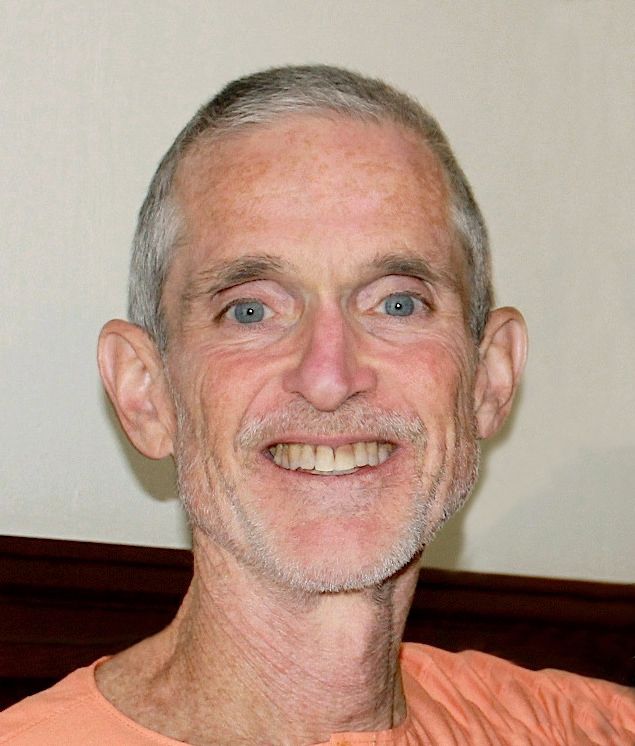
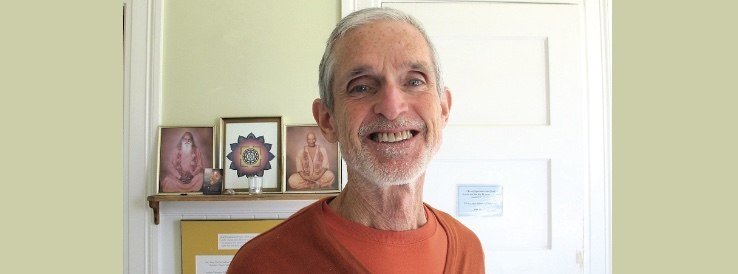
by Swami Ramananda

Independence implies a freedom from being controlled or unduly influenced by an outside source. Spiritual independence suggests the freedom to live in harmony with the spiritual truth at the heart of our being. It implies freedom from depending on any outside source for our happiness, which becomes more and more possible as we begin to experience the profound and unchanging peace within.

Most of us experience daily ups and downs as the situations and events in our lives unfold. When things go our way, we feel pleased and cheerful; when they don’t, we may be disappointed and frustrated. This tells us that we have unintentionally tied—and thus bound—our happiness to the changing world of thoughts, feelings, relationships, external objects, name and fame, and so on.

It’s not surprising that the predominant beliefs of our culture have influenced the way we understand ourselves and our relationship to the world around us. All our lives, we’ve been fed the message that happiness lies in pursuing and holding onto, as well as avoiding, certain things. The teachings of Yoga help us understand that the more we depend on our reputation, bank account, achievements, or the admiration of others as the source of our peace of mind, the more elusive it becomes.

When we find ourselves feeling anxious or angry, it can be an eye-opening exercise to question ourselves, “What is it that I am wanting but not getting that is preventing me from being at peace with this moment?” Or we could ask, “Who is upset and who is aware of it?” If I am aware that I am upset, I can center myself in that awareness or Beingness that is the real I, and is always peaceful, balanced, and lacking nothing.

Working with the breath can assist us in this type of inquiry. Pause and ask: “Do I have to be upset or can I take some deep breaths and reconnect to the center of balance even as I pursue my efforts?” In such moments, it can be beneficial to challenge ourselves to find at least a foothold of contentment and remember that is our birthright.

If we are in touch with who we truly are, with a felt inner sense of contentment, our relationship to anything that we might acquire or achieve is dramatically different. We can still enjoy things that we accomplish or experience, but our happiness is not contingent on those things. We can still enjoy eating something, winning a game, and pursuing a career or a relationship, but we can also enjoy the process since we are not relying on the outcome.

Yoga teaches us that we all experience this spiritual independence when we are able to quiet our minds and its movements: all the worrying, obsessing, and mindlessness that often occupies them. Beneath the surface waves of the mind lies an ocean of peace, a deep sense of contentment and connection with all of life. Imagine going about your day with that feeling in the forefront of your mind. Over time, that sense of peace will permeate all your experiences.

Stilling the mind this way is no easy task, but even a little success through some form of regular meditative practice will give us a taste of that natural joy that is ever-present at the heart of our being. Better still, a whole lifestyle based on the teachings of Integral Yoga creates a comprehensive approach that addresses all the levels of our being, and provides fertile ground for growth.

This means adopting sacred standards, such as the Yama and Niyama of the Yoga Sutras of Patanjali, as our guidelines for living. It means practicing asana, pranayama and meditation to calm and focus the mind. It means letting go of preferences that don’t really serve us and attuning to the inner wisdom that is always in service to the highest good of everyone, including ourselves. It includes an effort to disentangle our sense of self from the ways we have defined ourselves—witnessing the stories of the mind rather than being imprisoned by them. And, it embraces serving others with selfless love and care, without attachment to the result.

As our practice deepens, we experience moments free from past conditioning and begin to see ourselves and our relationship to the world in a fresh way. We begin to feel our connection to each other and all of nature. Over time, such a dedicated life will gradually restructure even the subconscious mind so that we are no longer compelled by old beliefs and fears, and are free to approach life with a sense of deep belonging, inner contentment, and wonder. This is true independence—the birthright that we are all meant to experience.

You can join Swami Ramananda for his upcoming 3-part workshop (sessions offered individually) Service and Surrender: A Path with Heart – Sat. July 23 @ 11:30 am – 1:00 pm PT

Swami Ramananda is the Executive Director of the Integral Yoga Institute in San Francisco and a greatly respected senior teacher in the Integral Yoga tradition, who has been practicing Yoga for over 45 years. Ramananda offers practical methods of integrating the timeless teachings and practices of Yoga into daily life, and transforming the painful aspects of human experience into steps toward realizing one’s full potential.
He leads beginner, intermediate and advanced level Yoga teacher training programs in San Francisco, and offers a variety of programs in many locations in the U.S., Europe and South America. Ramananda co-developed the Stress Management Teacher Training program with Swami Vidyananda, has trained many teachers to bring Yoga into corporate, hospital and medical settings, and has taught mind/body wellness programs in many locations. He is a certified Yoga therapist and founding board member of the Yoga Alliance, a national registry that supports and promotes yoga teachers as professionals. He is a co-founder of The Spiritual Action Initiative (SAI) which brings together individuals committed to working for social justice for all beings and for the care and healing of our natural world. His warmth, wisdom and sense of humor have endeared him to many.

2022-07-03T10:47:01-07:00July 3rd, 2022|Tags: , |

Teaching of the Month – Compassionate Communication

By Swami Ramananda

If we pay attention to the world news, I think we can probably agree that our world is in dire need of more mindfulness, more justice and compassion.  As individuals, a deeply- entrenched sense of separation, and the resulting insecurity, has given rise to so much mistrust and greed that we fail to experience the ground of being as something that we all share. This dynamic has translated into tremendous suffering and great injustice on the world stage

It’s understandable that many of us may feel powerless to bring light into the foreboding darkness that overshadows our world today. Yet the spiritual teachings of many traditions inspire us to engage in the world rather than retreat from it. Many great beings have served as role models for us, taking one step at a time, compassionately and mindfully, guided by the deeper understanding of our interdependence.

One of the ways a group of us have decided to focus our energies in this direction is the practice of compassionate communication. Communicating with a priority of genuine care for the well-being of the person we’re interacting with is a way of bringing spiritual values to the forefront of our daily lives.

We were inspired by a recent Satsang offered by Reverend Kamala Itzel Hayward, who offered a number of concrete steps that we feel can open the doors to deep listening, and problem-solving with open hearts. Here are a few of the principles that we are practicing, some of which come directly from Marshall Rosenberg‘s teachings on Nonviolent Communication.

The first principle is to observe the tendency to interpret what is actually said. There is often a strong tendency to interpret communications by using assumptions based on our personal history. For example, we may find ourselves concluding that someone dislikes us when they give us critical feedback. In reality, such remarks may be a way of showing care and a genuine desire for us to grow. We need to be able to see this tendency to interpret and to separate it from what was actually said.

The second principle concerns disagreements. There can be a great benefit to reflecting on the needs of the person we’re disagreeing with. Instead of just focusing on someone’s outward actions, it might make a considerable difference if we can shift our attention to curiosity about the needs behind their point of view. We may possibly defuse a charged conversation by making clear our intention to understand their view in a deeper way and it might also open their minds to hearing about our own needs and perspectives

Third, we are unlikely to succeed if we approach a disagreement dead set on changing someone or showing them where they are wrong. If we can show a genuine concern and respect for the other person’s perspective, our dialogue is much more likely to find common ground.

Rev Kamala told us about a friend of hers who had a potentially charged argument with someone who was in support of building a wall at the US-Mexican border. When Kamala‘s friend asked with compassion and curiosity about the need that this person had behind their support of the wall, the conversation shifted and the two found common ground in the basic need of wanting to protect their families.

Once we can understand the need behind someone’s assertions, we are capable of relating to them from the heart instead of simply judging their point of view. We may be able to dialogue instead about alternative ways to fulfill that need instead of simply making ourselves right and someone else wrong.

If you’re like me, it sounds much simpler and safer to simply avoid conflict and difficult conversations. But doing so may also mean compromising our commitment to practicing ahimsa (non-violence) and satya (truthfulness), as well as the intention to stand up for social justice.

Bringing compassion into a dialogue over polarized points of view has proven to be very powerful, especially when we look at the non-violent activism of Mahatma Gandhi, Martin Luther King Jr. and Thich Nhat Hanh.  We can all make an effort to embark upon a pathway of mindful and open communication rather than judging someone’s point of view without understanding what’s behind it.

Can you imagine saying to someone something like, “I view this a little differently than you. I’d like to hear more about what your thinking and if you’re open to it, tell you more about my perspective.” Along with this kind of effort, it’s equally important that we have compassion for ourselves and discern when we are ready to engage in a difficult conversation or when we may be too upset to speak skillfully.

Compassionate communication is supported and enhanced by a regular meditative practice that brings clarity and equanimity to the mind. A committed practice will gradually enable us to disengage from the ways we define ourselves as separate, thus clinging to narrow perspectives. As we quiet the habitual thoughts that cloud our vision, we begin to experience a Spiritual Presence at the core of our being and a natural flow of compassion for ourselves and each other.

Join Swami Ramananda, for an upcoming 3 Swamis Satsang: Keys to Fulfillment on Sat. April 30 @ 12:00 pm – 1:30 pm PDT.

And his upcoming workshop Transforming Anger and Fear -Yoga’s Practical Wisdom Thu. May 5 @ 5:30 pm – 7:00 pm PT.

Swami Ramananda is the Executive Director of the Integral Yoga Institute in San Francisco and a greatly respected senior teacher in the Integral Yoga tradition, who has been practicing Yoga for over 45 years. Ramananda offers practical methods of integrating the timeless teachings and practices of Yoga into daily life, and transforming the painful aspects of human experience into steps toward realizing one’s full potential.
He leads beginner, intermediate and advanced level Yoga teacher training programs in San Francisco, and offers a variety of programs in many locations in the U.S., Europe and South America. Ramananda co-developed the Stress Management Teacher Training program with Swami Vidyananda, has trained many teachers to bring Yoga into corporate, hospital and medical settings, and has taught mind/body wellness programs in many locations. He is a certified Yoga therapist and founding board member of the Yoga Alliance, a national registry that supports and promotes yoga teachers as professionals. He is a co-founder of The Spiritual Action Initiative (SAI) which brings together individuals committed to working for social justice for all beings and for the care and healing of our natural world. His warmth, wisdom and sense of humor have endeared him to many.

Teaching of the Month – Celebrating the Sacred

by Swami Ramananda and Prajna Lorin Piper

Throughout history, a few saints and prophets so powerfully articulated and embodied the spiritual Light within, that an entire religious tradition grew up around them and their teachings. Now, as we enter this season of holy days and cultural celebrations in honor of the spirit – Hanukkah, Christmas, Kwanza – we can appreciate and celebrate the sacred in all of them. These celebrations group around a time of year that is related to the light, a time that could be considered sacred with or without a religion – the winter solstice, when the light of day decreases to its smallest point and then turns again to increase.

It’s natural at this time of year, as the days grow shorter, to both turn inward, reflecting on our inner life, and then turn outward, sharing the renewed light of the season. Tidings of comfort and joy, sharing our blessings, prayers for peace and a reverence for the magic of the season, songs and special meals, decorated homes where we welcome family and friends – these are all the outward part of how we celebrate the sacred.

Celebrating the sacred as we see it depicted in various faiths does not discourage us from going deeply into our own spiritual path – quite the opposite. Whenever we quiet all the conditioning of the ego mind and open our hearts, we find the same natural sense of contentment and connection with the entire web of life and we realize for ourselves the oneness behind all the different forms.

The symbol of light is found in many of this season’s stories and traditions. The three wise men in the biblical story of the birth of Jesus Christ, were guided by a bright star shining in the east. Hanukkah celebrates the miracle of a light burning in the temple and Kwanzza features a seven-space candle holder called a kinara. The festivals and rituals of this time have celebrated the renewal of the light for as far back as we can see, beyond history, back through many different cultures, continents and faiths. At heart, they are talking about the same inner Light.

We can make a practice of seeing all the faiths as different expressions of one underlying truth. This is one of the primary teachings of Sri Swami Satchidananda and the reason he built the Light of Truth Universal Shrine at Yogaville. In the early 1980s, when the shrine was under construction, he appointed two representatives for each major religion to learn the teachings and traditions of that faith and teach them to the rest of the Ashram residents. He wanted us to understand and appreciate the way each tradition honored the divine.

By celebrating the sacred in many forms instead of acknowledging only one path, we learn to see the unity behind the diversity and to appreciate each person’s faith rather than discourage it. We can be inspired by all of the different teachings that guide us ultimately to the same place.

We celebrate the sacred by respecting each moment, by cultivating presence with what is rather than what we think should be. We celebrate it in the simplest of ways, by meeting both the pleasant and the unpleasant with kindness and an open heart. We celebrate the sacred by cherishing the beauty in the natural world around us, seeing the wholeness in each other alongside the fragmented and wounded, and touching the unchanging Peace within. We need to keep touching that Divine Presence within, in whatever way we know how, to bring that spiritual light and energy into expression, and dispel the darkness of ignorance that divides us.

Please join Swami Ramananda for Winter Solstice Meditation Tue. December 21 @ 5:30 pm – 6:30 pm PT as well as other end of year holiday workshops and events.

And join Prajna monthly for Deepening into Meditation Wed. January 19, 2022 @ 6:30 pm – 7:30 pm PT (every 3rd Wednesday)

2021-12-15T17:00:43-08:00December 15th, 2021|Tags: , , |

Forgiveness – Freeing the Heart from the Past

by Swami Ramananda

For the last few years, some of us at the Institute here in San Francisco have been grappling with how to respond to the many crises we see worsening in our world. It seems clear that to make any substantial changes, we need to rise above the many ways we have divided ourselves to address these problems together. A very real obstacle to working together is the tendency to harbor ill-will or long term grudges towards those that have harmed us. Toward this end, we decided to practice forgiveness for the month of October.

Forgiveness can be a very difficult process, but it can also be very healing. If we have been deeply hurt, we may have no interest in forgiving or it may seem impossible. But an inability to forgive usually means carrying inside a psychic knot of anger and ill-will that darkens the heart and keeps us connected to the very person from whom we may wish to be free.

Correctly understood, forgiveness is a conscious process of releasing resentful feelings. It frees us from being emotional victims of others, allows our hearts to breathe, and moves us one step closer to experiencing the natural flow of compassion that arises when blockages are removed.

Forgiveness does not mean condoning someone’s behavior, allowing them to be irresponsible or abusive, or letting them back into our lives. It does not mean being nice to the person you forgive–or even talking to them. Because it’s primarily an inner process, we can practice forgiveness and still take appropriate action to correct someone, set boundaries to protect ourselves, or even press charges.

A significant obstacle to forgiveness is the presence of anger, rage, grief or fear that may prevent us from acting skillfully. We may be more comfortable directing our fury toward someone than facing those painful feelings within ourselves. Inflicting suffering on others may feel good or justifiable temporarily, but it won’t heal our wounds or offer real peace to our hearts.

Resolving painful emotions requires that we acknowledge them without shame or self-judgement. Emotions are meant to move through us. In order to feel safe enough to experience them, we may need support, particularly if our own mindfulness is not strong enough to be fully present to our pain without getting lost in it. As we untie these emotional knots, we recover our perspective and clarity, and often see the hard lessons that our suffering has taught us.

This effort to reflect on and release painful feelings lays a foundation for the process of forgiveness. As we learn to face our own impulses and reactions, it becomes easier to understand the actions of others. Forgiveness then becomes a practice of looking beneath the surface of a person’s behavior to acknowledge the deeper spiritual essence that is worthy of our respect.

Looking deeply, we may recognize that many of our interactions with each other are unconsciously based on protecting our self-image, trying to control the ever-changing world around us and win the acceptance of others. We can practice having compassion for the ways that we all suffer from our attempts to arrange for happiness, reminding ourselves of the innate goodness within, like the light beneath a lampshade. We can also acknowledge the ways we may have hurt others when we’ve been preoccupied with our own safety and desires, and in this spirit of compassion, forgive ourselves for these mistakes.

Forgiving ourselves is a significant step toward understanding the actions of others that have hurt us. We can practice looking with eyes of compassion and releasing bitterness from our hearts, seeing both someone’s behavior and their deeper spiritual Self. It may help to envision such person as a child, full of hopes and dreams and shaped by the various traumas of human life.

Forgiveness might become easier when we understand that those who made us suffer are no doubt suffering themselves. And we may need to practice numerous times breathing into our hearts, letting go of our anger and trusting that their own suffering will bring them the lessons they need to heal and be whole.

As we make this effort to forgive, we move from responding to another person’s ego-identity to acknowledging their true nature. We begin to erode the confines of our own ego and release the armor around our hearts, accepting ourselves and others as we are.  We begin to experience a deeper source of happiness—one that comes from knowing our connection with all of life–and to feel the natural impulse to love and give that engenders a profound peace.

Swami Ramananda is the Executive Director of the Integral Yoga Institute in San Francisco and a greatly respected senior teacher in the Integral Yoga tradition, who has been practicing Yoga for over 45 years. Ramananda offers practical methods of integrating the timeless teachings and practices of Yoga into daily life, and transforming the painful aspects of human experience into steps toward realizing one’s full potential.

He leads beginner, intermediate and advanced level Yoga teacher training programs in San Francisco, and offers a variety of programs in many locations in the U.S., Europe and South America. Ramananda co-developed the Stress Management Teacher Training program with Swami Vidyananda, has trained many teachers to bring Yoga into corporate, hospital and medical settings, and has taught mind/body wellness programs in many locations. He is a certified Yoga therapist and founding board member of the Yoga Alliance, a national registry that supports and promotes yoga teachers as professionals. He is a co-founder of The Spiritual Action Initiative (SAI) which brings together individuals committed to working for social justice for all beings and for the care and healing of our natural world. His warmth, wisdom and sense of humor have endeared him to many.

2021-10-01T10:42:12-07:00October 1st, 2021|Tags: , |
Go to Top