Co-creating a Wave of Change in 2021

by Swami Ramananda

As this calendar year comes to an end, people all over the world are ready for a fresh start. All of us in the Northern Hemisphere are now seeing the return of light to our days, which is an ideal time to recommit ourselves to awakening the inner spiritual Light. In addition, the COVID vaccine offers us hope that we may once again be able to be together with friends and family in 2021. 

This worldwide pandemic and other events this year have been teaching us many lessons. We have seen how we struggle without some of the comforts we relied on as sources of happiness. We are still seeing how taking risks to pursue life as it was can easily spread the virus and endanger lives. Our eyes have also been opened to the tremendous harm caused by systemic racism. As literally millions all over the world are suffering from racism and the spread of the virus, it has become clearer than ever that we are all interconnected and that only by working together can we protect each other and our communities. 

Some of us have been learning to be alone. All of us, if we are sincerely interested in spiritual growth, have had a tremendous opportunity to self-reflect—to see in ourselves the thinking and behavior that creates suffering, and the need for spiritual practices that can free us from the prison of selfishness. If we are willing to embrace those lessons and put them into action, we have a tremendous opportunity to co-create a better world.

Many sources of wisdom have asserted that changing the world begins with changing ourselves, and the new year is a traditional time to rethink how we want to live. But far too often, a New Year’s resolution made in a moment of inspiration falls away in a relatively short time as our intentions are swept away by the stresses of daily life.

Along with creating intentions, real change happens through a realistic assessment of the obstacles we face, the willpower we have—which tends to fluctuate—and the support system we can count on to provide continual encouragement. Only by carefully creating very doable and measurable goals can we expect to make the sustained commitment to some new routine or practice that is necessary to make it a habit.

Here are some things we can ask ourselves:

o Are there changes I could make to my diet or lifestyle to support the healing and vitality of the body-mind? It can be much easier to give up some unhealthy habit by substituting something healthier that can fulfill the same need.

o Is there some Yoga practice or teaching I can begin or increase to support my well-being and spiritual growth? Starting small but practicing daily builds a habit and the benefits we experience provide additional inspiration.

o Am I taking care of my emotional needs for connection and support? We have a tendency to override or escape uncomfortable feelings which often lead to compulsive behavior. A practice partner or someone to talk to can make a big difference.

o Have I educated myself sufficiently about how systemic racism is embedded in our culture, and how I may unconsciously be contributing to it? Simply avoiding the topic altogether because it’s uncomfortable or inconvenient sustains this insidious crisis.

o Is there some habitual way of thinking that I find myself stuck in, such as self-judgment or judging others? Do I need guidance to deepen my awareness of how and why that happens and to choose more positive ways of thinking?

o Am I using my time and energy in harmony with my values? We can waste a lot of time with social media and we can do tremendous good by focusing our energies on some form of service—few things are as fulfilling as opening our hearts this way.

If we sincerely reflect on questions like these, we can create a slow but steady process of personal transformation that will inevitably spill into our lives in many other ways. Don’t think for even one second that we cannot hope to make a difference in the numerous and complex problems in our world. Healing our own hearts and minds enables us to feel the natural connection we have with all of life. Making a commitment to embody spiritual values brings them more fully to life than any political process. 

Everyday choices, as well as our long term goals, take on new relevance when we realize that each action and every focused thought is a tangible contribution to the collective consciousness of our planet. We each have the opportunity to co-create a new wave of change in 2021, manifesting more fully than ever the Light in ourselves and our world.

Swami Ramananda is the President of the Integral Yoga Institute in San Francisco and a greatly respected senior teacher in the Integral Yoga tradition, who has been practicing Yoga for over 35 years. Ramananda offers practical methods of integrating the timeless teachings and practices of yoga into daily life, and transforming the painful aspects of human experience into steps toward realizing one’s full potential.

He leads beginner, intermediate and advanced level yoga teacher training programs in San Francisco, and offers a variety of programs in many locations in the U. S., Europe and South America. Ramananda trains Yoga teachers to bring Yoga into corporate, hospital and medical settings and has taught mind/body wellness programs in many locations. He is a founding board member of the Yoga Alliance, a national registry that supports and promotes yoga teachers as professionals. His warmth, wisdom and sense of humor have endeared him to many.

2021-01-02T14:36:27-08:00January 2nd, 2021|Tags: |

What the Practice of Kirtan Means to Me

by Snehan Born

The practice of chanting the Holy names of Gods and Goddesses in Sanskrit is known as Sankirtan or simply Kirtan, as we’ve come to know it in the West.

This practice of singing the names in song form has the distinct ability to center us in our hearts. When we chant together in this way, we begin to lessen our self-consciousness and our hearts feel safe to open more fully. As we all know, music itself has the power to touch our hearts and evoke so many emotions. Imagine being free to sing unselfconsciously from your heart in a deeply spiritual practice, and in communion with other like-minded seekers; this is just a taste of what Kirtan can do for us. Repeating these Sanskrit names over and over produces internal vibrations that can be peaceful, healing, enlightening, relaxing and/or energizing.

I love to sing and in my own way I’ve been trying to learn to sing my whole life, though my natural voice is not great. I’ve imitated all kinds of singers; some even became friends. Eventually I decided that I would just keep practicing and in some future life I might have a voice that could be good enough to inspire minds and heal hearts. I still feel that way, that I am practicing in order to become a real singer next time around. But I’ll tell you something, when I came to love Kirtan in my 40s and after practicing for some time, I secretly discovered that my voice seemed to be slowly improving, little by little. I’m still pretty insecure about my voice, but I receive so much benefit and enjoyment from chanting together with others that I keep with it. And now it’s an inspiration and surprise to receive encouragement from friends who perform Kirtan professionally. 

Presently, I’m practicing the Hanuman Chalisa with an online sangha that meets every morning at 8am for an hour. This is so much fun and it furthers my awe of the effects of Kirtan on myself and others. Try it out. But be aware that it’s addictive to the soul. You might not just like it, you might love it!     

Our beloved kirtanist, Astrud Castillo, will be leading an online kirtan here at the Institute this Saturday, December 12th, at 7pm.  Steeped in the Bhakti Yoga tradition, Astrud will lead us in chanting the names of the divine, opening and attuning the heart to the spiritual ground of being we all share. We hope you will join us.  https://integralyogasf.org/event/integral-yoga-kirtan

Snehan Born has four decades of experience with yoga and has been teaching Integral Yoga since 2000. Snehan resides at the Integral Yoga Institute of San Francisco. He serves as assistant to Swami Ramananda and is a lead teacher trainer. He has also led Hatha Yoga trainings at Satchidananda Ashram, Yogaville, Virginia, The Integral Yoga Institute in New York City and privately in Hawaii where Snehan co-created the Metamorphous Yoga Studio. Snehan is certified in all levels of Integral Yoga Hatha and has received additional certifications in Pranayama, Meditation, Raja Yoga and Stress Management from Integral Yoga and “Life of a Yogi” certification from Sri Dharma Mittra. Snehan has taught yoga all over the US as well as in India, Nepal, South America, Australia, New Zealand, Mexico, Japan and Europe.

2020-12-12T18:57:41-08:00December 7th, 2020|Tags: , , |

Spiritual Activism in a Violent World

In the wake of yet another gross example of racism and another senseless murder in the U.S., many people I know are searching for some way to actively respond to a world that has given birth to so much violence and injustice. In Integral Yoga, we often speak about how we can embody the spiritual principles and practices we embrace in proactive ways to make a real difference.  

For far too long, many committed spiritual seekers I know have limited their response to sending prayers for peace, expressing their dismay to each other, and recommitting themselves to spiritual practice to establish peace in their hearts. These are all very important choices, but right now I don’t think they are enough. These actions are invisible to the world around us—I saw a protest sign recently that read, “Silence is Violence.” Spiritual practice should lay the groundwork for further action.

It is crucial that we sustain a regular meditation practice to touch the ground of being we all share and to awaken the natural compassion that arises in the heart when we experience this interconnection. Understood in this context, our spiritual practice is a responsibility, not simply a personal pursuit. Only then, will this sense of oneness be strong enough that it manifests in our hearts and minds as we interact in the world. 

But we need not wait for some level of enlightenment to take Yoga off the cushion or mat and into the street. We can purposely practice moving, talking, and thinking with peace and compassion in our hearts. 

We bring compassion into conversations when we listen deeply to another person and make a real effort to understand and respect their needs, instead of stubbornly defending our own. We can approach even those with whom we disagree with an open heart and an effort to build on the common ground we share, instead of focusing only on the differences.  

At every opportunity, we must speak out against injustice when we see, hear, or witness it and be a presence of peace in moments of conflict. Even when we cannot help directly, we can offer support to those who are fighting against racism and violence. We must make our voices heard to those seeking election, so that policies that support social justice are enacted at every level of government.

We must stand in solidarity with the voices of BIPOC (Black, Indigenous, and People of Color) stating that systematic racism and injustice due to police violence must end. We cannot just stand by and watch the murder of George Floyd, Breonna Taylor, Ahmaud Arbery, and the many others who have suffered from our country’s failure to address the racial inequality that has plagued our society for centuries.

We must also speak up against the derogatory language, hate speech, and acts of violence directed at Asian populations since the outbreak of the pandemic. I’ve read more than once that we must act now to strengthen the immunity of our societies, not only against COVID-19, but against the virus of hate and discrimination.

A recent message from the Interfaith Council of San Francisco articulates our intention to join with many others in supporting changes that value all peoples, regardless of race, eradicate all forms of oppression, and recognize the unity behind all diversity.

“The overwhelming national response to George Floyd’s death, manifested in peaceful protests, not only honors his life, but powerfully expresses the threshold of tolerance we as Americans have reached for injustice, systematic racism and discrimination against people of color. This powerful resurgence of a long overdue civil rights movement will not be silenced until structural change is realized. We lift our voices and stand in unity and solidarity with our sisters and brothers of color in proclaiming that BLACK LIVES MATTER.” —Interfaith Council of San Francisco

For the last 2 months, the residents of the Integral Yoga Institute here in San Francisco have been gathering to send out prayers for all those who are suffering from the pandemic. We will continue to do so and keep equally in our prayers all those suffering from racial injustice.  We also commit to educating ourselves to uncover unintentional racism, to searching our own hearts for prejudice of any kind, and to using every opportunity to promote the yogic understanding that we are all one.

Please join us for a free panel and community discussion we will hold on Sunday, June 14, 4:30 – 6 pm PDT, entitled Responding to Racism – A Spiritual PerspectiveIntegral Yoga Minister Kamala Itzel Hayward will speak on the essential role that acknowledging racism and other forms of oppression plays in the spiritual journey. Mazin Jamal Mahgoub will follow with a talk on effective activism grounded in spiritual principles. 

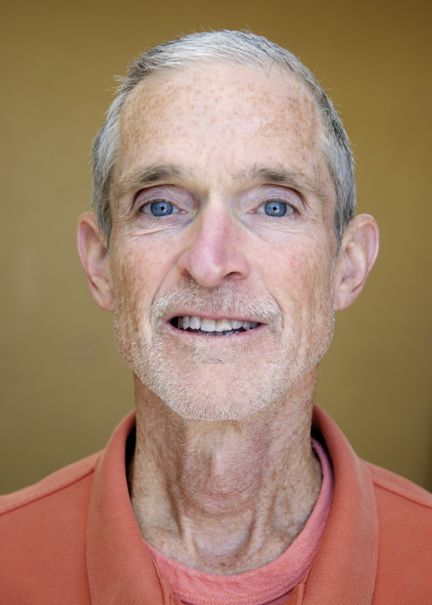
Swami Ramananda is the President of the Integral Yoga Institute in San Francisco and a greatly respected senior teacher in the Integral Yoga tradition, who has been practicing Yoga for over 35 years. Ramananda offers practical methods of integrating the timeless teachings and practices of yoga into daily life, and transforming the painful aspects of human experience into steps toward realizing one’s full potential.

He leads beginner, intermediate and advanced level yoga teacher training programs in San Francisco, and offers a variety of programs in many locations in the U. S., Europe and South America. Ramananda trains Yoga teachers to bring Yoga into corporate, hospital and medical settings and has taught mind/body wellness programs in many locations. He is a founding board member of the Yoga Alliance, a national registry that supports and promotes yoga teachers as professionals. His warmth, wisdom and sense of humor have endeared him to many.
2020-06-07T14:58:33-07:00June 3rd, 2020|Tags: , |

The Woodstock Spirit is Alive and Well in San Francisco

by Rev. Premanjali

This year we’re in the midst of celebrating the 50th anniversary of the Integral Yoga Institute of San Francisco on Dolores Street. Through the years, the sangha has been through some notable moments in history, but at the moment, we are experiencing an unprecedented shift in how we serve the community. As the COVID-19 pandemic spurs us to persist through the unexpected, IYISF continues to offer classes, workshops, and meditations online to stay connected with the community. 

Going back to 1969—a year prior to its opening—the first Integral Yoga teachers arrived in San Francisco from New York. They began teaching classes in an apartment until the beautiful Victorian-style building on Dolores Street was purchased a year later.

1969 was also the year of an event that came to define the 60s counterculture, the Woodstock Festival. At the last moment, Swami Satchidananda was helicoptered in to open the festival by the organizers who were hoping he might bring a peaceful mood to what was beginning to unfold as a potentially chaotic scene. From the moment he chanted, “Om,” he did calm the more than 400,000 young people at the music festival on a farm in upstate New York. And, in doing so, Swami Satchidananda attained rock star status—much to his own surprise. The festival rapidly became legend as did he. 

In August 2019, the 50th anniversary of Woodstock was celebrated. During that anniversary, Phil Goldberg (author of American Veda) wrote an article for Elephant Journal in which he noted: 

“For my part, I want to commemorate one brief but highly significant moment that occurred in the opening hour, on August 15, 1969. It does not get the attention it deserves. Of all the iconic Woodstock images—writhing mud-soaked bodies; impassioned performers like Jimi Hendrix; ecstatic faces and strung-out faces—one captures the spiritual zeitgeist of the era: Swami Satchidananda addressing the multitude. It’s a potent symbol of the meeting of East and West that transformed America’s spiritual and cultural landscape. Fifty years on, millions of people meditate, chant mantras, and stretch on Yoga mats, and the swami who came to be called ‘The Woodstock Guru’ deserves much of the credit. The image of the Hindu holy man blessing the most famous rock festival in history will endure as a symbol of the time when a generation of Americans turned Eastward and inward. No one contributed more to the modern Yoga boom than Swami Satchidananda, who started training American teachers in the late 1960s.”

Over the past fifty years, the San Francisco IYI has been a continually welcoming presence, offering the teachings of the classical path of Yoga to all who have come through its doors. During this time, Integral Yoga teachers have positively touched the lives of thousands of students as they have shared the Yoga practices and teachings. Swami Satchidananda famously declared that, “More people have been killed in the name of God than in all the wars.” He called on all religions to abandon rhetoric and behaviors that create conflict and instead embrace the teachings of universal peace, love, compassion, and sisterhood and brotherhood common to all faiths. “Paths are many,” said Swami Satchidananda, but, “Truth is one.” Integral Yoga teachers have continued to invoke Swami Satchidananda’s universal message of peace, kindness, compassion, inclusivity—celebrating both our unity and diversity as spiritual seekers.

In looking back we also gain inspiration for looking forward. In his classic eleven-volume text, The Story of Civilization, historian Will Durant expressed the hope that India would “teach us the tolerance and gentleness of the mature mind, the quiet content of the unacquisitive soul, the calm of the understanding spirit, and a unifying, pacifying love for all living things.” That turned out to be prescient for as Phil Goldberg also noted, “The image of Swami Satchidananda at Woodstock will always be a symbol of the moment when a battery of unconventional baby boomers turned eastward—and inward—in such large numbers that the process became irreversible.

We can all be proud that the Integral Yoga Institute of San Francisco is carrying this legacy forward—hopefully for another 50 years and more! We hope you will join us in our online offerings. It is a great opportunity for those outside of the San Francisco Bay Area to connect with the teaching and sangha from a distance.

This is part 2 of a post from February 26, 2020.

2020-04-29T15:49:07-07:00April 29th, 2020|Tags: |
Go to Top