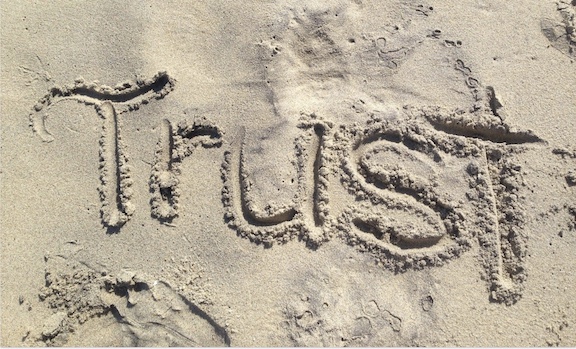
What is TRE®?

by Maria Alfaro

What is TRE®?
TRE stands for Tension and Trauma Releasing Exercises. This simple set of exercises mildly fatigue and stretch the muscles in our legs to activate a natural tremoring response called Neurogenic Tremors. This technique was designed to help release the deep tension created in the body during a traumatic experience or through chronic stress. It was created by David Berceli, Ph.D., an international expert in the areas of trauma intervention and conflict resolution based on his work with populations traumatized by war.

Adults tend to contract when they experience a threatening situation while young children in these same situations tend to shake and tremor. TRE theorizes that we are designed to contract to protect ourselves and we are also designed to release this contraction once we feel safe again. But since shaking or tremoring feels like a sign of a weakness or disease, we tend to shut it down.

This theory was used over 25 years ago to create this set of exercises that I mentioned. Using them we reactivate this natural shaking mechanism. TRE has not gone mainstream yet but it is being used by over seven million people in 86 countries.

What I like best about TRE is that it is really gentle, simple and anybody can do it. Originally designed for the severe trauma of leaving in a war zone, TRE is also very
effective for stress as stress and trauma are very similar and they create a similar reactions in the body. The difference is the degree, the intensity and the duration of the stressors. TRE is really good for anyone.

At the top of the list of benefits that people report are better sleep, improved digestion and less anxious, less fearful and less reactive responses to  life’s stressors. People also report a decrease in other symptoms such as all kind of chronic pain, fibromyalgia, chronic fatigue, sciatica, insomnia and panic attacks.

We don’t have to have experienced severe personal trauma in order to be very stressed out. If you watch the news and you are aware of the wars, global warming, the civil right restrictions, the voting frauds and more, it is pretty obvious that we all need to take care of our nervous system more than ever before. Our personal lives might be okay, but we are still affected by what happens around us so everybody can benefit from this work. And the thing I like the best is that it’s easy to learn and easy to practice.

Everyone who attends on of my introductory workshops, like the one I teach at Integral Yoga, will have access to my weekly free refresher class. I have been offering this online class since May of 2020, to support and assist people with their TRE practice. Because if you do it once, you would feel some benefit. But if you keep doing it, that’s where you will experience lasting results. And, after doing it a few times, it becomes very easy to reactivate this gentle response. You can do it for a few minutes every few days and it can really improve your life.

I live in Santa Cruz, California and the founder, David Berceli, came here in 2004.  I took his workshop way before there was a TRE organization. At that time, I was a full
time yoga teacher and I just attended that workshop out of curiosity and a desire to work on my own personal trauma. That class changed my life. It also showed me that although there are many effective ways to reduce our stress and trauma, such as yoga, meditation, psychotherapy and breathing exercises, there is nothing that works as rapidly as TRE. The amount of time and energy invested in it and the amount of achieved results makes TRE the most powerful and effective tool I have found so far.

That is why I became a full-time TRE Certification Trainer. By spreading this important work I feel like I’m making an important contribution to the world becoming a better place. Learn more by joining our upcoming, online TRE® (Tension and Trauma Releasing Exercises) Intro Workshop with Maria Alfaro, Saturday, April 15 at 10:00 am – 12:00 pm PT
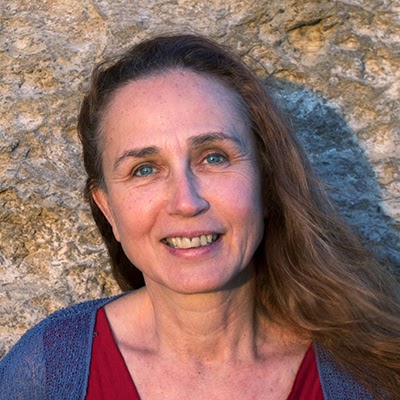
Maria Alfaro is a native Italian living in Santa Cruz, California. She has over 30 years of yoga experience and a background in Chinese martial arts and massage. As a senior TRE® Certification Trainer she has taught thousands of people in the US, Canada, Europe, Asia and the Middle East since 2004. She assisted Dr. Berceli, TRE’s founder, in numerous trainings in the US, South Africa, Brazil and Japan and led hundreds of public workshops and over hundred certification trainings worldwide.
Maria is also the co-creator of Neurogenic Yoga™, the sister method of TRE. Maria facilitates workshops and trainings globally. She creates a supportive environment that makes people feel safe as she leads her classes with compassion and a sense of humor.
2023-04-07T11:57:54-07:00April 7th, 2023|

Teaching of the Month: Right Speech

by Prajna Piper

Almost all spiritual traditions include a code of morality, of ethical understanding and behavior. Right, or wise, or mindful speech is the third quality addressed in the Buddha’s eight-fold path, and the first of the qualities that have to do with ethics.

Wise speech is sometimes reduced to a few sentences – Is it true? Is it necessary? Is it kind? Of course there’s more to it than that – the practice of cultivating right speech can become extremely refined – but those three guidelines are always good to remember. I once heard a meditation teacher say that every time he’d taught on right speech he would hear later from a student who had been accosted in the parking lot, after the talk, by another student wanting to tell them what was wrong with them. This kind of confrontation may be honest, but it isn’t necessarily right speech.

Hearing someone teach about morality can feel ponderous, and that’s probably because we already have a pretty strong moral compass inside of ourselves. There may be unusual situations where we have to think about how we frame our view, or understand a bigger picture of what is really ethical, but for the most part, we know inside ourselves what moral behavior is. We know when we speak uncaringly to others. And we certainly know, by the way it feels, when someone speaks uncaringly to us.

In today’s culture, morality doesn’t apply to speech for a lot of people. There’s the out and out grossness of some of the TV news stations, or the way people will publicly express hatred, as an extreme example of that. But when we’re looking more closely, at our own personal morality, at a refinement and cultivation of our words and deeds, I think there’s also often a real reluctance to monitor our own speech. For reasons related to self-expression, or authenticity, or the simple pleasure of being spontaneous, we don’t want to exercise restraint. We want to be autonomous beings, free-wheeling, with personas and ways of our own. But this is not exactly how morality works. Morality is something that needs to be attended to, and, it’s important to remember that we aren’t autonomous, free-wheeling beings. For better or for worse, we’re in this life together.

Years ago, I was in a month-long mindful living program, held at the Insight Meditation Society, in Barre, MA, and the Buddhist teacher, Joseph Goldstein came in to talk to our group.

Joseph is a really big deal to a lot of people and our group teacher had told us to save our hard questions for him. Everyone in the group had tried to come up with something complex to inquire about, and we’d all failed. So instead we asked him what, in all his years of practice, stood out for him in the teachings, and he thought for a moment and said, ‘well, three things then.’

I’m a little annoyed with myself that I can’t remember what the first two were. I think they were the teachings on non-self and on impermanence. But I remember very distinctly that he then paused and said that the third thing, and that he had to include it because he’d seen over and over again how much suffering speech caused, was right, or mindful, speech.

Later, in that session, a loud noise was heard overhead, and someone said, “it’s an airplane.” And it probably was. But Joseph said, quietly, questioningly, “well, we don’t really know that, do we?” What had been an assumption had been stated as a fact.

Over the course of the month while I was at Barre, I had occasion to exchange a few words with Joseph, to observe him socially, and to see that he was taking a split second before answering people, even in casual conversation, that he was monitoring, very carefully, what was going to come out of his mouth. I remember being touched by how diligently he was practicing, and when I tell people about this, I always have to say that you might think this would make someone seem boring, or unnatural. But it didn’t. He was just practicing, very sincerely and humbly, training himself to consider his intention before speaking.

This spiritual life we are trying to live needs to be based on our values, our intentions. If we value kindness and honesty, generosity, consideration and restraint, these qualities need to be practiced in our speech as well as in our minds and in our actions.

The residents at San Francisco IYI have chosen to practice right speech as the practice of the month. May we all practice with sincerity and humility, for the benefit of all beings.

Prajna lives and practices at Integral Yoga Institute San Francisco.

2023-03-16T18:18:47-07:00March 16th, 2023|

Collective Healing for Collective Trauma

by Kamala Itzel Hayward

“Collective trauma” is the mental, emotional, psychological, and spiritual harm experienced by a group of people as the result of a traumatic event or series of events. The group can be a specific demographic, a nation, or even everyone in the world. Acts of terrorism, natural disasters, and war are common examples, as are persistent societal and cultural conditions, such as colonialism, imperialism, toxic capitalism, and all forms of structural and systemic oppression.

Dominant culture embraces and even celebrates individualism. As such, it urges us to consider trauma as an individual problem, and to take an individualistic approach to healing from it. The result is the toxic denial of our essential interdependence.

Contemporary research confirms what the ancients have told us for centuries: that yoga can heal. Studies show that asana, pranayama, deep relaxation, and meditation all help to activate the parasympathetic nervous system (the opposite of the fight, flight, freeze, fawn mode that’s engaged during a traumatic event), thereby helping to reduce many trauma symptoms. These practices are a balm to our nervous system, giving our bodies, minds, and spirits time and space for silence, reflection, and rest. This space is the field in which we can come back into connection with both our humanity and the awareness of our own divinity.

Healing from collective trauma is further served through engaging in those yoga practices alongside others.

Practicing in community allows us to move out of the feelings of disconnection, shame, and isolation that are the result of trauma, and begin to understand that our trauma is not unique to any one of us. It creates a sense of community and belonging. In community we are reminded of our interdependence and interconnectedness. Practicing together also allows us to co-create a space in which we, as a community, can support each others’ healing and also visualize and dream together of a world we’ve never lived in—a world free from oppression and traumatic wounding.

As we come together to engage in healing practices, we begin to see more deeply into the truth of the fact that we are not separate from others and, as such, the healing of the individual is not separate from the healing of others. And we become better able to support one another and work toward creating healing change in our communities.

To make the most meaningful movement toward collective healing through practicing in community, find a trauma-informed yoga class with a teacher who actively moves away from yoga practices shaped by colonialism and appropriation and who understands the nature and impact of the collective trauma that comes from living in systems of oppression.

In the upcoming online Satsang, Yoga for Healing Collective Trauma, Sat. March 18 @ 5:30 pm – 6:30 pm PT, we’ll explore the role that yoga can play in the transformation and healing of collective trauma—in particular, collective trauma experienced as a result of living under structural and systemic oppression. We’ll come together to talk and explore ways we can collectively work to disrupt this oppression. And you’ll be guided through a practice to connect with the wisdom of your ancestors, the healing of yourself and future generations, and our sacred interconnectedness with all beings, wherever and whenever they may be.

Kamala Itzel Hayward was a lawyer for over a decade before becoming a Yoga teacher and Yoga therapist specializing in trauma, addiction, and wellness. She is passionate about bringing Yoga and other healing modalities to adults facing chronic stress caused by living under oppression, such as racism, sexism, homophobia, transphobia, classism, ableism, and more.
She is founder of the Integral Yoga Institute’s Scholarship-Based Yoga Teacher Training for Black, Indigenous, People of Color. For the last 12 years, she has been sharing Yoga with individuals facing housing insecurity and related challenges, including systemic barriers; structural oppression; social dislocation; physical, emotional, and mental health challenges; substance abuse; and addiction. She sits on the Advisory Board for the Trauma Prevention and Recovery Certificate Program at the City College of San Francisco.

2023-03-06T21:41:35-08:00March 6th, 2023|

Integrative Yoga and Somatic Therapy for Mental Health, Trauma, and Calling the Heart Home

by Rachel Jennine Goudey, Psy.D, C-IAYT
The many practices that fall under the umbrella of Yoga may mean different things to different people. We come to these practices for different reasons, drawn to different aspects of what Yoga has to offer. And yet, at the end of the day I believe that we are all searching and longing for the same things: to feel safe, loved, and seen. For me, the thing I keep coming back to, that I am always saying to my students, is that Yoga is a practice of the heart.
I believe therapy is the same thing essentially. We are investigating and working through patterns that have blocked us and kept our hearts shut down. Past experiences have injured us in some way, leaving us feeling unsafe, unloved, and unseen.
My approach to mental health and therapy is an integrative one. Trained as a Clinical Psychologist, I spent many years working in a traditional Western approach. There was always something in it for me that wasn’t working; wasn’t complete. What I believe was missing from the therapy process was a connection, or a reconnection rather, to one’s spirit. Some people may think of spirit as having to do with religion, but what I am referring to here is an essence, a vital life force. Spirit has been defined as, “an animating or vital principle held to give life to physical organisms” (Merriam Webster.)
In Traditional Chinese Medicine, which is a foundation of Yin Yoga, our spirit (Shen) resides in the heart when it is seen, loved and feels safe. In order to feel seen, loved and safe we must be able to fully look at ourselves, in all of our pain, rather than look away from it. I feel that Yoga, as a therapeutic process and practice, addresses the ever-varying state of humanness within the individual, seeking to help them integrate the parts of themselves that might be scary or painful, and feel whole again. In the traditional forms of western therapy I saw a system trying to “fix” what was “broken” by trying to get rid of it rather than integrate it. This is why I call my approach Integrative Yoga Therapy. I work by integrating multiple traditions and modalities, while helping my clients to integrate the different parts of themselves in a compassionate and loving way.
The body gives us direct access to our pain stories, and thus to our healing stories. Working within the body, we quickly start to realize, notice, and connect to those stories. When we are guided in a gentle way to really be in-touch with the body we increase interoception – the knowing of inner sensations and inner dialogues that come through the cells, the fascia, the muscles, the organs, the ingrained memories in the body. By now many of you have probably heard the phrase, the book title, The Body Keeps the Score, as well as statements like, “the issues are in the tissues,” or “every cell in your body is eavesdropping on your thoughts.” Our mental and emotional health, our generational and genetic health and trauma, and our own personal lived experiences of health and trauma are all alive in the body. The sensations, whether of pain or ease, are what animate us, what give us our spirit. Yoga therapy is what brings spirit into therapy. Through practice we create a movement of what has become stuck in us from fear and trauma, so that we can dance through our lives and rewrite our stories of pain into stories of transformation and growth, thinking, speaking, and moving from a place of love.


Please join Rachel for her 8 week Integrative Yoga Therapy and Support Group for Trauma, Tue. March 7 – April 25 @ 6:00 pm – 7:30 pm PT (8 Tuesdays).
And you can experience Therapeutic Yoga and Sound Healing on Sun. March 19 @ 3:30 pm – 5:30 pm PT with Rachel and Sevika; support your body, mind and spirit to relax, rejuvenate, and heal. No prior yoga experience is necessary.
Rachel Jennine Goudey, Psy.D., C-IAYT Certified Yoga Therapist, Educator and Doctor of Psychology. Specializing in trauma work and embodied practices for nervous system integration, Rachel helps clients increase their capacity for joy and love in life through somatic movement, breath work, sound healing, self-reflection, and cultivating healthy life choices.

Rachel brings years of mental health experience working with at-risk and underserved populations, integrating Eastern and Western practices to help clients move past symptom relief into true healing. She has brought holistic yoga programs and professional trainings on yoga for mental health into community mental health centers, hospitals and schools. Rachel’s aim is to guide individuals into states of peace and trust in their life’s story through the mind and body, create community, and bring the teachings and practices of yoga into various settings around the world. Rachel’s classes meet each student where they are at while still challenging them to reach new heights of self-realization, acceptance, and strength and flexibility, both on and off of the mat. She will push you to challenge yourself while also guiding you to listen to your body and intuition, teaching from a place of authenticity, passion and playfulness. To learn more about Rachel and her work visit Rachel Jennine Wellness.

2023-02-27T14:57:13-08:00February 27th, 2023|
Go to Top