The Precious Treasure of Freedom


by Swami Vimalananda


“…It offers what the wise crave—
The priceless treasure of Freedom.”

-Hafiz


We all want freedom: freedom from hunger, freedom from poverty, freedom from tyranny, freedom from discrimination, freedom from oppression, freedom from harm, both physical and mental.

We join movements, we fight, we argue, we attempt good legislation, we become educated, we labor, we scheme. We do whatever we feel is necessary for us and others to survive and prosper in this world.

The problem though, is after we obtain the level of prosperity that we think is necessary for comfort, we still have our old negative thoughts. We discover that even though we might temporarily feel less stress and have more luxuries, we are stuck with our old self-image.

I was a poor kid, and decided I wasn’t going to live in poverty. I decided that an education, good job, a loving husband, and a house in the suburbs was the way to my happiness. However, after I received an education, had a good job, married, had three kids, and a house in the burbs, I still had a negative self-image and felt unloved. I very clearly remember looking out our picture window and saying to myself, “Is this all there is?”

Even though I was physically secure, I still was very poverty stricken, emotionally and mentally. I was happy or sad, or angry because of other people’s opinions of me. When I received praise, I doubted its sincerity or felt that it was fleeting and unreliable. But I was still very willing to compromise my integrity for a crumb of attention. At the same time, I felt very lonely and very dependent.

It was years before I realized how the process of meditation allows us to see how our thoughts reinforce our own belief system. The thoughts are so frequent that only snippets need to be conscious for us to reinforce them. I based most of my life decisions on these thoughts, organized my perceptions of life, and reinforced these perceptions over and over again. My most frequent thought was, “I don’t think anyone loves me.”

Even after years on the yogic path, some of those old thoughts and misperceptions are so strong that they still call out to me.

The last time I saw my beloved Sri Gurudev, I bowed at his feet and looked up to him like a little girl asking for his approval, and he frowned and shook his head. It took me a while before I understood his message: that I am still looking for external approval.

But as the Patanjali Yoga Sutra states, “By the practice of the limbs of yoga, the impurities dwindle away and there dawns the light of wisdom leading to discriminative discernment.”

We can maintain calmness and equanimity in our daily lives by replacing the negative thoughts with the positive. The more inner directed that we are, the easier it becomes to practice selflessness and develop a pure heart. We can detach from the world’s agenda by touching the inner whole self more and more and surrendering to a higher power, thereby abiding in the great feeling of freedom.

One of my heroes, Admiral James Stockdale, a navy pilot at the time of the Vietnam war, exemplifies the ability to abide in freedom. He was imprisoned for eight years in the Hanoi Hilton prisoner of war camp after his plane was shot down. For five of those years, he was tortured. After he was released, Admiral Stockdale said that he was grateful for the experience. I actually heard him say that.

He discovered that even though his enemy could control his body, they couldn’t control his mind. He had the freedom to think his own thoughts and maintain and even grow in his selfhood.

What is freedom? It’s being free from the prison of our own minds and free from thinking we need other people’s approval — to know we are complete and one with the Divine. It’s sinking into our own hearts and connecting with our inner guide, feeling completely looked after, and knowing we are complete just the way we are, living in our true nature. It is a place of real fun.


It Cuts the Plow Reins
-by Hafiz

What does Purity do?
It cuts the plow reins.

It frees you from working and dining
In the mud.

It frees you from living behind
A big ox
That is always breaking wind.

What can Purity do, my dear?

It can lift your heart
On a rising, bucking Sun
That makes the soul hunger
To reach the roof of Creation,

It offers what the whole world wants—
Real Knowledge and Power.

It offers what the wise crave—
The priceless treasure of Freedom.

Pure Divine Love is no meek priest
Or tight banker.
It will smash all your windows
And only then throw in the holy gifts.

It will allow you to befriend
Life and light and sanity—

And not even mind waking
To another day.

It reveals the excitement of the Present
And the beauty of Precision.
It confers vitality and a sublime clarity

Until finally all the heart can do
Is burst open
With great love and laughter!

O Purity,
O dear Truth and Friend within me,
Why didn’t you tell me sooner
You could do all this—

Cut the reins of illusion,

So we can all
Just go wild
Loving God
And everyone all day!
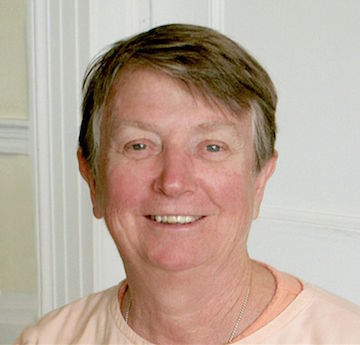
Swami Vimalananda Ma, RYT500, is an Integral Yoga sannyasi – monk. She has been involved with Integral Yoga since 1971 and Director of the San Francisco Integral Yoga Institute from 1992-2011. She specializes in teaching yoga philosophy and spiritual counseling.

2021-04-15T14:35:37-07:00April 15th, 2021|

Why is Beginner’s Mind Important in Meditation?

by Katharine Bierce

Do you feel stuck in your meditation practice? Do you find yourself striving to be a “better” meditator and feeling frustrated when you think you’re “doing it wrong?” If so, keep reading. Beginner’s Mind is a concept from Zen, but you can also apply it to whatever meditation practice you have. 

Suzuki Roshi discusses beginner’s mind at length in the book Zen Mind, Beginner’s Mind. In the beginner’s mind, there are many possibilities; in the expert’s mind, there are few. When you pay attention to something with the eagerness and curiosity of a beginner, what becomes possible compared to when you bring a bunch of ideas about how things are “supposed” to be? If you ask a class full of kindergarten kids who is a dancer, a painter, a singer, most of them will raise their hand. As we grow up, only adults who work in those professions or have those hobbies may say, “Yes, I’m a dancer” because adults typically assume you have to be an expert at something to do it. 

In that way, beginner’s mind is like embracing childlike enthusiasm and wonder to explore the world with a fresh perspective, every moment.

Beginner’s Mind is Non-Striving

A lot of times, in meditation as in everyday life, we’re trying to get somewhere else: to be calmer, to be more focused, to be a “better person.” The problem is, trying to get somewhere else, especially in meditation, creates physical tension and mental stress. In his book Be Here Now, Ram Dass writes about the importance of being present, saying, “Before enlightenment, chop wood and carry water. After enlightenment, chop wood and carry water.” The beginner’s mind view of this is that as we wake up, we learn to do even our usual activities paying attention to the actual activity itself, being present, rather than caught up in our ideas, expectations, or beliefs. 

I recently experienced beginner’s mind while I was recovering from a concussion. Near the end of December 2020, a car door hit me in the head and I spent January until the end of March recovering. For a few weeks, it was really hard to focus my attention in the way that I was used to in meditation. Trying to focus on the breath with close attention felt anywhere from extremely difficult to impossible. Was I a bad meditator because I couldn’t practice anapanasati, or mindfulness of breathing? Was all the expertise I had cultivated in more than a decade of formal meditation practice suddenly gone? No. Even though my attention came and went, I still had awareness (which is distinct from attention, as noted in The Mind Illuminated). I still remembered the attitude I had cultivated prior to my accident that being kind to myself was important. So I was able to embrace a perspective that concussion-mind offered: being present in each moment as a meditation.

Beginner’s Mind and Openness

In another Zen story, a student goes to the teacher to ask for teachings. The teacher pours tea into the student’s cup, but doesn’t stop pouring it – the cup soon overflows. A cup is useful when it’s empty. If it is already full of tea, no more can be added, just like how the student is coming with preconceived notions about meditation, so the teacher can’t add anything useful for the student. Being open is also discussed in Lao Tzu’s Tao Te Ching (I like Ursula Le Guin’s translation) where Lao Tzu discusses how a room or a cooking pot are useful when they’re empty. Flipping one’s perspective from focusing on a thing to focusing on the space within the thing is one example of the perspective shift that beginner’s mind can help with.

 Beginner’s Mind and Letting Go

Unless we practice beginner’s mind, as we get older, our ideas about ourselves and the  world tend to solidify. As a bumper sticker might say, “Enlightenment is not what you think.” Meditation isn’t even about attaining the perfectly peaceful state of mind: the Buddha said that what he taught was just about suffering and the end of suffering. States of mind come and go, so in cultivating beginner’s mind, we can be present with whatever is happening without getting stressed out about what “should” be happening. 

Beginner’s Mind is Not What You Think

Another Zen saying says, “The finger pointing to the moon is not the moon.” Ultimately, the irony is that whatever I say about Beginner’s Mind, it’s still not it exactly (“the moon”), because you have to experience it for yourself. It’s a paradox similar to Suzuki Roshi’s saying, “You’re already perfect, and you could use a little improvement,” which points to the fact that we already have a mind, a body, and everything we need to wake up, but we still benefit from formal meditation practice anyway. 

Ideas for a beginner’s mind meditation practice

  • Do The Work by Byron Katie: it’s a way to use your thinking to potentially go beyond thinking. When you find yourself stuck in an unhelpful thought, such as one that provokes anxiety, contemplate these four questions: 
    • Is it true? 
    • How do I really know it’s true? 
    • Who am I when I believe that thought? 
    • Who would I be without that thought? 
  • As you eat your lunch, just eat your lunch. Don’t multitask. Eat one bite at a time and put down your fork between bites. What does each bite taste like? Can you notice your lunch with each of your senses: sight, sound, smell, taste, touch? 
  • When you sit, sit; when you walk, walk; when you eat, eat; when you sleep, sleep. When you notice yourself trying to be somewhere else, or someone else, congratulate yourself for noticing, and try dropping or setting aside the “need to fix.” What remains?
  • As you listen to someone speak, just listen to them. What are their body language and words communicating? Notice when you try to plan your response to them, and see if you can let that go and just be present with them. 
  • Create space by shifting time: Add 5-15 minutes to your usual activities for one day, to allow extra time, and at the end of the day, see how you feel. For example, if you normally take 30 minutes to drive somewhere, try allowing 35 or 45 minutes and notice if you feel more relaxed when you arrive.
  • As you watch your breath in meditation, see if you’re judging yourself for “doing it right” or “wrong.” See what happens when you allow thinking, judgments, etc. to just be there without trying to believe them or push them away, and come back to the physical sensations of breathing, as if you are noticing the breath for the first time.

I hope these practice suggestions are helpful. If you need more inspiration for beginner’s mind, go to a dog park and watch the dogs run around. No matter how many times they go to the same place, dogs eagerly sniff the ground as if it were the first visit. It’s good meditation inspiration!

Katharine first learned about meditation at an event with free food during college in Chicago in 2009. After attending classes with Shambhala, she started an almost-daily practice in 2012 while working in consulting in New York City. Her influences include Nikki Mirghafori, Pema Chödrön, Vipassana in the style of S.N. Goenka, Tucker Peck, Culadasa, Jeremy Graves, The Mind Illuminated, Rev. angel Kyodo williams, somatic meditation with Neil McKinlay and Norman Elizondo, and the insight meditation teachers at Spirit Rock. In March 2020, she completed a month-long meditation retreat, which is her seventh retreat of a week or more. Katharine works full time in technology marketing at a Fortune 100 company in San Francisco and also teaches yoga on evenings and weekends with Business Casual Yoga.

2021-04-09T07:00:54-07:00April 9th, 2021|Tags: |

Student of the Month: Michael Bettinger

I do not believe adolescence ends until one is twenty five years old. That’s when the brain is fully developed and we can truly see how our actions will affect us for the rest of our lives. When I became twenty five I made a number of significant changes in my life, including making a lifelong commitment to myself to do something for my mind, body, emotions and spirit every day of the week, with the understanding that it is ok to miss one or two days a week in any of those categories. So at age twenty five I began to take an adult ballet class every day after work and on Saturday mornings. When I moved to San Francisco (from New York City where I was born and raised), I started taking my daily ballet class at Dance Spectrum, which was located on 22nd Street and Mission Street.  I had no intention of performing but I did wind up as a member of the corp de ballet for Dance Spectrum when they needed a lot of extra dancers for a large performance. I also danced with the Gilbert Chun Dance Company that performed mostly at nursing homes and senior residences.  That lasted until I was forty. At that time, my work schedule changed and I could no longer attend daily ballet class. So instead I joined a local gym and began weight training since I could do that on my schedule.

That lasted for thirty years, until I was seventy years old. By that time I had grown tired of weight training and decided I needed to do something else to stay limber and in shape. When I was twenty five I had taken a couple of Yoga classes at the Integral Yoga Institute in New York City. Over the years I used a number of the asanas I earned there as my warmup exercises before ballet class and before weight training. The gym where I had membership has a full schedule of exercise and Yoga classes at their various locations. So early in 2016 I began taking Yoga classes. For the first year of practice it was usually about two classes a week. Then in the second year of practice, it was more like three classes a week. I continued to do some light weight training on the other days of the week. 

On New Year’s Day in 2016 I finished a Yoga class and on my way back to my car, I was thinking about the Yoga classes I had taken and made a commitment to myself to take a Yoga class every day, again with the understanding that it would be ok to miss a day or two a week. I chuckled inside thinking this was on New Year’s Day and I had just made a “New Year’s Resolution.”  It was a matter of coincidence since I don’t really believe in New Year’s Resolutions. And for the next two years I remained committed to that schedule.  

Then last year in March the pandemic hit.  The shelter in place order for senior citizens was issued by Mayor Breed about March 7th. I remember saying to my Yoga teacher that this would be the last class until further notice and that I would try to take my daily class via Youtube. So that is what I started doing. I have also been a member of Congregation Sha’ar Zahav (located on Dolores Street and 16th Street, just down the hill from IYI). The rabbi, Mychal Copeland, in addition to being a rabbi also happened to be a yogi and a certified Yoga instructor. She had been holding a once a month Yoga class I had been attending on Saturday mornings. But with the pandemic, that quickly changed to a zoom Yoga class. After the first zoom Yoga class with Rabbi Copeland, several of us were chatting online, including myself and Stuart Dick. I mentioned the difficulty I was having with the Youtube Yoga classes and Stuart let me know that the Integral Yoga Institute of San Francisco was also doing Zoom Yoga classes.  So I checked the IYI website and started attending classes through IYI.

Now when I was attending in person Yoga classes I usually had to miss one or two days a week. Given travel time I had to have a three hour block of time free to attend an in person Yoga class.  With the Zoom classes I realized that was no longer a factor. So I began to have a daily practice through the zoom classes every morning at IYI. I had not any plan to set any sort of record but sometime after a few months, I realized that I had not missed a day’s Yoga class. Almost all of the classes were with IYI but I also attended Zoom Yoga classes through my synagogue and a few other places. When Thanksgiving came around and IYI took the day off, I attended a private Yoga class given by a Yoga teacher in Berkeley.  On Christmas and New Year’s Day when IYI was again closed, I took a Yoga class through Youtube, one given by Swami Satchidananda and another Hatha Yoga class I found on Youtube.  Then in March of this year I realized I had gone more than 365 days practicing Yoga in a row.

In a lot of ways, my life has been about commitment. I realized that all the good things in my life that I have  came through patience and commitment.  In addition to my commitment to a daily Yoga practice, I was a marriage and family therapist in private practice for most of my adult life until retirement.  I have also been married to my husband now for thirty five years. When I was 53 years old I began to study and play the conga drums in Latin jazz ensembles. I also practice on the drums daily. It is difficult for me to say what are the results of this commitment to a daily practice since I do not know what my life would be like had I not made this commitment. But I have faith that my life has improved mentally, physically, emotionally and spiritually because of this daily practice of Yoga. And I would not have been able to do it without the daily Zoom classes through the Integral Yoga Institute of San Francisco. For that I am exceedingly grateful. 

2021-04-04T10:58:11-07:00April 5th, 2021|Tags: |

Keeping our Eyes on the Sacred

by Swami Ramananda

Human beings are by nature attuned to the threats around them as a primary means of survival. For the past year, threats to our safety have abounded in numerous forms: Coronavirus, racial injustice, the climate emergency, political violence, and senseless killings. Our senses have been inundated with tragedy and loss, injustice and violence, shock and sorrow. And the news media are ready to feed the public appetite for danger.

In the U.S., where recent gun violence has again left many families in mourning, by far the greatest number of deaths are from suicide. Everywhere, there are people suffering from a plague of desperation, exhaustion, and despair. Let us not fall into that camp.

While it’s important to be aware of and respond to the distressing conditions we witness in our world, it’s just as vital that we keep our eyes on the sacred, the blessings, the miraculous. We do ourselves and our communities an injustice if we fix our gaze only on the tragedies around us. There are people all over the world devoted to serving their communities, healing the earth, creating new pathways for racial and economic equity, and transcending the traditional boundaries that divide us. Let us be equally inspired to act with courage in our hearts.

Spring is a time for new beginnings when the natural world, only a few months before looking dead, now bursts forth with new life. The holy days of both Passover and Easter celebrate the return of the Light and the triumph of Spirit, and there is light at the end of the pandemic tunnel if we remain committed to protecting each other. 

The need of the hour is for hope, for acknowledging the beauty around us, for seeing the wholeness in each other alongside the fragmented and wounded, for touching the unchanging peace within. The thoughts predominant in our hearts and minds have a subtle but powerful effect on the collective consciousness of our planet and are the foundation from which we act. So we need to keep touching that Divine Presence within, in whatever way we know how, to bring that spiritual light and energy into expression, and to see the unity behind the diversity.

When we turn our attention to the blessings of this moment, there is much to be grateful for. Effective vaccines are steadily circulating and there are numerous heroes in the medical field working with tremendous dedication. There are spiritual groups all over the world praying for their communities and caring for those most in need. There are grassroots movements fighting injustice.

We also keep our lives in perspective when we appreciate the beauty around us. Imagine taking time to feel gratitude for the pure smile of a baby and the small acts of kindness from a store clerk or the driver who waves us ahead. We profit immensely from marveling at a hummingbird in flight, keeping company with a forest or with a slowly darkening sky at dusk.

The human spirit is resilient and we are capable of much more than survival. Our grandparents and parents came through great adversities and showed their capacity to renew and rebuild. Let us affirm that same spirit in ourselves and help heal our world with hope and compassion. Let us keep our eyes on the sacred.

Swami Ramananda is the Executive Director of the Integral Yoga Institute in San Francisco and a greatly respected senior teacher in the Integral Yoga tradition, who has been practicing Yoga for over 45 years. Ramananda offers practical methods of integrating the timeless teachings and practices of Yoga into daily life, and transforming the painful aspects of human experience into steps toward realizing one’s full potential.
He leads beginner, intermediate and advanced level Yoga teacher training programs in San Francisco, and offers a variety of programs in many locations in the U.S., Europe and South America. Ramananda co-developed the Stress Management Teacher Training program with Swami Vidyananda, has trained many teachers to bring Yoga into corporate, hospital and medical settings, and has taught mind/body wellness programs in many locations. He is a certified Yoga therapist and founding board member of the Yoga Alliance, a national registry that supports and promotes yoga teachers as professionals. He is a co-founder of The Spiritual Action Initiative (SAI) which brings together individuals committed to working for social justice for all beings and for the care and healing of our natural world. His warmth, wisdom and sense of humor have endeared him to many.

2021-04-02T15:17:39-07:00April 2nd, 2021|
Go to Top