Student of the Month: Ankita Jasuja

Dayalan: Tell us a bit about yourself, what you like to do, work, and/or things you are most interested in and passionate about, and anything else you may wish to share.

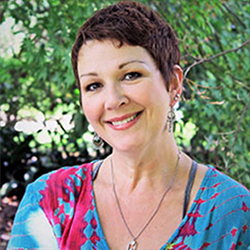
Ankita: Hari OM! My name is Ankita, in Sanskrit it means “One with auspicious marks.”

I was born and raised in India and moved to the USA in 2013. I’ve studied electronics and communication engineering in my undergrad and have worked in different industries both in India and USA.

In my free time I like going for long walks in nature and my favorite spot is Tilden park in Berkeley. Besides this, I indulge myself in pursuing my hobbies and interests like taking weekly yoga classes, riding my bike, and cooking vegan & vegetarian meals. I have followed a vegetarian diet since childhood and also relish vegan food.

For a long time, I spent hundreds of hours imbibing knowledge regarding my varied passion towards sustainable and more compassionate being, devoting time to learn the various practices of ayurveda, nutrition science, spirituality, learning food and  farm industry practices, and animal welfare. I am trying to bring more and more conscious living choices in my lifestyle and I’m trying to replace the automatic ones passed by fast-paced modern life.

I believe one day I will contribute this back to the society and help our future generation to come back to their roots and realize the health benefits and inner peace that can be ingrained by practicing Yoga.

Dayalan: Who has inspired you most in your life as a teacher(s) or mentor(s)?

Ankita: There are so many brilliant teachers in the world and there’s so much to learn from each one of them. I’m taking a few classes every week at IYSF apart from my YTT training and meeting so many inspirational teachers.

Currently I’m enjoying Diana Meltsner’s Therapeutic Chair yoga class at IYSF. It has been kind of revolutionary for me. It gave me an awareness regarding how yoga can be accessible to every age, body shape, or even for someone recovering from an injury, or just looking for more ways of mobility and relaxation. She’s a phenomenal teacher.

I love my Wednesday and Friday morning dose of Mia Velez’s mixed level yoga classes which are a wholesome package for mind & body. I love how her classes help to ground my body and mind into the present moment and prepare me for meditation.

I’m also enjoying talks by Swami Ramananda, Divyananda Ma and Karunanda Ma; kirtans with Astrud Castillo and noon meditations with Snehan Born at IYSF.

Out of my personal interest in specifically understanding Indian food and nutrition, I love listening and reading books of Rujuta Diwekar (India’s leading sports science and nutrition expert) as she emphasizes a blend of traditional food wisdom and modern nutritional science for a healthy body and mind.

Dayalan: What has been one of the most valuable learning experiences you have had?

Ankita: I believe working through difficulties in my life has taught me many lifelong valuable experiences. All of the experiences have been valuable for my growth till now. But if I have to pick one, I would give my first 200-hour BIPOC YTT with Integral Yoga SF a complete credit. The most exciting part of the training was learning the difference between knowing yoga and understanding yoga. The true learning for me out of this training was to understand that yoga is just not about a perfect body or about perfectly memorizing sutras and mantras in Sanskrit but the value that a yoga practice and community bring to your life. This training certainly has increased my quest to dive deeply into it.

Dayalan: What drew you to yoga and meditation?

Ankita: Listening to the experiences of a few friends. Also, I’m always captivated by the music and chanting and I find it to be a profound way of being joyful.

Dayalan: What benefits have you found in your personal practice?

Ankita: It is a work in progress. Overall, I would say, it has benefitted me at all levels, but I’ll have to practice more insightful self-observation to explain the benefits more clearly.

Dayalan: I understand you are in the 1st BIPOC Teacher Training offered with Integral Yoga Institute. How has that experience been?

Ankita: I must say I’m fortunate enough to be part of it. Along with deepening my own personal practice for yoga I had a strong desire to deepen my understanding of yoga as a whole and no better place other than with my wonderful BIPOC community. I will offer a brief insight; maybe it can inspire others to be part of it in the upcoming years.

In the beginning we all got books on Hatha yoga, science of breath, meditation, the yoga sutras, anatomy, yogic diet, breath of life, and a few others.

We explored all 8 limbs of yoga – the Yamas and Niyamas (yoga ethics), Asanas (physical postures), Pranayama (breathing practices), Pratyahara, Dharana (mindfulness), Dhyana (meditation), and Samadhi (freedom and living joyfully).

Apart from our main program teachers, Mukunda Marc Morozumi, Mia Velez, Rev. Kamala Itzel Hayward, and Arturo Peal, we also had a diverse background of speakers sharing on various topics, like cultural appropriation of yoga, yogic diet, building equity, yoga and body coalition, and a conversation about gurus. Along with hatha yoga it has also focused on other branches of yoga- Raja yoga, Karma yoga, Bhakti yoga, Jnana yoga, and Japa yoga. These are a few names to mention but there were so many subtopics shared and explored further.

Enabling conversations around yoga and race, hosting different BIPOC speakers, and focusing on healing from ancestral trauma— this part of our training has been super inspirational for me, since it has focused on celebrating diversity and wellness by making yoga accessible to everyone.

There has been consistent 1:1 support of teachers who have been highly approachable and it was very easy to reach out to them after the hours of the training through emails and appointments. There has always been a Q&A time after every session and recordings of each class have been a huge resource. Breakout room practice sessions were crucial to the learning process.

Three months already into the training and one more month to go, I feel like one of the reasons I got so much out of the experience is because I went into it with no hard expectations from training and myself. I’m taking it day by day. It really is a journey and not a destination. I will always be eternally grateful for everyone associated with this training and IYSF for providing this platform.

Dayalan: What are your future aspirations?

Ankita: I want myself to be immersed in yoga while honoring its root and also to step up and serve others while exploring my own journey and all of this while also being an animal welfare activist. I’ll continue to travel and focus on strengthening my own practice.

असतो मा सद्गमय ।

तमसो मा ज्योतिर्गमय ।

मृत्योर्माऽमृतं गमय ॥

ॐ शान्तिः शान्तिः शान्तिः ॥

Lead us from unreal to real

Lead us from darkness to the light

Lead us from the fear of death

To knowledge of immortality

OM peace peace peace

Our Responsibility to a World in Crisis

It is time. It is past time. We are witnessing a myriad of overlapping world crises manifesting in destructive ways. We all, every one of us, need to take some form of action now. Our world is calling us to shift in a way we have never had to in our history. 

Change and suffering, as we are taught in Yoga philosophy, are the nature of the world. As Sri Patanjali lays out in the Yoga Sutras, non-attachment and spiritual practice are the way forward. They help us to make the shifts that are necessary to pursue the spiritual path in the material world. They help us become grounded enough to see beyond the boundaries of our egos and a self-centered view of the world, and to experience a connection to all of Creation. These teachings are the bedrock of Yoga philosophy. 

Our world is in crisis on so many different levels. To remain true to our foundation and the historical call of Yoga to be of service (think Swami Vivekananda, Gandhi, or more in the past, Kabir, Tulsidas, Mirabai), we need to rise and meet these challenges. We can be the example, the support, the agents of change to make the needed shifts in priorities in our communities in this time of crisis. 

Integral Yoga International has been deeply reflecting on these issues and is beginning to make necessary changes to our organization to address equity and racism in our centers. We have increased the number of workshops led by people of color and have added more people of color to our administrative teams. We are offering workshops that help our predominantly white sangha explore ways to foster allyship with BIPOC. We now have our first BIPOC Basic Teacher Training class in progress. There is plenty more work to be done, but we are making strong efforts in this regard.

There is another very compelling and intersecting crisis that we as a community need to address. The climate emergency is spiraling, growing incrementally to threaten the very existence of our world. If we look at it full on, we know that it is causing suffering like no other we have seen. We have come to a point where we have to face the hopelessness, anxiety, grief, and frustration. We have to reflect on it individually and talk about it together to fully acknowledge it. And then we have to get up and act. What a blessing to have the tools of Yoga to help us act with discernment and compassion. 

Krishna exhorts Arjuna in the Bhagavad Gita to face his destiny, his path, his dharma. That is exactly where we are in this moment – facing a challenge that is full of the unknown, of suffering, of the potential loss of life as we know it. We can turn our heads or we can face it full on and do everything we can to meet it, trying to mitigate the suffering with compassion and informed action to effect the needed changes. 

Selfless action, or Karma Yoga, is done with no attachment to the outcome or personal motive. This means being willing to sacrifice our personal conveniences and desires for the sake of the greater good. But when we do serve with selfless hearts, blessings come. Our anxieties diminish as our sense of love and connection for our world is intensified. We can feel that we are aligning our lives with a Higher Will and acting in harmony with our values and the foundational teachings of Yoga. 

We know many of you are making efforts to personally address the climate emergency. We can all do things like shift our consumption of resources, food, and energy. We can look at our day to day habits and find ways to use less water, recycle more and reduce our carbon footprint. That is a significant and responsible way to effect change.

We may think that our use of plastic bottles every day is not harmful, or if given up, will have no real effect. But will various companies continue to make plastic bottles for individual use if we are not buying them? We can make a difference with every choice we make, and it is empowering to know that, no matter how small an action, together we can lessen our negative imprint and help to restore our earth.

 Here is a recent article with a remarkable tool to assess your food and energy consumption habits and footprint. It offers clear answers to how we can personally impact climate change. The authors describe this tool, saying, “To find out the climate impact of what you eat and drink, choose from one of the 34 items in our calculator and pick how often you have it.” It is as simple as that. It shows how each of us can directly express our concern and compassion for our fellow humans and our beautiful earth.  

Along with this personal downsizing and care, societal policy changes are imperative. Most major corporations and our government have to change policies and practices to address the devastating impacts of overuse and disregard for environmental implications. Consumerism and the capitalistic practices that support an unsustainable lifestyle and bring harm to our earth have to be stopped. These policies and the needed changes seem out of our reach. But as Martin Luther King, Nelson Mandela, and John Lewis have demonstrated, nonattachment to our own selfish interests, selfless service, compassion, and connection can bring positive, needed change.

We are asking our international sangha to dedicate themselves to that right effort to find a path forward. We need to effect change on three levels: personal, within our communities, and on a more global level. All of us have different skill sets and interests. We can all contribute in some way, at some level. But it is past time for us to hope that we won’t have to make sacrifices, that we are too busy to think about it, or that someone else can come up with a plan of action. 

We are each of us responsible. We are each of us talented. We are all so very blessed in this life to have found the teachings of Yoga. If we come together, our love and commitment to each other and the teachings can help us build and grow something beyond what we can do individually. We can harness our energies to grow a collective set of actions and practices to effect positive change.

 We all must consider our own path to address this crisis. To prompt thinking and inspire action, we invite all our international sangha to save this date and join us on Saturday, November 20th from 11-12:30 pm PT for The Climate Emergency: What We Can Do Now. We will offer ideas, brainstorm, do some deep listening and pray in an effort to chart a path forward to address the climate crisis. Please join us.

Lokah Samastah Sukhino Bhavantu.

May the entire Universe be filled with Peace and Joy, Love and Light.

Sarani Fedman and Swami Ramananda

Swami Ramananda is the Executive Director of the Integral Yoga Institute in San Francisco and a greatly respected senior teacher in the Integral Yoga tradition, who has been practicing Yoga for over 45 years. Ramananda offers practical methods of integrating the timeless teachings and practices of Yoga into daily life, and transforming the painful aspects of human experience into steps toward realizing one’s full potential.


He leads beginner, intermediate and advanced level Yoga teacher training programs in San Francisco, and offers a variety of programs in many locations in the U.S., Europe and South America. Ramananda co-developed the Stress Management Teacher Training program with Swami Vidyananda, has trained many teachers to bring Yoga into corporate, hospital and medical settings, and has taught mind/body wellness programs in many locations. He is a certified Yoga therapist and founding board member of the Yoga Alliance, a national registry that supports and promotes yoga teachers as professionals. He is a co-founder of The Spiritual Action Initiative (SAI) which brings together individuals committed to working for social justice for all beings and for the care and healing of our natural world. His warmth, wisdom and sense of humor have endeared him to many.

Sarani Beth Fedman has studied, practiced and taught yoga for over 20 years. Most of her teacher training was completed at Yogaville, Virginia, the home of Satchidananda Ashram. These teacher trainings through Integral Yoga include Basic and Intermediate Hatha, Prenatal and Postnatal, Meditation, Raja (Philosophy), Children’s and Special Needs Yoga, Restorative, Reducing Anxiety, Accessible and Therapeutic Yoga. She has also studied Mindfulness Yoga with Frank Jude Boccio and Buddhist Meditation with Thich Nhat Hanh, Sharon Salzberg, and Joseph Goldstein. Her approach is inclusive and adaptive with the understanding that everyone can benefit from the practices and teachings of the ancient wisdom of yoga. Each of her therapeutic students receives support through an individualized practice plan with the goal to reduce stress and discomfort and promote healing and a deep sense of well being. She has received her yoga teacher certification from Yoga Alliance at the RYT500 level and is a certified yoga therapist through the International Association of Yoga Therapists.

2021-09-14T09:42:22-07:00September 3rd, 2021|Tags: |

What Does Self-Realization Mean to You?

by Swami Ramananda

At a satsang in New York some years ago, I raised the question, “What matters most to you?” I spoke about the importance of clarifying what we value and reflecting on the ultimate purpose of our lives. Speaking to a group of yogis, I was not surprised that someone suggested right away that moksha or spiritual liberation was most important. We all might understand liberation, or Self-realization, to be the goal of Yoga, but what does that really mean to us?  It remains a vague and distant idea that may seem to have little relevance to our daily lives. How do we actually go about pursuing enlightenment? 

We often think of realization as something passive that happens by stilling the mind, as the Yoga Sutras imply. But it is better understood as an active response to life, as a way of bringing to life or embodying the qualities we associate with our spiritual nature: compassion, peace, joy. True awakening is not something that happens in isolation; it blossoms—a fruit of both our Yoga practice and our conscious choices in relationship to each other and our environment.

Imagine how it would feel for our essence-nature to be as tangible and active as the body and mind while pursuing our goals. Every time we are fully present to life and act with mindfulness, we take a step toward this reality. Our true nature is expressed each time we recognize with gratitude all the ways we are blessed, and allow that sense of abundance to overflow as generosity with others.

Pausing and breathing to allow a sense of peace to arise in a quiet moment is a beautiful step toward liberation. Bringing more compassion into an interaction in line at the store or in heavy traffic is a genuine stride in spiritual growth. Taking the time to be fully present and experience the joy of playing with children or listening deeply to a friend who needs to talk are enlightened choices. These are examples of how spiritual realization is pursued in each moment that we act while holding in our hearts a clear vision of what matters most to us.

The late Yoga teacher and author Michael Stone powerfully articulates the importance of bearing witness to the world we live in with all its injustice, suffering, and corruption, as well as its magic and majesty. He describes in detail how spiritual life includes taking responsibility for our participation as a member of this planet. In his book, Yoga for a World out of Balance, he writes, “It’s hard to wrap our minds around the way transportation patterns, digestion patterns, pollution, consumption, even the dinner table itself, impact the web we call life. Without attention to such connections, choices become life-destroying rather than life-affirming.”

I believe our spiritual practice is much more potent when seen in the context of the condition of our world, our communities, and our homes. Everyday choices, as well as our long term goals, take on new relevance when we realize that each action and every focused thought is a tangible contribution to the collective consciousness of our planet. Our science-oriented culture does not appreciate the power of the subtle energies we generate in our hearts and minds. Yet how many times has a gesture of generosity had a ripple effect that touched many hearts? How many prayers for healing have brought soothing relief to someone who is suffering?

Each time we disengage ourselves from the grip of habitual ego-driven thought, we bring a greater awareness into presence. Sri Swami Satchidananda strongly affirmed that each time we pray for peace in the world, as we do at the end of each Yoga class, we send potent energies out into our world. Even though we may not see the effect, each instance of mindfulness, every act of kindness, is a significant act in co-creating reality.

The effects of our actions and choices can sometimes be destructive. On a larger scale, we are systematically destroying our home, Mother Earth, and our response to this crisis is a crucial element of spiritual life. Thus, spiritual practice can also include promoting green energy, conserving water, and taking concrete steps to withdraw our support of the wasteful culture of consumption we live in, as well as the mass production of harmful chemicals that pollute our environment.

We might feel that the full experience of enlightenment is far away from us, but we experience a taste of it when we serve, love and give. It is our nature to give in response to all we receive. Sri Swamiji articulates this beautifully in his book, The Golden Present

“If you think in terms of how much benefit we get just by being here on the surface of the earth, how much we get from nature, how much we get from people, how much we get from association, we receive constantly.  Even the smile from a baby is a gift.  You don’t have to give it back at the same place if you get a smile from a baby, do something to help a poor person somewhere on the road, or a sick person—somebody who needs a little help. That will balance it out.”

When we sincerely reflect on all that we have been given, we cannot help but feel abundance. We can reflect further on how the United States and other western countries have taken advantage of less powerful countries, and how this dominance has contributed to the imbalance of wealth and justice in the world. In a magazine article I read, the Buddhist teacher Thich Nhat Hahn wrote, “The pain of one part of humankind is the pain of the whole of humankind. We have to see that and wake up.”

Those of us who live with material security and abundance easily take those things for granted. I feel we have an obligation to serve those less fortunate in any way that we can. We may not be able to negotiate peace settlements or end world hunger, but we can each take concrete steps to volunteer our time right where we are. We can offer free Yoga classes, serve in a soup kitchen, tutor underserved children, or reach out in myriad ways to those in need. 

Serving in these ways is a natural expression of gratitude and arises from the recognition of our interdependence with all of life. Actions performed with genuine care for others are healing for our hearts, and we find joy in giving rather than looking for a reward or outcome. This is how we really bring our Yoga practice to life.

Every choice we make, everything we do, can be guided by either a ‘me’-centered or ‘we’-centered mindset. Understanding how our daily actions are the moment to moment expression of what matters most to us can transform our lives, bringing meaning to every aspect of it. May we all learn to see how awakening to our own inner Light is actually the same as manifesting that Light into our world. 


Swami Ramananda is the Executive Director of the Integral Yoga Institute in San Francisco and a greatly respected senior teacher in the Integral Yoga tradition, who has been practicing Yoga for over 45 years. Ramananda offers practical methods of integrating the timeless teachings and practices of Yoga into daily life, and transforming the painful aspects of human experience into steps toward realizing one’s full potential.
He leads beginner, intermediate and advanced level Yoga teacher training programs in San Francisco, and offers a variety of programs in many locations in the U.S., Europe and South America. Ramananda co-developed the Stress Management Teacher Training program with Swami Vidyananda, has trained many teachers to bring Yoga into corporate, hospital and medical settings, and has taught mind/body wellness programs in many locations. He is a certified Yoga therapist and founding board member of the Yoga Alliance, a national registry that supports and promotes yoga teachers as professionals. He is a co-founder of The Spiritual Action Initiative (SAI) which brings together individuals committed to working for social justice for all beings and for the care and healing of our natural world. His warmth, wisdom and sense of humor have endeared him to many.

2021-08-04T18:49:50-07:00August 4th, 2021|

Always Communing with Our Guru

by Swami Vimalananda

Even though the day to formally celebrate Guru Poornima has passed, our relationship with our Guru is forever constant. Not only does a Guru light our way, but is the ideal mentor. She/He wraps us in love, steadies us on the path, always pointing the way, and is there to take our hand through our bodily death and beyond. No one is closer to us — in fact, Sri Gurudev has said, “I am closer than your own heart.”

A long time ago, I was sitting on a log looking out at the ocean and saying to myself, “My God, I have completely screwed up my life, and there is no easy out, I have no idea what I should do!” At that moment I felt a warm golden light surrounding me and an inner voice saying, “You will be fine.” I only noticed the light disappearing when I felt the cold and twilight of the evening. I got in my car and went home. After that it wasn’t easy but looking back, sure enough, I was fine.

If we have fear, it only means we have forgotten that the Guru is there, always there, and our minds have just created a false narrative. Our beloved Gurudev will never lose touch. He will never abandon us; even when we lose touch with him, it just means we need to calm our minds enough to realize He is still there.

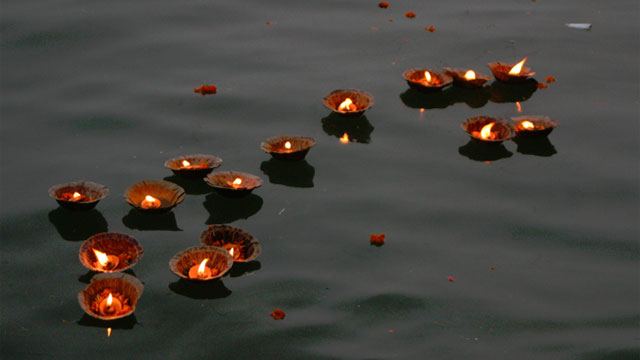
“Only a candle that is lit and shining can give a little light to the other candles. You have to come, touch the lamp, and get a spark before you get lit. That is the duty of a disciple. After having seen a lit candle, you should go, bow down and then get the touch. Once you have gotten that, you work on yourself, make your life brighter. Of course, since you remember that you got the light from another lamp, you are grateful to that light. This is why we dedicate a special day each year in honor of all the great masters, sages, and saints. They were flaming torches. We touch them in some form or other and get a little spark. We humble ourselves in front of those great sages and saints and express our gratitude, and doing that we are able to receive more.”   —Sri Swami Satchidananda

Jai Sri Satguru Maharaj Ki!


Swami Vimalananda Ma, RYT500, is an Integral Yoga sannyasi – monk. She has been involved with Integral Yoga since 1971 and Director of the San Francisco Integral Yoga Institute from 1992-2011. She specializes in teaching yoga philosophy and spiritual counseling.

2021-07-30T21:52:45-07:00July 30th, 2021|
Go to Top