Introduction to Yoga Nidra

by Dr. Mark Halpern

Yoga Nidra is the art of conscious deep relaxation. The body is asleep, but the mind is awake and an active participant in the healing process. In this state, you can access the subtle flow of energy, called prana, in the body. One of the goals of this practice is to identify and remove blockages to its flow.

Yoga Nidra is a powerful healing practice for body, mind, and consciousness. Your body is a densely packed field of energy. Through this field, prana, or life energy, flows through the 72,000 different channels described in Yoga. These channels are called nadi. Every thought, every feeling, produces a change in the flow of prana. Disturbances in the flow define our suffering, both physically and emotionally. Prana controls the functioning of our body. When the flow of prana is disturbed, the systems of the body function less than optimally. The practice of Yoga Nidra restores the proper flow of prana throughout the body and mind, allowing the systems of the body to function properly.

Yoga Nidra maximizes the potential of the body and mind to heal itself and can be practiced to support healing from any condition. In a natural, relaxed state, the mind is calm and the body functions properly. As we engage the world of drama, the mind becomes agitated and the physiology of the body is altered. These changed weaken the body. The immune system fails and the body becomes sick. Yoga Nidra restores the mind to a state of calmness and improves the functioning of the immune system.

The importance of deep relaxation to our health and well-being has its origins in Yoga, the world’s oldest system of quieting the mind. As the knowledge spread out of India, it impacted the systems of healing and spirituality around the world. As Yoga teachers came to the United States during the twentieth century, they emphasized the importance of deep relaxation techniques. This significantly influenced the personal growth field and the field of modern psychology. It also became the foundation of some techniques within a branch of psychology called hypnotherapy. From this state of deep relaxation, suggestions can be implanted in the subconscious. Yogis call these suggestions sankulpa, or intention. It is through sankulpa that our personal world and all of our experiences come into existence. Alternative psychologists, often without knowing the proper name of this technique and its broadest implications, were the pioneers of Yoga Nidra in the West. They modified it and called it by a variety of names, included guided or progressive relaxation. Today, the Yoga Therapy community has reclaimed this technique, bringing it back to the practice of Yoga for healing body and mind, for deepening one’s experience of meditation, and for expanding consciousness.

In 1987, after being crippled by a severe autoimmune illness, I spontaneously entered the state of consciousness known as Yoga Nidra. I was crippled and bedridden with severe arthritis, high fever, and other symptoms. Laying in bed, I began to perceive my subtle body and the flow of energy through it. I noticed blockages to the flow and through a combination of what I can best call awareness and intention, I learned how to release those blockages. I monitored the flow of prana in my subtle body and I practiced removing blockages several times each day. With each practice, I observed how the channels through which energy flows stayed open longer and longer. After two weeks, my fever came down and I worked my way back to a wheelchair and eventually back to walking again.

After my fever came down, I lost much of the acute ability to perceive energy. At the same time, I was introduced to several recordings by a psychologist and teacher named Mary Richards. Her recordings reintroduced me to accessing this level of awareness. I then practiced entering into the state of Yoga Nidra two or three times per day for the next five years as my recovery continued. During this time, I restored my strength overcoming severe chronic fatigue and many mild reoccurrences. Since then I have practiced whenever I am tired, feel run-down, or when any illness affects my body. The healing of my body is greatly accelerated by this process.
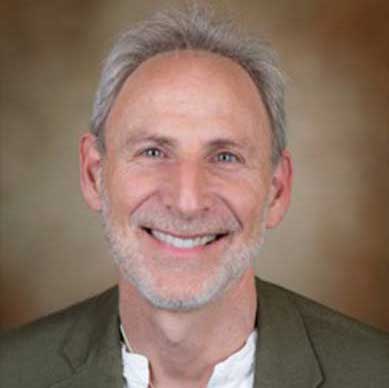
Dr. Marc Halpern is the founder and President of the California College of Ayurveda. An internationally respected expert in the field of Ayurveda, Dr. Halpern received the award for best Ayurveda Physician from the Indian Minister of Health and Family Welfare, Dr. Ramdas. He is the co-founder of the National Ayurveda Medical Association and the California Association of Ayurveda Medicine.


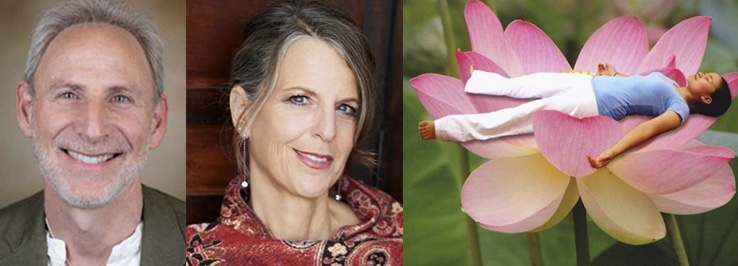
Join Dr. Marc Halpern and Dr. Andrea Deerheart for an incredible 2-day Yoga Nidra Personal Retreat
 Saturday and Sunday March 4 & 5, 2023 from 9:00 am – 4:00 pm PST (with 90 min. lunch breaks). Sign up and reserve your spot today. Space is limited.

“If you would like to experience Dr. Halpern’s Yoga Nidra as he taught it to me, please join us Friday evenings from 6:30-7:15 pm PT, online via Zoom or in-person (please register in advance). I have also experienced many benefits from this practice and it is my great pleasure to offer it to you.” – Abhaya, Yoga Nidra Instructor.

2022-10-28T19:03:27-07:00October 28th, 2022|Tags: |

Yoga Nidra Personal Retreat

IN-PERSON
$180.00
$150.00 early bird exp. 2/19/23

During this two-day program, Dr. Marc Halpern and Dr. Andrea Deerheart will be your guides as you go on a deep and personal inner journey of discovery, relaxation, and deep healing through the sacred practice of Yoga Nidra. Yoga Nidra is an ancient, classical practice of entering in a deeply relaxed but entirely conscious state of awareness. From this state of consciousness, each individual is empowered to remove the obstacles that are in the way of attaining optimal health and peace of mind and then set out on a new path of conscious creation – the manifestation of life as you dream it to be.

Schedule:

Saturday & Sunday: 9:00 am-12:00 pm & 1:30 pm-4:00 pm

This program consists of a combination of practicing Yoga Nidra* and group processing. The doctors will share stories both classical and personal and each student is supported and encouraged to be as open as possible. Sacred space, trust, and safety are core principles of this program.
*Please bring a blanket, a pillow and a yoga mat.

Dr. Marc Halpern is the founder and President of the California College of Ayurveda. An internationally respected expert in the field of Ayurveda, Dr. Halpern received the award for best Ayurveda Physician from the Indian Minister of Health and Family Welfare, Dr. Ramdas. He is the co-founder of the National Ayurveda Medical Association and the California Association of Ayurveda Medicine. Dr. Halpern is also the author of five textbooks on Ayurveda and Yoga and the #1 best-selling recording: Yoga Nidra and Self-Healing. A classically trained Sivananda Yoga teacher, Dr. Halpern has dedicated his life to the removal of suffering.

Dr. Andrea Deerheart is the passionate founder of the HeartWay, a non-profit foundation dedicated to Embracing life and Honoring Death. Using wisdom gathered from decades of guiding the living and dying; physically, emotionally, and spiritually, Deerheart has provided care and healing on the journey of conscious living and dying for more than 20 years. With a doctorate in Depth Psychology, her primary work focuses on issues relating to aging, cultural mythology, death and dying, as well as grief and loss. Deerheart is also a RYT 500 yoga teacher and a certified classical Yoga Nidra Instructor. She is also the author / narrator of the recording, Yoga Nidra: Graceful Transitions.

2022-11-08T20:07:54-08:00October 10th, 2022|Tags: , |

If My Yoga Mat Could Speak

by Jaymie Meyer

If my yoga mat could speak, it would articulate both the indescribable joy and deep sorrow I’ve felt through the thousands of hours we’ve shared.

Every morning, I bring this aging body to my practice, grateful for the ways I am still flexible and not-so-flexible. I listen to the sounds my body makes – sounds that have become old friends: the pop in my left hip when I externally rotate that femur; the click in my right hip when I extend into triangle on that side; the familiar snap from my thoracic spine when I twist to the right.

It’s a good morning when it’s all there. When I’m tight or injured or have slept funny, my body is silent. Trying to hold it all together, perhaps, it refuses to say a word.

These are the days I know to take it easy – to give up the high-energy movement I favor for a restorative practice, just for that day.

Having just the right mat surface is essential. It’s also highly personal. I require just enough stick – but stick it must! – with not too much give, ensuring the safety of my wrists in my beloved inversions. The rubber must be smooth. Not too rough on my hands or feet. Odorless.
In the 30-some years I’ve been practicing, I’ve cycled through maybe a dozen mats, and it’s been a bitter discovery that they’re like lipstick: No matter the manufacturer, once you find one you like, the next time you need it, it’s been re-formulated or discontinued.

The sweetest moments on my mat are those in yoga nidra or “yogic sleep,” also known by the less popular name “corpse pose.” In this supine position, one transcends deeply through the koshas or layers of being: body, breath, mind, wisdom, and bliss. During a 20-minute practice – or longer – I am taken to a place that is deeply restorative. I often shed tears, spontaneously, seemingly unrelated to anything specific.

I arise from practice renewed, lighter, and feeling younger. I see this same lightness of being in the students and clients I’ve worked with these past 20 years.

When a mat has begun to reach the twilight of its life, as my current mat has, after practice I lovingly pick up the tiny flecks of rubber from the gouged-out places where my calloused heels have made divots. I roll those little pieces between my fingers, pieces that have separated from the source, and I discard them, pretending perhaps that the mat isn’t as old as it seems, that it has many more moons to go.

Interestingly, every cat I’ve ever owned has enjoyed many a nap on my folded mats after I complete my yoga practice. Animals are so wonderfully in tune. No doubt they are drawn to the invisible lingering essence from hours of practice: peace, joy, surrender.

My mat is so much more than a sheet of rubber. It’s a throne, a magic carpet, a sacred place. It’s where everything takes place.


Jaymie is the founder of Resilience for Life®. Over the past 19 years, she’s educated thousands of people in stress reduction and resilience. A National Board-Certified Health & Wellness Coach, Jaymie is a licensed HeartMath provider with certifications in Ayurveda, and yoga therapy (C-IAYT). A veteran yoga therapist and educator, Jaymie most frequently serves those in mid-life who have any combination of concerns including stress, anxiety, back pain, poor sleep, balance issues, heart disease, insomnia, osteoarthritis, osteoporosis and chronic pain. In addition to teaching the Therapeutic Class on Wednesdays, Jaymie serves as a Yoga for Arthritis mentor. As a Health and Wellness coach, she works online with clients, focusing on stress reduction, weight control and optimal sleep. www.resilienceforlife.com

2020-01-30T06:27:30-08:00January 29th, 2020|Tags: , |
Go to Top