Seva: Dedication and Devotion in Action

by Swami Ramananda

The saints and sages of many faiths are dynamic examples of how spiritual awakening is accompanied by a natural impulse to serve humanity. After experiencing the interconnection of all of life, many of these great beings were moved by a profound compassion to dedicate their lives to the relief of suffering. All of the many faith traditions also recognize the importance of seva, or selfless service, as one of the primary means by which we grow on the spiritual path and experience that full awakening.

But the messages of our culture instill in us the illusion that we are all separate beings, each needing to pursue happiness as individuals. This easily leads to comparing ourselves and competing with each other for the things and achievements that seem to create a happy life. And the world economy feeds on this illusion by offering us happiness in the form of the marketplace—an endless variety of things to buy. Thus, many people find themselves living in a relentless cycle of earning and consuming that, sooner or later, leaves them feeling frustrated and incomplete, cut off from everything that really gives life meaning.

The teachings of Yoga offer a completely different paradigm. Serving others is seen as a unique spiritual path—Karma Yoga—a practice in which actions are performed with a focused mind, a caring heart, and no concern for personal gain. This intention can be incorporated into literally anything we do and it deepens as we become less dependent on the outcome of our efforts and experience a newfound freedom from tension and expectations. 

What a relief it is for me to focus fully on my work projects, free of worry, knowing that agonizing over the results only diminishes my skills. Then it can be more like play. Sri Swami Satchidananda put it this way: “Do your best, leave the rest.”

Perhaps the most powerful way this practice develops is from the joy we derive from giving ourselves wholeheartedly in service to someone or some higher purpose. Many people who work in service of others find tremendous fulfillment in the act of serving, giving, or even praying for others. Such experiences go beyond theory—they enable us to feel a deep sense of connection and belonging, a purpose for living that is larger than ourselves, and the flow of love that is a natural expression of our true nature.

An equally powerful approach to seva is devotion, service as an offering to God. Since we don’t easily recognize the Divine in each other—and the idea of a spiritual consciousness is so abstract—people throughout history have found countless symbols, names, and forms to represent this ineffable Presence that dwells within everything. This form, be it a deity, spiritual principle like peace, or a picture of a saint, can help us cultivate a higher form of love. Love directed toward God in any form inspires us to feel protection and comfort, to access an ever-present Grace and inner strength, and rise above the illusion of separation.

Yoga offers techniques to cultivate this deep love, which are collectively known as Bhakti Yoga. These practices include chanting the names of the Divine to feel its Presence (kirtan), creating an altar and making heartfelt offerings (puja), and performing actions with reverence and devotion (seva).

When we perform duties as an offering to a beloved personification of the Divine, we give our very best. In the Bhagavad Gita, Sri Krishna says, “Perfection in action is Yoga.” When we strive to see ourselves as instruments of the Divine—the hands of God at work in the world—we access and allow ourselves to be guided by an inner strength, much greater than our own. We let go of our personal desires without force or denial by willingly surrendering to a Higher Will.

The intention to serve a Higher Will inevitably leads us to serving our families, neighbors, and communities. As Mother Theresa beautifully experienced and taught, we serve God by serving the Divinity in each other, in all of nature. Seva is a practice, and if we practice seeing and serving God in all, we gradually erase the imaginary boundaries we have come to believe in. 

We have a new administration in the United States and people all over the world are gradually receiving the COVID vaccine. But that doesn’t mean we can sit back and let our governments take care of everything. We all need to step up and contribute to our communities in whatever way we can. Serving in such ways arises naturally from the recognition of our interdependence with all of life. Actions performed with genuine care for others are healing for our hearts, and we find joy in giving rather than looking for a reward or outcome.  This is how we really bring our Yoga practice to life.


Swami Ramananda is the President of the Integral Yoga Institute in San Francisco and a greatly respected senior teacher in the Integral Yoga tradition, who has been practicing Yoga for over 35 years. Ramananda offers practical methods of integrating the timeless teachings and practices of yoga into daily life, and transforming the painful aspects of human experience into steps toward realizing one’s full potential.

He leads beginner, intermediate and advanced level yoga teacher training programs in San Francisco, and offers a variety of programs in many locations in the U. S., Europe and South America. Ramananda trains Yoga teachers to bring Yoga into corporate, hospital and medical settings and has taught mind/body wellness programs in many locations. He is a founding board member of the Yoga Alliance, a national registry that supports and promotes yoga teachers as professionals. His warmth, wisdom and sense of humor have endeared him to many.


2021-02-02T16:42:49-08:00February 2nd, 2021|Tags: , |

Bhakti: The Yoga of Devotion


by Swami Ramananda


“The desire for connection with the Divine and our formless inner self is at the foundation of all desire for human connection.”

― Donna Goddard


Sooner or later, most of us find ourselves compelled to seek a deeper source of connection and love that is not subject to the changes we all experience in our personal relationships.  People all over the world and throughout history have found countless ways of seeking and identifying this deeper source as an unconditionally loving Spiritual Consciousness that dwells within everything. Since consciousness is too abstract for many of us to relate to, endless symbols, names, and forms have been used to express and connect with this Presence.

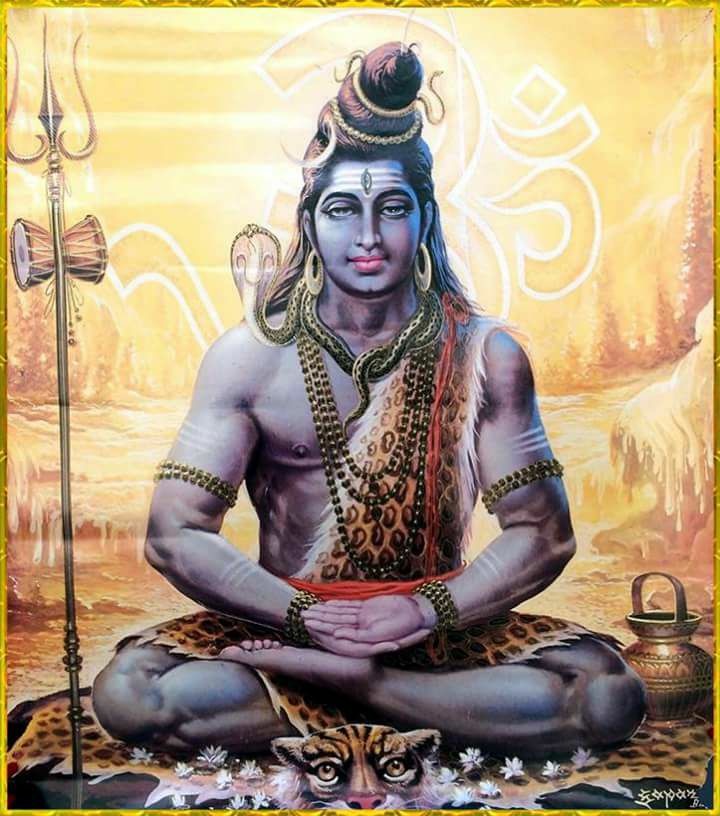
This form, be it a deity, a spiritual principle like Peace, or the image of a saint, can help us cultivate a higher form of love and connection.  Love directed toward God in any form inspires us to feel protection and comfort, to access an inner strength, and rise above selfish thinking. By acknowledging something beyond the ego-mind and its limited ideas, we humble ourselves and open our hearts to receive a grace that is always present. Just as raising the window shade allows the sun to shine in, we experience an inner Light when we let go of the habitual thoughts that define us and separate us from the Spirit that dwells within each of us.

Yoga offers techniques to cultivate this deep and unconditional love, which are collectively known as Bhakti Yoga. These practices include kirtan (chanting the names of God), puja (creating an altar and making offerings to it), and an abiding devotion toward a specific form that represents the Divine Spirit.

As the presence and power of the Spirit becomes more real, it can become a part of everything we do. Such devotion can motivate us to dedicate everything we do as a loving offering and to access the Divine Will in our daily choices.  It will guide us to recognize, love, and serve that Presence in each other. Whenever this happens, we begin to relate not so much to the ego-mind of another person, but to the Light that is within them, no matter how well hidden by the personality.

I once heard a story of a wealthy man who became attracted to Sri Ramakrishna, an Indian saint. This man was accustomed to all the sensual pleasure that money could buy:  a luxurious home, fine wines and gourmet foods, and the company of prostitutes. His love of Ramakrishna grew enough that he asked to be accepted as a disciple, even though he had no intention of giving up his lifestyle.

Ramakrishna agreed to accept him on the condition that he would offer everything he consumed or did to Ramakrishna before partaking in it. The man readily agreed, thinking he had the best of both worlds. Before he ate or drank or did anything, he offered it mentally to Ramakrishna. But as his devotion grew and he sought to honor the saint with appropriate offerings, he gradually gave up all the old unhealthy habits.

Such is the power of higher love to transform us in ways that our willpower alone may not.  That is no doubt why various Yoga masters have said that the path of devotion is the easiest practice during this era of materialism. In a way, the goal of all spiritual practice can be summed up as a process of learning to love unconditionally. Rumi says it beautifully: “Let yourself be silently drawn by the stronger pull of what you really love.”

Please join us on January 30th at 7 PM, as Mirabai guides us to experience our own connection and love with the Divine through chanting, mantra, and song. Details and registration HERE.


Swami Ramananda is the President of the Integral Yoga Institute in San Francisco and a greatly respected senior teacher in the Integral Yoga tradition, who has been practicing Yoga for over 35 years. Ramananda offers practical methods of integrating the timeless teachings and practices of yoga into daily life, and transforming the painful aspects of human experience into steps toward realizing one’s full potential.

He leads beginner, intermediate and advanced level yoga teacher training programs in San Francisco, and offers a variety of programs in many locations in the U. S., Europe and South America. Ramananda trains Yoga teachers to bring Yoga into corporate, hospital and medical settings and has taught mind/body wellness programs in many locations. He is a founding board member of the Yoga Alliance, a national registry that supports and promotes yoga teachers as professionals. His warmth, wisdom and sense of humor have endeared him to many.

2021-01-16T14:11:57-08:00January 16th, 2021|Tags: , , |

What the Practice of Kirtan Means to Me

by Snehan Born

The practice of chanting the Holy names of Gods and Goddesses in Sanskrit is known as Sankirtan or simply Kirtan, as we’ve come to know it in the West.

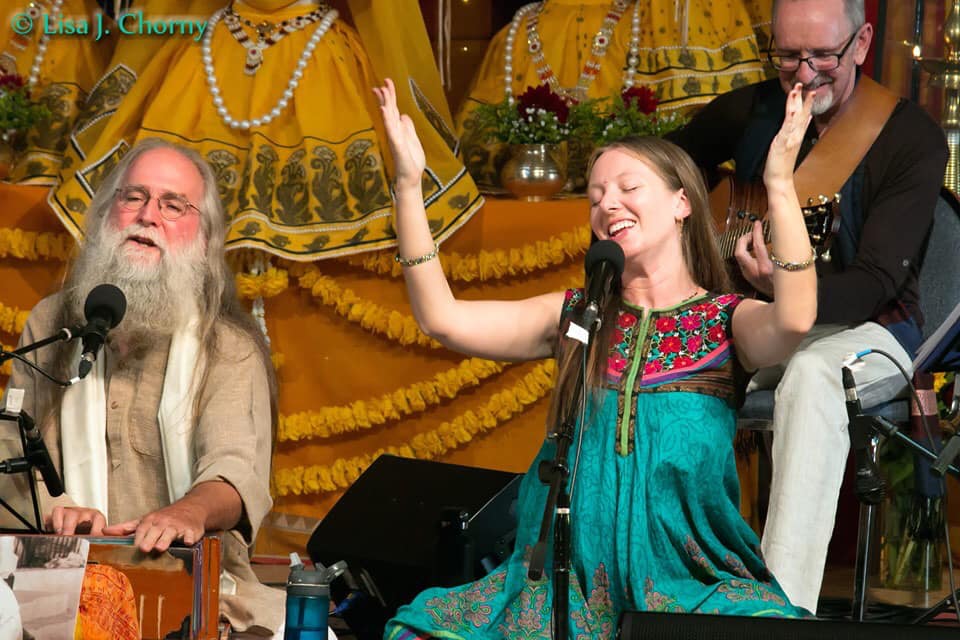
This practice of singing the names in song form has the distinct ability to center us in our hearts. When we chant together in this way, we begin to lessen our self-consciousness and our hearts feel safe to open more fully. As we all know, music itself has the power to touch our hearts and evoke so many emotions. Imagine being free to sing unselfconsciously from your heart in a deeply spiritual practice, and in communion with other like-minded seekers; this is just a taste of what Kirtan can do for us. Repeating these Sanskrit names over and over produces internal vibrations that can be peaceful, healing, enlightening, relaxing and/or energizing.

I love to sing and in my own way I’ve been trying to learn to sing my whole life, though my natural voice is not great. I’ve imitated all kinds of singers; some even became friends. Eventually I decided that I would just keep practicing and in some future life I might have a voice that could be good enough to inspire minds and heal hearts. I still feel that way, that I am practicing in order to become a real singer next time around. But I’ll tell you something, when I came to love Kirtan in my 40s and after practicing for some time, I secretly discovered that my voice seemed to be slowly improving, little by little. I’m still pretty insecure about my voice, but I receive so much benefit and enjoyment from chanting together with others that I keep with it. And now it’s an inspiration and surprise to receive encouragement from friends who perform Kirtan professionally. 

Presently, I’m practicing the Hanuman Chalisa with an online sangha that meets every morning at 8am for an hour. This is so much fun and it furthers my awe of the effects of Kirtan on myself and others. Try it out. But be aware that it’s addictive to the soul. You might not just like it, you might love it!     

Our beloved kirtanist, Astrud Castillo, will be leading an online kirtan here at the Institute this Saturday, December 12th, at 7pm.  Steeped in the Bhakti Yoga tradition, Astrud will lead us in chanting the names of the divine, opening and attuning the heart to the spiritual ground of being we all share. We hope you will join us.  https://integralyogasf.org/event/integral-yoga-kirtan

Snehan Born has four decades of experience with yoga and has been teaching Integral Yoga since 2000. Snehan resides at the Integral Yoga Institute of San Francisco. He serves as assistant to Swami Ramananda and is a lead teacher trainer. He has also led Hatha Yoga trainings at Satchidananda Ashram, Yogaville, Virginia, The Integral Yoga Institute in New York City and privately in Hawaii where Snehan co-created the Metamorphous Yoga Studio. Snehan is certified in all levels of Integral Yoga Hatha and has received additional certifications in Pranayama, Meditation, Raja Yoga and Stress Management from Integral Yoga and “Life of a Yogi” certification from Sri Dharma Mittra. Snehan has taught yoga all over the US as well as in India, Nepal, South America, Australia, New Zealand, Mexico, Japan and Europe.
2020-12-12T18:57:41-08:00December 7th, 2020|Tags: , , |
Go to Top