The Magic of Sound

By PJ Church

The sound of a loved one’s heartbeat while your head rests against their chest. Releasing a slow, gentle sigh. The shimmering flow of a creek on a summer day. A mother’s bedtime lullaby. The rhythmic rush of waves on a sandy shore. These healing sounds are naturally woven into the fabric of our daily lives. Studies have even shown that expletives uttered in response to an injury reduce the experience of pain! It makes perfect sense then that much research and practice has gone into the art and science of sound, giving birth to the wide array of methods modalities we see today in the world of sound healing.

I first experienced a sound bath over a decade ago at the end of a gentle asana session, simple and beautiful, three crystal bowls singing the class into an immersive savasana. As we returned from deep relaxation, I remember thinking only five or ten minutes had passed and discovered the instructor had been playing for over half an hour. The experience was profound and left me with the resolve to study and begin sharing these kinds of experiences with others. As a musician, it felt natural, but it’s also worth noting that you don’t need to have any musical experience at all to quickly begin achieving results with simple tools like chimes, bowls, or gongs.

The science of sound is utterly fascinating. From vibrational resonance and measurable effects on brainwave entrainment to lower cortisol and blood pressure levels in sound bath recipients, the results are undeniable. While some of the research might be new, sound as a healing tool is not, with the use of singing bowls dating back thousands of years. And technology has brought new tools into being, crystal bowls for example, which weren’t even originally created for sound, but to grow crystals for computer processors!

Even more fascinating than the science of sound are the subjective experiences sound bath participants are often eager to share afterwards. In addition to the common experience of bliss, relaxation and timelessness, participants have described sensations of floating, seeing myriad colors and sometimes complex mandalas. Many have reported having improved sleep for weeks after just a single sound bath. More than once I’ve had a student describe feeling a profound sense of connection to a deceased family member and experiencing a healing release of grief. As much fun as it is to play these instruments for people, it’s seeing the meaningful results it brings to people’s lives that is the real nectar of the work.

While sound baths function well as an experience unto themselves, practitioners frequently find that these tools can profoundly enhance the practice of yoga, and yoga can in turn deepen the benefits of sound. Physical practices can help prepare the body to be more comfortable, relaxed and receptive. Pranayama combined with sound can, among other things, enhance the benefits of emotional regulation and focus. Sound itself is related to Pratyahara, which while commonly thought of as “withdrawal of the senses” does also refer to sensory consciousness in general and can aid us in the process of going inwards. Sound functions as meditation and helps to cultivate yoga as “citta vritti nirodha,” that deep inner stillness in which we can experience our true nature as pure awareness.

Sound, like yoga, is a flowing and open thing with myriad techniques, and it invites play and experimentation for guide and participant alike. There’s no one-size-fits all approach and there’s something there for everyone. In a sound bath, just like an asana class, it’s also helpful to practice non-attachment, to be open to having whatever experience presents itself in the moment, in the shimmering, healing magic of the moment.

Join Rachel Goudey, Psy.D, C-IAYT and PJ Church, C-IAYT for Therapeutic Yoga and Sound Healing (In-Person) on Sunday, June 8th, 3:30 – 5:30 PM PDT

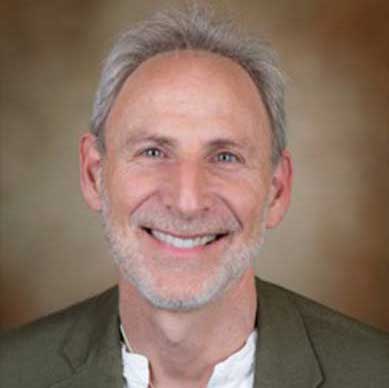
PJ Church, RYT-500, C-IAYT, has been a practitioner of yoga, mindfulness and related modalities for decades. Over the last 12 years, he has taught an array of studio classes, workshops and teacher trainings. Modalities that PJ teaches and practices include Hatha, Raja, Restorative, Vinyasa, Yin, as well as sound healing. When not teaching, he enjoys books, tea, travel, music, and being a grandparent.

Rachel Jennine Goudey C-IAYT, Psy.D. As an educator specializing in trauma work and embodied practices for nervous system integration, Rachel helps clients increase their capacity for joy and love in life through somatic movement, breath work, sound healing, self-reflection, and cultivating healthy life choices. Rachel brings years of mental health experience working with at-risk and underserved populations, integrating Eastern and Western practices to help clients move past symptom relief into true healing. She has brought holistic yoga programs and professional trainings on yoga for mental health into community mental health centers, hospitals and schools. Rachel’s aim is to guide individuals into states of peace and trust in their life’s story through the mind and body, create community, and bring the teachings and practices of yoga into various settings around the world. Rachel’s classes meet each student where they are at while still challenging them to reach new heights of self-realization, acceptance, and strength and flexibility, both on and off of the mat. She will push you to challenge yourself while also guiding you to listen to your body and intuition, teaching from a place of authenticity, passion and playfulness. To learn more about Rachel and her work visit racheljenninewellnessandyoga.com.

2025-06-01T16:32:36-07:00May 25th, 2025|

Reclaiming Joy in a Hurting World

by Kamala Itzel Hayward

In their ancient teachings, the great Yoga masters remind us over and over that our true nature is Satchidananda—existence, knowledge, and bliss absolute. And yet, many of us find ourselves asking: If bliss is our essential nature, why is it so difficult to experience—especially in times of pain, injustice, or uncertainty?

What happens when the world feels heavy, when our communities are grieving, and when our own hearts are tired? Where does joy live then?

These questions have been living in me for a long time.

As someone who shares Yoga with others and is devoted to our collective healing, I’ve sat with many people who feel sadness, discouragement, or even self-doubt when they can’t seem to find joy—or even the willingness to seek it. It’s as if they see joy as something they should already have, or should be able to summon on command. Some have expressed that  in the face of the deep suffering of others, the very idea of reaching for joy can feel out of place or even wrong.

But the sages tell us that true joy isn’t based on what happens to us. It’s not a fleeting feeling that can be found only when suffering is absent, or when life feels easy. The teachings remind us that true joy is always already available—even when external forms and conditions are imperfect. Indeed it isn’t something outside of us at all. Rather, it’s something already within us that can be seen, uncovered, or remembered when we are rooted in relationship with what is real: with Spirit, with each other, and with the sacredness of our own existence.

The Yoga teachings offer us many ways to cultivate that relationship: through seeing ourselves clearly, through staying present with life as it is, through anchoring ourselves in Spirit and in the web of life that holds us all. And the Bhagavad Gita reminds us that no sincere effort on the path is ever wasted. Every time we practice the teachings—no matter how small the gesture—we open space for true joy to express itself.

This is not a call to bypass real suffering or deny injustice. It’s an invitation to be anchored in something deeper than the shifting tides of circumstance. It’s an invitation to remember that even in sorrow and struggle, we are held by something larger than ourselves.

Join June 7th at 5:30 pm PT for an online talk called Joy as Resilience, Joy as Resistance.  We’ll explore joy as a quiet strength, a source of healing, and a form of sacred resistance in a world that often asks us to harden, disconnect, or despair.

Kamala Itzel Hayward was a lawyer for over a decade before becoming a Yoga teacher and Yoga therapist specializing in trauma, addiction, and wellness. She is passionate about bringing Yoga and other healing modalities to adults facing chronic stress caused by living under oppression, such as racism, sexism, homophobia, transphobia, classism, ableism, and more. She is founder of the Integral Yoga Institute’s Scholarship-Based Yoga Teacher Training for Black, Indigenous, People of Color. Since founding Attuned Living in 2010, she has been sharing Yoga with individuals facing housing insecurity and related challenges, including systemic barriers; structural oppression; social dislocation; physical, emotional, and mental health challenges; substance abuse; and addiction. She sits on the Advisory Board for the Trauma Prevention and Recovery Certificate Program at the City College of San Francisco.

2025-05-19T09:50:48-07:00May 15th, 2025|Tags: , , , , |

Compassionate Communication

by Swami Ramananda

If we pay attention to the world news, I think we can agree that our world is in dire need of more mindfulness, justice, and compassion. ​On an individual level, a deeplyentrenched sense of separation—​and the resulting insecurity—has given rise to so much mistrust and greed ​that we fail to experience the ground of being that we all share. This dynamic, on the large scale of the world stage, has translated into tremendous suffering and great injustice​.

It’s understandable that many feel powerless to bring light into this foreboding darkness that overshadows our world today. Yet the spiritual teachings of many traditions inspire us to engage in the world rather than retreat from it. Many great beings have served as role models for us by taking one step at a time, with compassion and mindfulness, guided by the deeper understanding of our interdependence.

Some of our Integral Yoga Institute of San Francisco community members have decided to focus our energies in this direction as one way to practice compassionate communication. Communicating with genuine care for the well-being of another person is both practical and immediately applicable to our daily lives.

We were inspired by a recent satsang offered by Reverend Kamala Itzel Hayward, who offered a number of concrete steps that we feel can open the doors to deep listening, and problem-solving with open hearts. Here are a few of the principles that we are practicing, some of which come directly from Marshall Rosenberg‘s teachings on Nonviolent Communication.

First, observe the tendency to interpret the facts, which can easily give rise to judgment, anger, or irrational conclusions. For example, we may find ourselves concluding that someone dislikes us when they give us critical feedback. In reality, such remarks may be a way of showing care and a genuine desire for us to grow. Instead of jumping to conclusions, a much better approach is to separate the actual facts from the assumptions we might make based on our past experience.

One thing to be aware of: the mind loves to create stories. The multi-billion dollar per year entertainment industry certainly supports what Yoga science has long known. If you really are unsure what someone’s motives might be, and you feel they would be open to speaking with you about your concerns, you could try the following:

  1. Ask the person if they would have time to talk to you.
  2. If they agree, you could frame your concerns in the following way: “I hope you can help me navigate an issue that’s arisen. I find that I’m telling myself the following story.” Then, proceed to describe what that story is in as neutral a way as possible adding, “And, before I jump to any conclusions I was hoping you could share your perspective with me about what I just shared.” This leaves the door open to hearing a different perspective or having your interpretation of events verified.

Secondly, when we disagree with someone, there can be a great benefit to reflecting on the needs that this person has. Instead of just focusing on their outward actions, it might make a considerable difference to be curious about the needs behind their point of view. One immediate benefit is that if we show genuine interest in their needs, we may quickly defuse a charged conversation with our intention to understand them in a deeper way. Then, if they can feel we are communicating with compassion in our hearts, they might also open their minds to hearing about our needs and perspectives.

Rev. Kamala told us about a friend of hers who had a potentially charged argument with someone who was in support of building a wall at the US-Mexican border. When Kamala‘s friend asked with compassion and curiosity about the need that this person had behind their support of the wall, the conversation shifted and the two found common ground in the basic need of wanting to protect their families. Once we can understand the need behind someone’s assertions, we are capable of relating to them from the heart instead of simply judging their point of view as wrong. We may be able to dialogue instead about alternative ways to fulfill that need instead of simply deciding they are wrong.

Thirdly, if we approach a disagreement with someone dead set on changing them or showing them where they are wrong, we are unlikely to succeed. Whereas if we can show a genuine concern and respect for their perspective, our dialogue is much more likely to find common ground.

It might sound much simpler and safer to simply avoid conflict and difficult conversations. But doing so may also mean compromising our commitment to practicing ahimsa (non-violence) and satya (truthfulness), as well as the intention to stand up for social justice.

Bringing compassion into a dialogue over polarized points of view has proven to be very powerful, especially when we look at the non-violent activism of Mahatma Gandhi, Martin Luther King Jr., and Thich Nhat Hanh. Every one of us can make an effort to embark upon a pathway of mindful and open communication rather than judging someone’s point of view without understanding what’s behind it.

Rev. Kamala’s friend, Kathy Simons, suggests approaching potentially charged conversations by saying something like, “I think about this a little differently than you. I’d like to hear more about what you’re thinking and if you’re open to it, tell you more about my perspective.” Along with this kind of effort, it’s equally important that we have compassion for ourselves and discern when we are ready to engage in a difficult conversation or when we may be too upset to speak skillfully.

Each aspect of compassionate communication is supported and enhanced by a regular meditative practice that brings clarity and equanimity to the mind. A committed practice will gradually enable us to disengage from the ways our minds construct stories, leading us to define ourselves as separate, thus clinging to narrow perspectives. As we quiet the habitual thoughts that cloud our vision, we can experience a quiet Presence at the core of our being. As our understanding expands, we begin to experience the spiritual truth that each of us has th that same essence-nature. Then, a natural flow of compassion for ourselves and each other can fully blossom.

Join Swami Ramananda, in-person on Friday, May 16 @ 6:30 – 8:00 pm for Yoga for the Soul, Body, and Mind, a 90 minute practice that evenly combines mixed level asana with extended guided meditation and spiritual awareness explorations through a group discussion on yogic topics.


Swami Ramananda, C-IAYT, E-RYT 500, is the Executive Director of the Integral Yoga Institute in San Francisco, C-IAYT, and a greatly respected senior teacher in the Integral Yoga tradition who has been practicing Yoga for over 45 years. Ramananda offers practical methods of integrating the timeless teachings and practices of Yoga into daily life and transforming the painful aspects of human experience into steps toward realizing one’s full potential.
He leads beginner, intermediate and advanced-level Yoga teacher training programs in San Francisco and offers a variety of programs in many locations in the U.S., Europe and South America. Ramananda co-developed the Stress Management Teacher Training program with Swami Vidyananda, has trained many teachers to bring Yoga into corporate, hospital and medical settings, and has taught mind/body wellness programs in many locations. He is a certified Yoga therapist and founding board member of the Yoga Alliance, a national registry that supports and promotes yoga teachers as professionals. He co-founded The Spiritual Action Initiative (SAI), which brings together individuals committed to working for social justice for all beings and for the care and healing of our natural world. His warmth, wisdom and sense of humor have endeared him to many.

2025-05-13T18:03:58-07:00May 6th, 2025|

Resolutions That Last: The Art of Sustainable Spiritual Practice

by Swami Vidyananda

For many years, I’ve given a talk on New Year’s resolutions at our annual Integral Yoga New Year’s Retreat. I focus mainly on setting achievable goals for a regular spiritual practice of poses, breathing, relaxation and meditation. Here’s a few suggestions from that talk:

  1. Set a small, reasonable goal for a certain amount of time for each practice you want to do daily. Then immediately cut it in half. That becomes your daily minimum. Try that. If you don’t succeed at that, then cut that time in half. Keep cutting until you find how much you really will do, even if it’s one minute for each practice. Then stick to that as your daily minimum.

For example, Swami Satchidananda recommends meditating a minimum of 15 minutes twice a day for meditation. So, when I started my regular practice, I set a minimum of 15 minutes once a day (which equaled half the time I wanted to do). That’s been my rock solid minimum for many years. Most days I’ll do far more, but if I’m very sick in bed, I lie there and do 15 minutes of japa. Even if the meditation is unfocused, I’ve still met my goal.

Setting a small goal and accomplishing it daily develops will power and gives you confidence in your own power to meet your goals in life, not just in spiritual practice.

  1. Have a chart where you check your practice off daily. Studies have shown tracking your progress is one important key to success.
  2. Make some small change to your environment to make it easy to do your practice. For example, if you want to do Hatha Yoga daily, leave a mat out in a corner of a room and don’t put it away. Then you can take a few minutes to do Hatha Yoga with no need for any preparation. Researchers found that as little as five minutes of moderate-to-vigorous activity a day may have a positive effect on health in the long term.
  3. Make your Yoga as yummy as possible. Make it feel as good as you can. You’re more likely to stick with it if you enjoy it while you do it. Challenge yourself for the fun of it.
  4. Have a purpose partner, a supportive friend with whom you check in about your progress toward keeping your goals. This is another technique studies have shown to help you meet your goals. It’s best to set it up so you tell them how you did and they don’t express a negative judgment. They don’t offer advice, or chide you, unless you ask them to do so that day. They can offer a gentle word of support.
  5. Don’t expect bliss in your practices every day, especially meditation. You’re often just cleaning out what will keep you from being focused and relaxed the rest of the day.

We often make the mistake of giving up if the meditation is unfocused or if painful thoughts come up. We underestimate the immense benefit of getting to know the mind on every level. Carl Jung said, “Until you make the unconscious conscious, it will direct your life and you will call it fate.” Our undigested past conditioning leads to knee-jerk reactions that cause so much pain and misunderstanding in our lives. Sitting with your mind for a given amount time, no matter what comes up, is a powerful, life-changing practice. You want to use some self-soothing technique like mantra repetition or simple breath awareness so that the mind knows it is loved and accepted exactly like it is, and it’s safe to let you see what’s going on. When you know your unconscious patterns, you can use the tools of Yoga skillfully to help you change them.

  1. Prepare for backsliding. If you remind yourself that most people slip sometimes before they succeed, you’ll be less likely to give up when you do miss a day or a few. You’ll think, “Yes, that’s normal” and get back on the routine vs. telling yourself “I can’t do this!”

All these hints can be summarized in a saying I heard from our Ashram comedian Swami Murugananda: “Start slow, and then taper off.” To which I add: After you taper off, stick with your brief yummy Yoga. If you make it feel good, your minimum will gently, automatically get longer because you’re feeling joy and seeing your good habit build every day.

“Come, come, whoever you are
Wanderer, worshiper, lover of leaving.
It doesn’t matter
Ours is not a caravan of despair.
Come, even if you have broken your vows a thousand times.
Come, yet again, come, come.”
~Rumi

Swami Vidyananda, E-RYT 500, C-IAYT has been practicing Yoga since 1969 and teaching Integral Yoga internationally since 1973. For many years she traveled with Sri Swami Satchidananda serving as his translator into French. She has taught in many therapeutic programs, including for people with cancer, Yoga for university students with eating disorders, and Yoga for children with learning disabilities. She has taught Yoga for Stress Relief around the world. She has served as a Yoga Therapist since 1979. She co-developed the Integral Yoga Stress Management Teacher Training program with Swami Ramananda and has taught it for over 25 years. Swami Vidyananda lives in Yogaville, Virginia, where she teaches meditation, Raja Yoga, and all branches of Integral Yoga. She also serves as chairperson of the Integral Yoga teachers Council, and as director of the Integral Yoga Therapy Training Program.

2025-05-07T13:53:37-07:00April 11th, 2025|
Go to Top