Spiritual Activism in a Violent World

In the wake of yet another gross example of racism and another senseless murder in the U.S., many people I know are searching for some way to actively respond to a world that has given birth to so much violence and injustice. In Integral Yoga, we often speak about how we can embody the spiritual principles and practices we embrace in proactive ways to make a real difference.  

For far too long, many committed spiritual seekers I know have limited their response to sending prayers for peace, expressing their dismay to each other, and recommitting themselves to spiritual practice to establish peace in their hearts. These are all very important choices, but right now I don’t think they are enough. These actions are invisible to the world around us—I saw a protest sign recently that read, “Silence is Violence.” Spiritual practice should lay the groundwork for further action.

It is crucial that we sustain a regular meditation practice to touch the ground of being we all share and to awaken the natural compassion that arises in the heart when we experience this interconnection. Understood in this context, our spiritual practice is a responsibility, not simply a personal pursuit. Only then, will this sense of oneness be strong enough that it manifests in our hearts and minds as we interact in the world. 

But we need not wait for some level of enlightenment to take Yoga off the cushion or mat and into the street. We can purposely practice moving, talking, and thinking with peace and compassion in our hearts. 

We bring compassion into conversations when we listen deeply to another person and make a real effort to understand and respect their needs, instead of stubbornly defending our own. We can approach even those with whom we disagree with an open heart and an effort to build on the common ground we share, instead of focusing only on the differences.  

At every opportunity, we must speak out against injustice when we see, hear, or witness it and be a presence of peace in moments of conflict. Even when we cannot help directly, we can offer support to those who are fighting against racism and violence. We must make our voices heard to those seeking election, so that policies that support social justice are enacted at every level of government.

We must stand in solidarity with the voices of BIPOC (Black, Indigenous, and People of Color) stating that systematic racism and injustice due to police violence must end. We cannot just stand by and watch the murder of George Floyd, Breonna Taylor, Ahmaud Arbery, and the many others who have suffered from our country’s failure to address the racial inequality that has plagued our society for centuries.

We must also speak up against the derogatory language, hate speech, and acts of violence directed at Asian populations since the outbreak of the pandemic. I’ve read more than once that we must act now to strengthen the immunity of our societies, not only against COVID-19, but against the virus of hate and discrimination.

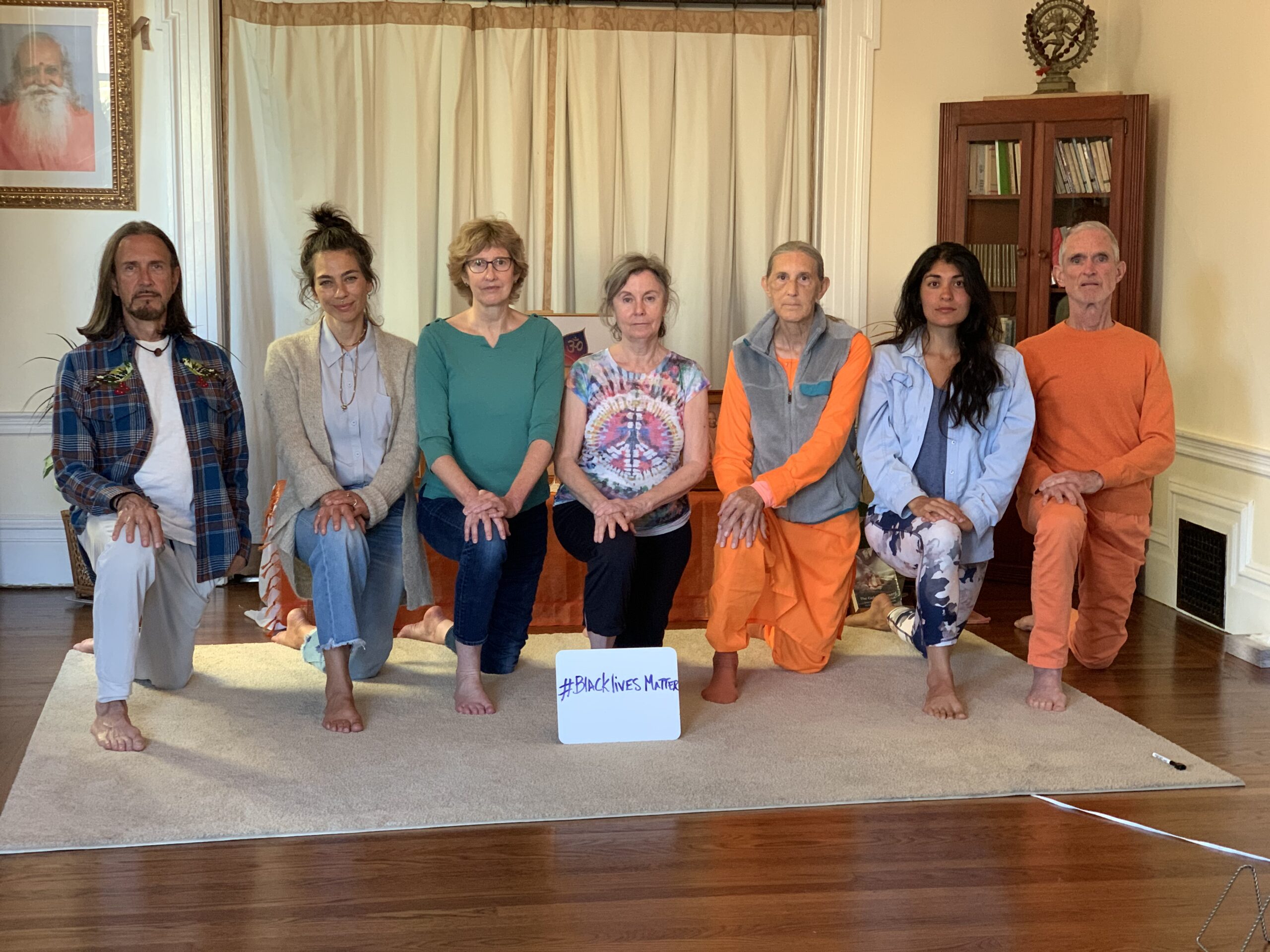
A recent message from the Interfaith Council of San Francisco articulates our intention to join with many others in supporting changes that value all peoples, regardless of race, eradicate all forms of oppression, and recognize the unity behind all diversity.

“The overwhelming national response to George Floyd’s death, manifested in peaceful protests, not only honors his life, but powerfully expresses the threshold of tolerance we as Americans have reached for injustice, systematic racism and discrimination against people of color. This powerful resurgence of a long overdue civil rights movement will not be silenced until structural change is realized. We lift our voices and stand in unity and solidarity with our sisters and brothers of color in proclaiming that BLACK LIVES MATTER.” —Interfaith Council of San Francisco

For the last 2 months, the residents of the Integral Yoga Institute here in San Francisco have been gathering to send out prayers for all those who are suffering from the pandemic. We will continue to do so and keep equally in our prayers all those suffering from racial injustice.  We also commit to educating ourselves to uncover unintentional racism, to searching our own hearts for prejudice of any kind, and to using every opportunity to promote the yogic understanding that we are all one.

Please join us for a free panel and community discussion we will hold on Sunday, June 14, 4:30 – 6 pm PDT, entitled Responding to Racism – A Spiritual PerspectiveIntegral Yoga Minister Kamala Itzel Hayward will speak on the essential role that acknowledging racism and other forms of oppression plays in the spiritual journey. Mazin Jamal Mahgoub will follow with a talk on effective activism grounded in spiritual principles. 
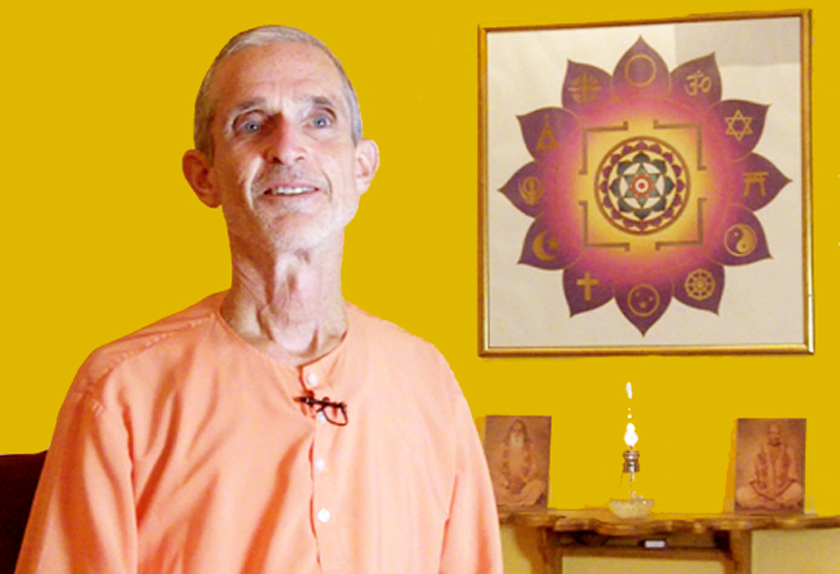
Swami Ramananda is the President of the Integral Yoga Institute in San Francisco and a greatly respected senior teacher in the Integral Yoga tradition, who has been practicing Yoga for over 35 years. Ramananda offers practical methods of integrating the timeless teachings and practices of yoga into daily life, and transforming the painful aspects of human experience into steps toward realizing one’s full potential.

He leads beginner, intermediate and advanced level yoga teacher training programs in San Francisco, and offers a variety of programs in many locations in the U. S., Europe and South America. Ramananda trains Yoga teachers to bring Yoga into corporate, hospital and medical settings and has taught mind/body wellness programs in many locations. He is a founding board member of the Yoga Alliance, a national registry that supports and promotes yoga teachers as professionals. His warmth, wisdom and sense of humor have endeared him to many.
2020-06-07T14:58:33-07:00June 3rd, 2020|Tags: , |

Your Knees Need Your Love

by Dawn Summers

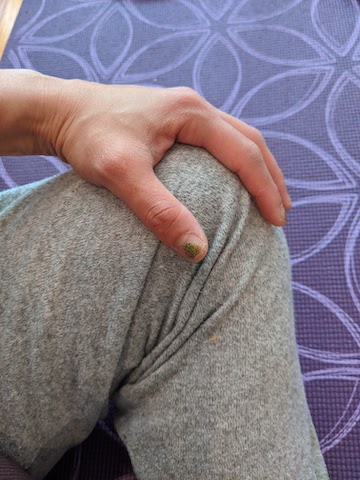
Oh no!  Suddenly my left knee got really wonky when I was going up and down stairs.  I could hardly bend it and put weight on it without pain, so that was a call to action!

Yoga had been a foundation for me since 1985 when I decided to learn more and became an Integral Yoga Teacher, so I decided to see if I could resolve it with the right yoga practice.  I am also trained as a yoga therapist by Gary Kraftsow, founder of the American Viniyoga Institute, so here was an essential and compelling crisis. But it was more than that: it was also an opportunity as well as a necessity to apply my knowledge in practice.  

So, after some svadhyaya (self-examination of my hips, legs and knees) and some study of old notes from my therapy training and other resources, I created a practice.

Fortunately, my knee issue resolved within a month and I learned a lot about biomechanics and tracking lines which involve the hips, legs and feet.  I am quite relieved to move away from this dangerous knee issue and recover full function; especially now so I can happily take my long walks when swimming pools are closed and I have no other alternate source of major exercise besides perambulation. 

Call me a Happy Yogini with Bees Knees!

You, too, can have happier knees from participation in the online workshop for knees on May 30 from 1-3pm. You will explore your own hip/leg/knee relationship with a targeted practice specific to supporting the knees, plus an understanding of why these postures are useful. Yoga teachers can also receive two Yoga Alliance CE hours.


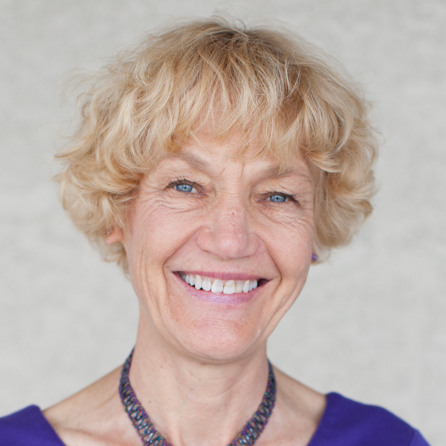
Dawn Summers has been teaching yoga since 1985 and is a certified Yoga Therapist in the Viniyoga tradition. She has also trained yoga teachers and yoga therapists.
Dawn has considerable experience working therapeutically with individual students to develop an appropriate yoga practice. She also has trained yoga and aerobics instructors, and is most grateful to her teachers – Swami Satchidananda (1985 IYI certification) and Swami Asokananda (Advanced IYI Certification); Gary Kraftsow (certified 1992, 2000), T.K.V. Desikachar (1994, Chennai India). She has assisted with training yoga teachers at Yogaville and was Teacher Training Coordinator for American Viniyoga Institute (AVI). She has also been a Senior Faculty training yoga therapists with AVI. She teaches in San Francisco and Pacifica.[/fusion_text][/fusion_builder_column][/fusion_builder_row][/fusion_builder_container]

2020-05-21T19:17:35-07:00May 21st, 2020|Tags: |

Supporting Lung Health During the Pandemic

by Vishnupriya Vanessa Doherty

When I first explored Yin Yoga, a new world of healing with energy opened up to me. I am referring to our energy channels, meridians (Chinese system) or nadis (Indian system), which are invisible pathways that house our vital energy. All of these transport energy (chi or prana), which flows through the organs, tissues, bones, joints and connect the exterior with the interior of our bodies. The topic of this blog is to explore what happens when, in particular, the lung and large intestine meridians go off balance and how Yin Yoga can assist in harmonizing the flow of this energy. Why did I choose these two meridians and omit the 10 others? According to Traditional Chinese Medicine (TCM), their qualities seem to be the most relevant to our current climate of COVID-19, allergy season, and how the shelter-in-place orders have altered our lives. With this in mind, I’ll review the lung meridian’s energetic qualities and the mental and emotional qualities of the lung and large intestine meridians to help us understand our potential responses to our current environment and a remedy. 

The lungs are vital in filtering our breath, oxygenating our blood, fueling every cell with this oxygen, and expelling the carbon dioxide with the exhale. Energetically, the lungs are the first to take in external chi (upon the inhale) and mix it with our internal chi. According to TCM, if one gets frequent colds, the lung chi within the meridian is deficient (weak or lacks vibrancy). This can affect the whole body, in particular, the respiratory system. The symptoms present themselves via allergies, asthma, bronchitis, shortness of breath, coughing, hives and rashes. It also diminishes our sense of smell and taste. Because our lung chi is the foundation of our body’s network, when there is a breakdown in the network, respiratory illnesses, skin conditions and other conditions arise along with degeneration of the spine, spasm in the throat and esophagus, and rheumatic pain.

The energetic flow of the lung and large intestine meridians is key to balancing our emotional and mental qualities. This chi splits into two complementary polarities, Yin and Yang. The lung meridian (Yin) works in harmony with the large intestine meridian (Yang) and they share energetic characteristics in that they draw in nutrients and let go of waste. Emotionally, they are associated with our courage and reverence, meaning, Santosha (contentment) becomes more prevalent, and we experience our time in life as precious and accept what we cannot change. An imbalance in this chi can cause a sense of grief, isolation, loneliness and blocked emotions. Mentally, our thinking can be muddled, cloudy, or disconnected. When balanced, one has the drive and confidence to take on with grace the changes and difficulties found in life, lessening the desire to run away from what’s uncomfortable. Of course, all emotions are a natural part of life, but when they become never-ending or injurious to our health, look to the flow of chi as a remedy.

There are many ways to keep these channels free flowing, such as acupuncture, tai chi, qigong, and taking care of our diet, thoughts, environment and daily yoga practice. I would like to share a simple practice with you to be done 2 or 3 times per week. Some days it can be worked into your Hatha practice, beginning with sun salutations, backbends and inversion and ending with Yin Yoga, savasana, and Pranayama. Each Yin pose is to be held 3 to 5 minutes. This allows the body time to get deep into the connective tissue to gently load the tendons and ligaments, which is therapeutic for those with former injuries, illness, muscular tightness or blockage. When the pose is released, stagnant chi (distorted chi movement) and deficient chi starts to flow more freely. When these rivers of energy flow freely, optimal health is in sight.

Recommended poses:

  • Butterfly pose (Baddha Konasana)
  • Sphinx pose (Salamba Bhujangasana)
  • Child pose with wide knees (Balasana)
  • Dragonfly pose (Upavistha Konasana)
  • Seated Forward Fold (Paschimottanasana)

Like in a traditional Hatha practice, the mental focus is very important. While in the pose, direct the breath to areas that are tight, blocked, or intense. Visualize the breath moving energy, releasing muscles and revitalizing your energy. Never move into pain – sharp, stabbing, burning sensation. This will hinder your motives and stall the energetic flow. Only move to your “edge” – feeling pressure with unlabored breath. Take time to rest in advasana (reverse corpse pose) or savasana after each pose to settle your body.

Yin Yoga is a beautifully meditative practice that can be tailored to your own personal ailments. Whether it’s illness, injury, lethargy and/or anxiety, depression, fear, sorrow, there is a sequence for you. Find an experienced teacher, an online class and explore the poses and meditations, then do your own exploring safely and mindfully at home. It’s just one more way to make the most of our time at home. 

We hope you join us online for our Yin Yoga class Tuesdays at 7pm PST.


Vishnupriya Vanessa Doherty, RYT 500, YACEP, is a California native and has been practicing yoga since the early 90s. Vishnupriya lives the life of a yogi, not just for her own benefit, but so she can dive deep and teach the traditional methods of yoga and serve others wholeheartedly. She has been teaching since 2010 and continues to obtain certifications that focus on yoga for healing and realizing our innate peace. She holds certifications in Classical Hatha Level 1, Integral Yoga Intermediate and Advanced, Yin Yoga, Therapeutic yoga Level 1 and 2, Reiki Energy Healing Levels 1 and 2.

2020-05-14T11:10:36-07:00May 14th, 2020|

How Trauma Sensitive Yoga Changed My Life

by Kelsey Gustafson

There are few choices that stand out in my life as having changed everything.

Deciding to become trained professionally in Trauma Center Trauma Sensitive Yoga has been the most helpful and profound investment I have made in the last decade.

I’ve been reflecting on how I got to be here – teaching trauma sensitive movement full time. And there was a pivotal moment that changed everything for me. 

Here’s the story…

I was deep into my personal healing journey when I first realized that something was missing. I had been teaching yoga for 5 years and was leading retreats, workshops and classes regularly.

While I was in Guatemala leading a retreat, one evening we facilitated a cacao-infused ecstatic dance with a live DJ.

It was a gorgeous scene with the sun setting over the lake and people dancing around, touching each other and laughing, all in their perfect outfits.

However, I felt myself inching away from the scene.

When I stepped back, I noticed a woman on the edge, also looking at the scene, just observing. 

In my mind I called her “the girl in the shadows” – and I recognized her as part of me.

I started to get curious about her and I realized…

  • She wants to move slower.
    • She wants to build safety before diving into intimacy.
    • She wants support creating and upholding healthy boundaries.
  • She wants choice and agency with how she moves.
    • She wants to be invited to go at her own pace.
    • She wants to actually feel safe enough to connect to herself. 
  • She wants to feel her body on her own terms.
    • She doesn’t always want to touch other people or be touched.
    • She can’t always access her body (let alone bliss). 
  • So she sometimes feels left out or left behind in the yoga scene.

I realized that I needed to make space for that part in me. 

I realized that so much of what I had been taught as yoga was inaccessible to her.

I realized that I wanted to learn how to teach to “the girl in the shadows.”

So I flew to the east coast where I began an in-depth training in Trauma Sensitive Yoga. This training changed everything for me.

I learned that cathartic, intense release is not always helpful for trauma survivors. I learned the importance of consent in facilitating. I learned to teach from a place that honors power dynamics and invites personal autonomy. 

It became clear to me why I felt so uncomfortable pushing bliss.

Forcing or pushing happiness is just as toxic as forcing pain. 

From my new perspective, I have the tools to hold space for the full spectrum of emotions and experiences that come up for people on their healing journey.

My compassion and love for my work has grown tremendously. 

I am so incredibly grateful to be able to confidently work with trauma survivors. 

If you are a yoga teacher, therapist, clinician or facilitator who wants to grow your skill in holding space for trauma healing, join me for an introductory training in trauma informed care.

In one afternoon, I will share the essential tools that I use in my full time practice as a somatic trauma resolution facilitator.

This training is perfect for yoga and movement teachers, therapists, counselors, psychologists, healthcare professionals, teachers, activists, healers, caregivers, and anyone who wants to learn the theory and practice of trauma informed care.

Join the growing field of trauma treatment. Be a grounding force in chaotic times. We need you! 

Our next workshop on Teaching Trauma Sensitive Yoga will be offered online, Saturday May 9 from 1:00-5:00pm PST. More information and registration here.


Kelsey Gustafson, RYT 200, TCTSY-F, has been teaching yoga for 10 years and has over 1,000 hours of training in yoga and healing arts. In 2015, Kelsey became the first Trauma Sensitive Yoga Facilitator in the state of California when she graduated from the advanced TCTSY certification program through the Center for Trauma & Embodiment. She has a private practice in Oakland where she combines the Trauma Sensitive Yoga method with Somatic Experiencing. Kelsey is on the teaching team for the Rebloom Trauma Training and also facilitates group classes in somatic trauma healing and trainings for professionals who want to become more trauma informed.

2020-05-04T12:29:08-07:00May 4th, 2020|
Go to Top