Integrative Yoga and Somatic Therapy for Mental Health, Trauma, and Calling the Heart Home

by Rachel Jennine Goudey, Psy.D, C-IAYT
The many practices that fall under the umbrella of Yoga may mean different things to different people. We come to these practices for different reasons, drawn to different aspects of what Yoga has to offer. And yet, at the end of the day I believe that we are all searching and longing for the same things: to feel safe, loved, and seen. For me, the thing I keep coming back to, that I am always saying to my students, is that Yoga is a practice of the heart.
I believe therapy is the same thing essentially. We are investigating and working through patterns that have blocked us and kept our hearts shut down. Past experiences have injured us in some way, leaving us feeling unsafe, unloved, and unseen.
My approach to mental health and therapy is an integrative one. Trained as a Clinical Psychologist, I spent many years working in a traditional Western approach. There was always something in it for me that wasn’t working; wasn’t complete. What I believe was missing from the therapy process was a connection, or a reconnection rather, to one’s spirit. Some people may think of spirit as having to do with religion, but what I am referring to here is an essence, a vital life force. Spirit has been defined as, “an animating or vital principle held to give life to physical organisms” (Merriam Webster.)
In Traditional Chinese Medicine, which is a foundation of Yin Yoga, our spirit (Shen) resides in the heart when it is seen, loved and feels safe. In order to feel seen, loved and safe we must be able to fully look at ourselves, in all of our pain, rather than look away from it. I feel that Yoga, as a therapeutic process and practice, addresses the ever-varying state of humanness within the individual, seeking to help them integrate the parts of themselves that might be scary or painful, and feel whole again. In the traditional forms of western therapy I saw a system trying to “fix” what was “broken” by trying to get rid of it rather than integrate it. This is why I call my approach Integrative Yoga Therapy. I work by integrating multiple traditions and modalities, while helping my clients to integrate the different parts of themselves in a compassionate and loving way.
The body gives us direct access to our pain stories, and thus to our healing stories. Working within the body, we quickly start to realize, notice, and connect to those stories. When we are guided in a gentle way to really be in-touch with the body we increase interoception – the knowing of inner sensations and inner dialogues that come through the cells, the fascia, the muscles, the organs, the ingrained memories in the body. By now many of you have probably heard the phrase, the book title, The Body Keeps the Score, as well as statements like, “the issues are in the tissues,” or “every cell in your body is eavesdropping on your thoughts.” Our mental and emotional health, our generational and genetic health and trauma, and our own personal lived experiences of health and trauma are all alive in the body. The sensations, whether of pain or ease, are what animate us, what give us our spirit. Yoga therapy is what brings spirit into therapy. Through practice we create a movement of what has become stuck in us from fear and trauma, so that we can dance through our lives and rewrite our stories of pain into stories of transformation and growth, thinking, speaking, and moving from a place of love.


Please join Rachel for her 8 week Integrative Yoga Therapy and Support Group for Trauma, Tue. March 7 – April 25 @ 6:00 pm – 7:30 pm PT (8 Tuesdays).
And you can experience Therapeutic Yoga and Sound Healing on Sun. March 19 @ 3:30 pm – 5:30 pm PT with Rachel and Sevika; support your body, mind and spirit to relax, rejuvenate, and heal. No prior yoga experience is necessary.
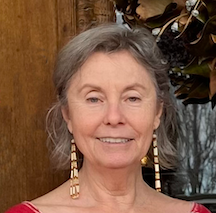
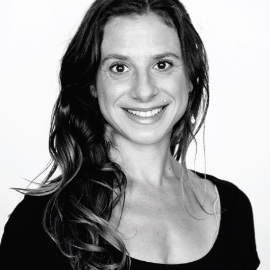
Rachel Jennine Goudey, Psy.D., C-IAYT Certified Yoga Therapist, Educator and Doctor of Psychology. Specializing in trauma work and embodied practices for nervous system integration, Rachel helps clients increase their capacity for joy and love in life through somatic movement, breath work, sound healing, self-reflection, and cultivating healthy life choices.

Rachel brings years of mental health experience working with at-risk and underserved populations, integrating Eastern and Western practices to help clients move past symptom relief into true healing. She has brought holistic yoga programs and professional trainings on yoga for mental health into community mental health centers, hospitals and schools. Rachel’s aim is to guide individuals into states of peace and trust in their life’s story through the mind and body, create community, and bring the teachings and practices of yoga into various settings around the world. Rachel’s classes meet each student where they are at while still challenging them to reach new heights of self-realization, acceptance, and strength and flexibility, both on and off of the mat. She will push you to challenge yourself while also guiding you to listen to your body and intuition, teaching from a place of authenticity, passion and playfulness. To learn more about Rachel and her work visit Rachel Jennine Wellness.

2023-02-27T14:57:13-08:00February 27th, 2023|

Teaching of the Month – Practicing Joy

by Swami Ramananda

This month, we have chosen to explore how to live with joy in our hearts and what prevents it.  The Yoga Sutras of Patanjali offer a teaching called Mudita, often translated as delight in the virtuous.  This could be one way to practice.  The Buddhist teachings also mention Mudita, referring to it as sympathetic joy. In both traditions, we are encouraged to take joy in the inspiring behavior or happiness of others, rather than harboring envy or jealousy.

Sri Swami Satchidananda often spoke about peace and joy as our birthright, our very nature.  He exhorted us to understand and avoid anything that would disturb that natural condition.  Sri Swamiji once said, “Just be happy, have fun, enjoy life, and don’t get caught…..Choose the kind of fun that won’t bind you.  If a certain kind of fun will bring you unhappiness later on, then it’s not fun at all. Our goal is unending joy.”

One of the primary obstacles to experiencing joy is the way we get caught up in our heads–constantly planning, judging, and worrying about ourselves and the things we think will bring happiness.  A mind that is preoccupied this way is effectively cut off–both from the heart, where we experience love and connection, and from the present moment, the only moment in which true joy can occur.

When we open our hearts to others and make efforts to serve and give, we find a deep sense of fulfillment that is free of dependency on people or things.  And through a practice of Yoga asanas and meditation, we learn to quiet the incessant activity of the mind, and sense that inner peace that is there already inside us.  Both sitting still and serving are forms of Yoga practice that can reveal to us our immense potential to enjoy life.


Rabindranath Tagore, a famous Indian poet, put it this way.  “I slept and dreamt that life was joy. I awoke and saw that life was service. I acted and behold, service was joy.”  Even though it may not be easy to consciously cultivate joy when we all struggle in some ways, I plan to enjoy trying.

I really like the idea that it is my nature and birthright to know joy now, and that I can choose to enjoy this moment as it is without needing anything to make me happy.

May we all taste that joy and let it manifest in all we do.

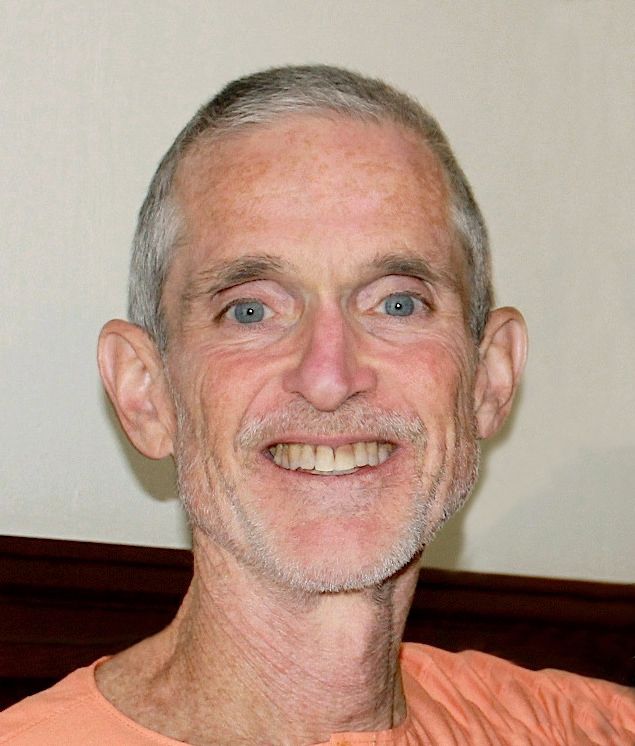
Swami Ramananda is the Executive Director of the Integral Yoga Institute in San Francisco and a greatly respected senior teacher in the Integral Yoga tradition, who has been practicing Yoga for over 45 years. Ramananda offers practical methods of integrating the timeless teachings and practices of Yoga into daily life, and transforming the painful aspects of human experience into steps toward realizing one’s full potential.
He leads beginner, intermediate and advanced level Yoga teacher training programs in San Francisco, and offers a variety of programs in many locations in the U.S., Europe and South America. Ramananda co-developed the Stress Management Teacher Training program with Swami Vidyananda, has trained many teachers to bring Yoga into corporate, hospital and medical settings, and has taught mind/body wellness programs in many locations. He is a certified Yoga therapist and founding board member of the Yoga Alliance, a national registry that supports and promotes yoga teachers as professionals. He is a co-founder of The Spiritual Action Initiative (SAI) which brings together individuals committed to working for social justice for all beings and for the care and healing of our natural world. His warmth, wisdom and sense of humor have endeared him to many.

2023-02-15T17:25:13-08:00February 13th, 2023|

Kirtan

by Wah

I started chanting when I was in college at Oberlin College and Conservatory.  My dance teacher taught me a Sanskrit chant and then a disciple of Ravi Shankar, Roop Verma, came to teach for a short while. He taught raga on orchestral instruments. I learned raga on violin. I also began playing tabla, singing with the harmonium. And about that time, I started doing yoga too. It all came together in the same package. In school, I was studying African music, Indian music and many other styles. Sacred music for me was all about community – it brought everyone together for celebrations, life changes, new beginnings, endings and more.

The music I create is inherently meditative. It points to a practice, a daily practice of clearing and blessing the body vehicle, infusing it with light and love so you can be open to your day. Sanskrit chanting connects you to the vibration of Om, the sound of all things moving in Creation. It is a quality of connection that is supreme. 

The goal of meditative practices is to feel peace. To feel ecstatic, joyous. You participate in your life without directing it. You watch it evolve, you celebrate your own evolution as well as others. It is joyous to watch life moving through us and all living beings.

Every living thing on earth has a quality, a way to measure or understand its purpose. Physical form has a quality of being dense, heavy, tangible. Things of Spirit have less density. Stones, trees, and bones are made of slow-moving molecules. Water and blood have molecules which move a little faster.  Air, light, electromagnetic frequency and spirit have the fastest moving molecules. Our bodies are a combination of all three. Sacred music injects some of the faster moving frequencies into our bodies. It speeds things up a bit. To me it feels like joy.

When you analyze or go over events in your mind it gives you insight but not healing. Insight is the beginning of new awareness. But healing requires a cellular transformation. The cells need to reform themselves with the new information. Think of it like a software upgrade. As the body comes into contact with faster moving frequencies of joy and light, it changes or upgrades the composition of the physical body. The cells change. The DNA changes. The mitochondria lengthen. You feel different. You have a different point of attraction for your life. The Spirit world has more light, more electromagnetic energy, more heat. By sourcing higher vibrational frequencies, your mood changes. Your life changes. Healing happens, you open pranic channels, and then you feel freer, like a new person. 

The chants I do are simple mantras. A few words that repeat, something easy to remember and join in on. These mantras were created for the masses, for uneducated people. Unlike the Vedic chanting, which requires a Brahman lineage, years of study and memorization of long passages, the chants we sing are simple. If you just say Shree Ram Jai Ram Jai Jai Ram while you’re plowing the fields, cleaning the temple floors, or doing housework, it can elevate you in whatever you are doing. It is simple. This is why I do it. There are no qualifications, no pre-requisites.

It’s simpler than classical Indian music. Classical Indian music is for the educated. In a classical concert, after 108 beats when the musicians return to beat one, everyone in the audience is keeping track and enjoys this moment of unity. But you have to be educated to appreciate it. My chanting has to be accessible, appreciated by the everyday person. Folk and bhajan rhythms are 4 beats or 3 beats, simple. Folk music is for the people, the working class. That means I introduce some folk or pop elements, some jazz into my music. I play with it. I want people to relax and feel comfortable both with me and with themselves. Because that’s when healing can happen. Not when you’re trying hard to be something else. It has to be integrated. We are multi-cultural now and my music shows that. Whatever the style, it has to be integrated in a way that makes sense to me, so that I can deliver the joy to you. 

Some critics feel that the Western brand of kirtan is not as sacred, not the real thing. Well, the Westerners could improve their pronunciation of the mantras, that’s for sure! But let me put it this way: Yoga and chanting are both sacred by nature. The listener has to decide for him or herself if the teacher/performer is drawing them into sacred space. “Is this connecting me to Source energy? Is it helping me connect to myself?” Each person has to ask and decide. Some of the music out there is sacred; some of it is not. You have to sift through it.

My music is based in spiritual work. I practice yoga, meditation, pranayama. I teach self-care and healing. My personal evolution is informed by intense study, intense practice, kindness/light-heartedness and humor. I consciously bring these elements into my work, to help myself and the people I come in contact with.

Chanting is a practice I do for myself. I chant to feed myself so my actions can follow an intention of joy love. My intention is to raise my vibration and let it flow into whatever I do. I have chanted for over 50 years now, I think it’s in my pores, in my heart.

Chanting gained popularity because people had a genuine longing. In the 1960s the Beatles sang “My Sweet Lord/Hare Krishna” and Ravi Shankar played for Woodstock. It opened people’s hearts. 2023 has brought the world to a precipice. We must bring in more light or be swallowed by the darkness. How are we going to do that? Through yoga, chanting, 12-step programs, eye movement therapy, neurolinguistic programming, counseling. There are thousands of amazing technologies out there, including yoga and chanting. If I can make people feel more at peace with themselves through chanting, I feel I have contributed something. If people can create the new world with joy, old ways will fall away naturally.

I travel around the country trying to share with everyone an experience of openness, a presence, an elevated state of being.  There’s no scientific how-to, it’s just an experience of hanging out. We chant, I tell stories, sing songs; we try to find an elevated energy together. I don’t say I’m the  authority on spirituality. I don’t say, “Do you see that? That is where we’re going.”  No. I say, “We’re going to close our eyes together and see what happens.”  For me, we’ll hang out together. (I appreciate ya’ll coming and meditating with me.)  When I see you twice a year or once a year, I look:  Are you brighter?  People see me, and say “Ahh, you look brighter.” Or maybe not. I see someone else whose life fell apart and went through enormous changes. I see more light in their eyes. More internal growth. They are more connected.

Being connected means you can embody more light, at higher frequencies. You are open.  But getting there is not always pleasant – when something hidden is suddenly revealed. “Oh That?!”  I always squirm, “Certainly not That. That doesn’t have to go.”  My guides sit silently, waiting for me to “get it.” Yes, That needs to go. You think it is your own, but actually it isn’t a personal item at all. It’s a personal framework hindering you from becoming who you are. You protest but eventually let go, feeling a bit freer, even though it’s unfamiliar.  With grace, personal becomes universal, like drops of water joining an ocean.

Our evening of KIRTAN together, Sun. February 12 @ 5:00 – 6:30 pm PT, will be chanting, meditation, dancing if you like –a beautiful evening of higher vibration. Sign-up

Wah! is an accomplished musician, record label owner, mother, and one of the founders and leaders of the global yoga community. She has spent over 25 years teaching and performing, helping people relax, improve their health and learn about compassionate relationship.  She was born into a musical family and graduated from Oberlin College/Conservatory with a Performing Arts Degree and a minor in Vocal Studies. She explored African, Indian, and Western folk and jazz music and became one of the pioneers of kirtan (mantra chanting) in the West. Her meditative music is used around the world, her Savasana CDs are bestsellers. She will be performing at IYI San Francisco on February 12, 2023. www.wahmusic.com

2023-02-04T09:44:43-08:00February 4th, 2023|

Opening Up About the Chakras

by Mia Velez

Exploring the Chakras is interesting.  Why is it interesting? Because it alludes to something subtle.  It promises an understanding and a depth of perception that might give some secret knowledge on how to get along with life.  It’s mystical and occult, which makes it fascinating.  But, is there a practical application – a way to work with it so that it is of benefit?  There is an abundance of writing out there about the Chakras, and yet there isn’t a definitive system that describes them satisfactorily. It seems that there are as many interpretations of the chakras as there are practitioners. I have to ask myself if offering a chakra workshop seems audacious.
I actually haven’t read the Vedas or the Upanishads, but a Google search says the chakras are in there.  By no means am I an expert.  I am simply a seeker just like you.  I am curious, just like you.  I realize that I’ve never had any in-depth dialogue about the chakras with anyone.  There have been no mentors to discuss this with.  My study of the chakras has been done alone and under cover.  It’s funny to share now, but early in my investigation a satirical image of someone who speaks of chakras made an impression on me.  They were flighty, flower-children, who taught yoga in beaded bracelets all along their arms, a stone necklace and hemp fabrics around their necks, shaking their bells or incense and a total pot-head.  Think, Saturday Night Live yogi character. That image really affected me. I wanted to be taken seriously as a Yoga teacher and that image made me feel embarrassed by my interest.  So, I studied in secret, making  use of whatever I learned, applying it to my practice and not sharing it with others.  As a yoga teacher, one word I for sure did not use in class was the word “chakras”.  With such an abstract concept, who was I to tell people where it is and how it affects the body.  But mostly, I didn’t say anything because I didn’t want to be seen as that SNL Yogi.

As I matured and shared bits and pieces with friends, I discovered that I’m not the only one who is into chakras.  A LOT of people are interested. Why else would there be SO MANY books about it?  The Saturday Night Live impression is one flavor…a sliver of a representation.  And, yeah it can be a funny trope.  However, it’s a strong image. I still notice that awkward impression that lingers when I talk about the “chakras”.

It wasn’t until last summer’s 200-hour Basic Yoga Teacher Training that I really opened up about what I know so far.  One of the tasks as a yoga teacher trainer was to actually count the hours of live instructions to meet the “200 hours” Yoga Alliance requirement.  A student was allowed to miss only x amount of hours to be eligible for the diploma.  The way we designed our program, the “x hours missed” restriction was becoming an obstacle for some of the students.  In response, trainers Nitika Achalam and Rukmini Ando and I took turns offering quick 30 minute segments we called, “How to deepen your practice.” I offered to talk about the chakras, and I didn’t prepare much because, what’s 30 minutes?  The students were engaged that evening and that helped me to share more of what I knew, which was more than I had realized.  I was able to describe features of each chakras just from memory and even suggest the asanas that can access them.  The 30 minutes went by fast.  Everyone came with their own knowledge and was happy to share. It was fun to geek out about chakras with people. …but we ran out of time – UGH!  We had just scratched the surface!

So, that’s what I want to offer in this workshop.  I’m going to share with you what I know so far about the Chakras (colors, location, sound, asana etc.) and give myself enough time for it.  Having the workshop in two parts with a week in between, gives us all time to digest and think about the information, before continuing on with the group exploration.

I am excited to indulge in this interest, and I am curious to know how these energies occur to others.  I have a personal relationship with the chakras, that has evolved over the years.  In fact, in preparation, I am revisiting the chakra books I’ve read and reread and realizing that my understanding has shifted from the books’ perspectives.  I must have mashed up all the information I’ve taken in and come up with a perspective of my own.  It has become a system of understanding myself that I quietly utilize to sort out parts of my life.

There is an infinite amount of information out there on the chakras, enough so that it would be nearly impossible for one person to get it all. The information I hold wants to be shared, and  an odd and silly bias is not going to hold me back anymore.  It’s stimulating to be in discussion with those who are just as interested and mystified by the chakras as I am – even the SNL Yogi.

Join Mia for her upcoming 2-part workshop Intro to the Chakras, Saturday, February 4th & 11th from 11 am – 12:30 am PT.

Mia Velez entered the Integral Yoga Sangha in 2016 through the kitchen by helping to cook Thursday community lunches and silent retreat meals. In 2018 she certified as an Integral Yoga teacher to learn more of the IYI approach and be part of the lineage. Mia is a disciple of the Moy Yat Ving Tsun Kung Fu lineage and is highly influenced by her martial arts training. After completing her first 200 hour teacher training in 2008, she began to see undeniable parallel in Yoga and Kung Fu. When she began teaching Kung Fu in 2014, she incorporated Yoga insight and principles in her classes. Her goal in teaching is to connect with the students and to facilitate a safe space for exploration and self inquiry. Yoga and Kung Fu is integrated into her daily life as a mother, a preschool teacher, and an advocate for gender, race and class equality through multiple non-profits groups.

2023-01-26T16:05:35-08:00January 26th, 2023|
Go to Top