Understanding our Capacity: The Importance of Learning to Let Go and Listen into the Body through Therapeutic Yoga and Sound Healing
By Rachel Jennine Goudey, Psy.D., C-IAYT and Shalom Mayberg, MIM

Just because we can, doesn’t mean we have to, or that we should. I recognize this ingrained “need” within myself to always do more, go hard, say “yes.” I notice it when I feel overwhelmed by an upcoming social event or task that I said “yes” to, but my body is telling me “no,” and asking for rest, and I wrestle with what to do. I notice it physically when I take a yoga class and the teacher invites us to go slower, to skip the vinyasa and go straight to downward dog or child’s pose and rest in the stillness longer. Often I continue to practice the vinyasa, though more and more I’m encouraging myself to take the pause, do a little less and thus be able to really settle into my body and BE there. This is what creates space, and in turn, cues us into what our true capacity is.

Capacity can be defined as how much we can hold, as well as how much we can produce. Knowing what our capacity to take in, as well as what our capacity is to put out is, only comes when we allow ourselves the space to pause and listen. By listen, I mean feel, and this happens when our body can let go and relax. Like everything else though, it is a daily practice of pausing and noticing. Getting curious, and being kind. If we are not used to going slow and relaxing, it can actually feel tense and scary. Our body and nervous system need time to adjust to something different. This is where the practices of slower, therapeutic Yoga like restorative and yin can help us as they encourage us to soften and slow down progressively. The postures, held for lengths of time in a supportive environment, with supportive props teach our nervous system that it is not only safe, but healthy for us to slow down. In time this message translates into our daily lives and we begin to make more conscious choices that honor our body, energy, and mind’s true capacities.

In a recent restorative class where I was the student, the teacher guided us into a supportive bridge pose, encouraging us to put the block on the lowest height. I always put the block on the highest height because my body can comfortably do that, and “if I do less, I won’t get enough out of it.” Perhaps what there is to “get out of it” is to learn to be patient and present with one’s self, and give some space for ease. I turned the block to its lowest height. I watched myself physically and mentally struggle a bit to get comfortable. After a bit, with my attention on my breath and giving permission to do less, my body and mind calmed and I settled into ease.

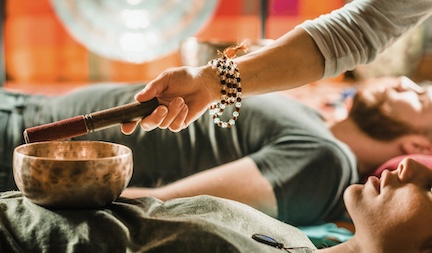
Like restorative yoga, the benefits of therapeutic sound healing are apparent when we slow down and let go of trying so hard. Sound healing has this way of inviting us on a journey through the senses whereby we can release, heal, or acknowledge all sorts of life’s challenges. Emotional, physical, or spiritual ailments are released with each note of musical healing instruments. However, the precursor to this is “letting go” letting go of judgments, or preconceived ideas of how this or that should be or at a minimum, a willingness to let go- aka a willingness to change. For some, during a therapeutic sound bath letting go happens very quickly, and for others, it takes a little bit more time. Each instrumental sound touches each person differently and offers the participant exactly what they need at that moment.

One of the beautiful things about sound healing is that even in a group of 10 or 20 or more, all listening to the same sounds, each person will receive the sound differently and exactly as they need. One might see extravagant colors and multifaceted imagery bringing them to a state of grace and awe, while another might have a more visceral experience, akin to an energetic, chiropractic adjustment of sorts, while another might be remembering and releasing old hurts through whimpers and tears. At its core, however, therapeutic sound healing will bring us back to our center and realign our energetic (chakras and meridians) system to a place of presence offering us clarity and a deeper connection.

The sound vibrations pulse through the physical body while the Yoga postures target specific fascia and muscles, offering each cell, organ, muscle, and bone an acoustic massage from the inside out. Ultimately, this massage-like experience brings the brain and subtle body to a place of stillness. It is from this place of stillness that the inert wisdom can come alive to restructure and realign itself.

Often we don’t realize all the ways we are constantly doing, and overriding our capacity, be it energetically, mentally, emotionally, or physically as it becomes “normal,” and we fall into patterns of running our body and nervous system beyond their capacity. This is when things like burnout, fatigue, overwhelm, and feeling paralyzed to take action come into play. Harnessing the ancient wisdom and power of Therapeutic Yoga and Sound Healing helps to realign the body, mind, and spirit and guide us to make conscious and aligned choices that honor our capacity in life.

You can experience Therapeutic Yoga and Sound Healing on Sunday, March 17 @ 3:30 pm – 5:30 pm PDT with Shalom and Rachel. Space is limited, please sign up in advance.
Shalom Mayberg, MIM
Dedicated to holistic well-being and spiritual exploration, Shalom Mayberg is a yoga instructor, energy healer, and sound healing practitioner. Through the practice of yoga, he guides individuals on a mindful journey through movement, breath, and self-awareness harmonizing the body, mind, and soul. Shalom has also been working in the healing arts for over 13 years and uses modalities such as Reiki, Energy Medicine, and Intuition to facilitate holistic healing. In addition, the medicine of sound is prominent in his practice and is used to create transformative experiences for people of all backgrounds. Shalom recently graduated from the Academy of Intuition Medicine and offers 1:1 work, training in Reiki and sound healing, and group events. To learn more, visit shalom360.com.
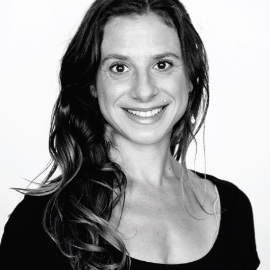
Rachel Jennine Goudey, Psy.D., C-IAYT
Rachel Rachel is an IAYT Certified Yoga Therapist, Educator and Doctor of Psychology. Specializing in trauma work and embodied practices for nervous system integration, Rachel helps clients increase their capacity for joy and love in life through somatic movement, breath work, sound healing, self-reflection, and cultivating healthy life choices.
Rachel brings years of mental health experience working with at-risk and underserved populations, integrating Eastern and Western practices to help clients move past symptom relief into true healing. She has brought holistic yoga programs and professional trainings on yoga for mental health into community mental health centers, hospitals and schools. Rachel’s aim is to guide individuals into states of peace and trust in their life’s story through the mind and body, create community, and bring the teachings and practices of yoga into various settings around the world. Rachel’s classes meet each student where they are at while still challenging them to reach new heights of self-realization, acceptance, and strength and flexibility, both on and off of the mat. She will push you to challenge yourself while also guiding you to listen to your body and intuition, teaching from a place of authenticity, passion and playfulness. To learn more about Rachel and her work visit racheljenninewellnessandyoga.co

2024-03-07T16:42:21-08:00March 7th, 2024|

Facing Adversity

by K. Muktidevi Demafeliz

What does it really mean to face adversity and how can we build the strength within ourselves to face the adversities in our lives? When I think about that, I think about the Sanskrit word
“tapas” which means “accepting pain for purification.” We need to face and go through our
difficulties, to accept, purge and then grow from our pains, our experiences. Like all of us, I have been through many trials and tribulations. They have been overcome with time, healing and growth and they have all brought me here to write this blog, but the one adversity I’d like to
share with you today is my diagnosis and living with Multiple Sclerosis (MS). This October will
be my 26 th year of living with MS.
 
MS is why I sought yoga in the first place, and then, over time, I fell in love with the practice.
Now, 16 years later, I want to share my journey with you.
 
Before I began my yogic/spiritual path, I was doing everything backwards; I was eating poorly,
not exercising regularly and was attaching myself to everything and everyone! When I was
introduced to yoga practice, it was because I had to figure out a way to “keep my body
moving” after being half-paralyzed, temporarily blind, speech impaired and a full list of other
symptoms. I was what we call a “hot mess,” but I knew I had to get my act together or else, I told myself, I was NOT going to make it. I was involved with the National MS Society and the MS community and I needed to figure out a way to balance everything and to lead a healthier lifestyle. I took my first yoga class back in March 2008, when I was employed at the SFPD Airport Bureau and had decided to join the Wellness Program at the SFO Airport. WOW… how  that all changed my life, truly, for the better.
My first yoga teacher, who then became my mentor, Anthony “Tony” Garcia supported and
guided me through the teachings. I was four years into my practice when I started to have a
deeper understanding and connection with mySelf, with my body and breath. When I told Tony
“I want to become a yoga teacher, show me the way,” he shared literature with me and worked
with me, helping me to understand the science and philosophy behind yoga. He encouraged me to take yoga teacher training in the Integral Yoga® tradition and, when I stepped into the IYISF back in September 2014, that is what really changed my life forever.
 
During my very first yoga teacher training at the Institute, in the midst of the many hours of intense training, studying and many practice sessions, my mother was very ill with cancer. The challenge of caring for a sick parent while dealing with my own health condition was huge and my mind was in a constant blur. The uncertainty of my mother’s condition and my desire for her to live forever  and my terror of losing her just as I was finally pursuing my passion to becoming a yoga teacher was all so very difficult. I was sleeping less than four hours a night, or none at all, while I cared for my mother and studied.
During that time and over the years, as I stuck with it, my yoga practice saved me, helping me
tremendously with my healing, growth and survival. During the teacher training, I was able to
really “be in the present moment and detach myself” from the people and things that were
binding me from internal happiness. I allowed the asanas, breath work and stillness
(meditation) to help carry me through and, day by day, they helped ease the pain I was feeling
inside my heart.
 
One of the spiritual sayings that really put things in perspective for me was “Pratipaksha Bhavana.” It tells us that when we are disturbed by negative thoughts, opposite (positive) ones should be brought to mind. By practicing Pratipaksha Bhavana in daily life, we are able to stop negative thoughts from overpowering a situation, which can then change the environment, bringing about a “positive” one.
My mother ended up taking her last breath on October 17, 2015 and passed away while in my
arms (boy that was hard). Although that was one of the most soul-crushing moments in my life,
it was also a special and beautiful moment for me. The same person who had given me life was
transitioning over to finding ultimate peace, with no pain or suffering, and I was able to witness
all of that with her. In recent years, I have found myself facing most of my traumatic hardships
and coming out on the other side, even when I did not think I was going to make it. Now, I want
to continue to thrive and be true (Satya) to myself with the saying, “its okay, to not be okay” and
to not be afraid to ask for help or to give myself permission to cry when I feel the need to.
PURGING is vital for the healing process. And learning and growing from what caused us pain
and suffering in the first place, being able to detach or “let go” of that pain is liberating,
lifesaving.
 
In closing, please practice LOVING yourself unconditionally (I know this can be challenging)
and do not say or think that you are less than anyone else if you feel that “something is wrong
with you.” You are your own ultimate higher Self. Love yourself fully so that you can love and
help others heal from their own adversities, giving them the space and voice to be heard.
Liberate yourself from what may be binding you to any sufferings, and know that one can
release and purge out and purify any pain (going back to tapas) by confronting and accepting
those pains. The pain is temporary. Liberate yourself, empower yourself and allow yourself to
heal through the power of your yoga practice.
You can join Muktidevi along with Swami Ramananda and Arpita Roy for Satsang: Facing Adversity, Sat. March 2 @ 5:30 pm – 6:30 pm PST online & in-person. Or attend Muktidevi’s Mixed Level Online Hatha class, every other Thursday from 6:00 – 7:00 pm.
K. Muktidevi Demafeliz is a born and raised San Franciscan and has been a yoga practitioner for 16 years. Her yoga practice began with her mentor Tony Garcia who guided her in the study of yoga back in 2012 through the SFO Airport’s Wellness Program. He encouraged her to pursue yoga teacher training, which she did, in the Integral Yoga tradition. She is certified in Basic Hatha I, Intermediate Hatha II, Accessible Yoga (Gentle), and certified in Mindful Resilience Training through the Veterans Yoga Project to teach trauma-informed yoga. She wishes to pursue future trainings such as Meditation Teacher Training in addition to Yoga for First Responders as she is the Well-Being Champion for the San Francisco Police Department. YOGA IS HER PASSION, and she expresses her love and enthusiasm for the practice with those she comes into contact with, on and off the mat. Muktidevi mentors and supports teacher trainees as well as newly certified teachers to help them continue to develop and grow while on their yogic path. She also supports the BIPOC Sangha which was born at the Integral Yoga Institute San Francisco (IYISF) and continues to serve these communities to help create ripples for change to establish a space of healing and empowerment. With that, yoga has impacted and transformed her life in such a positive and healthy way that she truly believes it is the saving grace for all. For 26 years, Muktidevi has been living with Multiple Sclerosis (MS) and continues to carry out the practices of yoga to help her maneuver through life’s challenges when facing adversity. She is a lifelong learner and strives to become the best version of herself to live her best life, regardless of what life may bring.
2024-02-21T14:33:02-08:00February 21st, 2024|

How to Stay Heart Centered Once You Find Yourself There

by Snehan Born

Swami Satchidananda said, “Bhakti Yoga is the easiest practice because we begin with Love. Chanting doesn’t require a quiet place or a particular kind of dress or a particular type of life.”

 This testimony is evidenced by the steadily increasing popularity of Kirtan chanting all over the world. People are discovering the benefits and pleasures of chanting the Holy names of God. The practice requires no particular faith nor belief to have a positive effect on us.

By singing or repeating these names, even if we don’t know the language we are chanting in, there comes a quieting of the mind and an opening in the heart. Those who regularly practice Kirtan and Japa experience, without fail, a shift from mind centered being to heart centered being. Then comes the question: How do we maintain the open heart and stay centered there  in our exchanges with other beings who may not, consciously or unconsciously, welcome nor support an open heart? If we are not securely grounded in our open heartedness then we will feel the need to guard our hearts from the critical responses of others.

I have been thoroughly enjoying chanting Kirtan and Japa practices for decades now and most definitely in the past 6 years of living at the IYI in San Francisco.  Joining an online sangha that meets every morning to study and repeat the Hanuman Chalisa has given me very clear experiences of reliably opening the heart only to feel that I shut it down upon the first encounter with negativity. But these experiences have shown me the more challenging work of staying open hearted in the presence of negativity.

It is certainly not easy, but just lately I’ve had some pretty clear experiences of quelling the tendency to react in defense and rather, just allowing the presence of perceived negativity without needing to “correct” it. I have watched the mind rushing back into its job of defending the ego and have interceded with the knee-jerk reactive mind, requesting  that I stay in the heart, because I know how good that open heart feels.

When I’ve been more successful with this, I have been surprised with the degree of calm presence that I find myself in. Within that space, I can choose to react, if at all, from loving kindness and choose thoughts, words and actions emanating from Love. Even if this doesn’t shift the negativity on the outside, inwardly I remain relatively peaceful compared to the alternative of defensiveness and needing to be understood. And that feels way better than any degree of defense or understanding can produce.

Join Snehan for monthly Full Moon Chanting – February 23 @ 8:00 pm – 8:30 pm PT online & in-person.  He also teaches weekly online and in-person:

Snehan Born, E-RYT 500, has over four decades of experience with yoga. He resides at the Integral Yoga Institute of San Francisco, where he teaches yoga classes and is a lead teacher trainer. Snehan is certified in all levels of Integral Yoga Hatha and has received additional certifications in Pranayama, Meditation, Raja Yoga and Stress Management from Integral Yoga. Chanting mantras and playing the harmonium are part of his regular practice and classes. Snehan has lived and traveled extensively within India and practiced with many teachers there. He has taught yoga all over the US as well as in India, Nepal, South America, Australia, New Zealand, Mexico, Japan and Europe.
2024-02-14T21:19:55-08:00February 14th, 2024|

Teaching of the Month: Living with an Open Heart

by Swami Ramananda

When we talk about the purpose of spiritual practice, we often say something about experiencing our True Nature. What exactly does that imply? When I reflect upon what that means to me, I think of experiencing an innate peace or contentment within myself, as well as a sense of oneness with the whole web of life. This integral sense of connection gives rise to a natural compassion toward all fellow beings, which enables me to derive joy from caring for and serving others.

Of course, the culture we live in obviously paints a different picture. We are conditioned in numerous ways to think of ourselves only as a body and mind, separate from each other. And if we’re unable to experience the spiritual consciousness that is our shared ground of being, we invariably find ourselves living in a trance of separation. This sense of disconnection suggests that something is lacking, leaving us with an underlying sense of incompleteness and insecurity.

Our culture prescribes the solution in the form of acquiring things, achieving goals, and arranging our lives well enough to create the conditions for material security and seeming happiness. Our minds are thus dominated with all the judging, planning, reasoning and evaluating necessary to create a so-called successful life, causing us to dwell so much in our heads that we inevitably lose touch with our hearts.

I think that in many ways the spiritual path is a return to dwelling within our hearts, where we can feel a natural connection to each other and to the source of wisdom and joy that is our True Nature. The sages of many spiritual traditions have asserted that learning to love each other fully is the essence of their teachings. The Dalai Lama once said, “Kindness is my religion.” Jesus Christ gave us the well-known teaching: “Love thy neighbor as thy self.”

In his book, A Path with Heart, Jack Kornfield beautifully articulates this understanding: “When we see the mind’s very nature is to think, to divide, to plan, we can release ourselves from its iron grip of separatism and come to rest in the body and heart… As one great Indian master, Sri Nisargatta, put it, ‘the mind creates the abyss, and the heart crosses it’.”

Of course, we must use our minds to function in the world, and it behooves us all to think clearly, plan ahead and use good judgement. Yes, absolutely.  However, our thinking can also function in harmony with a Higher Will when we stay open and connected to our hearts. When we allow ourselves to be guided by a Higher Will, we will have compassion, first of all for ourselves, enabling us to acknowledge our mistakes and recognize our unhealthy behaviors without judging ourselves harshly.

Living with an open heart also enables us to enjoy the connections we make with each other – deep friendship and intimate love are beautiful and powerful aspects of human life to be embraced and treasured.  What we must learn though is to love without requiring something in return, experiencing the joy of giving love freely. When a mother loves her baby, for example, she doesn’t expect anything — the experience of opening one’s heart fully to another being is itself fulfilling.  We can all learn over time, often from the pain of our unhealthy attachment to others, to love in this selfless way.

Just as we learn to open our hearts in relationships with those we love, we must also learn from our difficult relationships.  If we dislike someone that we find annoying or shun those who are struggling, we ultimately hurt ourselves by closing our hearts and failing to remember the spiritual presence and connection that resides within us all.  The teachings from many spiritual traditions clearly guide us to cultivate an inner response of compassion to those who are suffering.

In this context, a compassionate mindset does not dictate any specific behavior.  Compassion may take many forms — from lending a helping hand to simply offering a prayer, acting with kindness or listening with empathy.  This practice keeps our hearts open and at peace, remembering that we too struggle when we are overwhelmed or distraught.

Clearly, the best motivation for serving others comes from experiencing the feeling of compassion flowing through our hearts and the natural sense of joy that arises from giving freely. Ultimately, we are all learning, one act of kindness at a time, that pursuing our spiritual growth also means nurturing the impulse of an open heart to selflessly love and serve as instruments of the Divine Will.

You can join Ramananda this month, online or in-person for:

Swami Ramananda, C-IAYT, E-RYT 500, is the Executive Director of the Integral Yoga Institute in San Francisco and a greatly respected senior teacher in the Integral Yoga tradition, who has been practicing Yoga for over 45 years. Ramananda offers practical methods of integrating the timeless teachings and practices of Yoga into daily life, and transforming the painful aspects of human experience into steps toward realizing one’s full potential.

He leads all levels of Yoga teacher trainings and programs around the globe. Ramananda co-developed the Stress Management Teacher Training program and has trained many teachers to bring Yoga into corporate, hospital and medical settings. He a founding board member of Yoga Alliance and is a co-founder of The Spiritual Action Initiative which brings together individuals committed to working for social justice for all beings and for the care and healing of our natural world. His warmth, wisdom and sense of humor have endeared him to many.

2024-02-05T11:33:38-08:00February 5th, 2024|
Go to Top