About prajna

This author has not yet filled in any details.
So far prajna has created 103 blog entries.

Ahimsa for Your Hurting Heart
by Karla Helbert

Ahimsa, the first of the yamas, is possibly the most important guide of all for self-care. It is often translated as “non-harming, non-violence. Sadly, the human capacity for violence and harm is our greatest failing. Acknowledging our own capacity for violence—toward ourselves and others—is the beginning of change. We may think that violence has nothing to do with grief, but it is actually quite often a part of the experience.

Underlying violence is almost always fear. We are regularly filled with fears, of the unknown, of others, of change. To avoid feeling our own pain, or being in pain, we often cause pain to others as a form of protection. When our security is threatened on any level, our inner capacity for violence is stirred. This may take place internally or as an outward expression, but it is always a form of violence. Any time we experience any amount of hostility or antagonism, inwardly or outwardly, there is violence—even if but a seed.

Any type of loss can bring feelings and experiences of violence and a sense of violation. When people feel powerless or filled with despair, anger can often result. We may want to lash out, to harm, to destroy. We may also direct violence toward ourselves by neglect, or through harmful behaviors that can damage body, mind, and spirit.

We live in a world where anger is often more acceptable than sadness. Anger itself is not the problem. Violence is the problem. Anger is a signal that there is something wrong, and when you experience profound loss, there is something very wrong. Recognize that your feelings are important and valid. Being aware of how you direct the energy of your feelings—especially anger and fear—makes all the difference. Learning to cultivate loving and constructive energies and feelings in the place of violent, destructive ones can be difficult, but it is possible. The practice of ahimsa supports us in this.

Directing compassion toward ourselves is essential in grief, and in managing feelings of anger and fear.  Yet, many of us have extreme difficulty with self-care. Sometimes this is because we are so overwhelmed by pain that we simply do not have the energy to act in a caretaking way for ourselves. Other times we may feel emotionally unable to engage in acts of love or care toward ourselves. We may feel undeserving of care or love. We may feel we do not deserve anything other than pain or there can never be anything other than pain in the future. We often do not care about the pain we may cause ourselves—no pain can be greater than the pain of being without who or what we have lost.

Awareness is the beginning of change—and of ahimsa. Can you observe, with as little judgment as possible, any violence that has occurred or may be occurring inside you? Can you peel back the layers of that to see what lies beneath? Is there fear, is there anger? Do you regularly perpetuate thoughts or engage in behaviors that cause harm to your body, mind, psyche, or spirit? The first step to dissolving the root of violence is recognizing that violence has taken root. Is there a seed that may grow? Observe with love and compassion and without judgment any violence inside you and how it is manifesting.

Spend some time thinking, with as much compassion as possible, about ways both large and small that you do harm to yourself. This in itself is a form of self-care. You do not have to force yourself to change your thoughts or actions, but rather attempt to become lovingly aware. Slowly and gently, you can add small ways of caring for yourself. Those small things may turn into greater acts of self-care.

Self-care is physical—taking care of your body with good food, sleep, exercise, massage, movement, sunshine, and nutrition. It is mental—self-help books, music, art, creativity, seeking and finding a well-trained counselor who understands grief and bereavement. It is spiritual—in meditation, nature, study of spiritual books, chant, ritual, prayer, contemplation, speaking to a trusted spiritual leader. Self-care is also found in reaching out to your community—to friends and family, neighbors, co-workers. It is finding and going to a support group, engaging with on-line communities, taking a course or workshop. Each of these things can be done with small steps forward.

Here is a simple, yet profound ahimsa practice you can do right now: Place your hands over your heart, close your eyes if you wish. Breathe slowly and fully, directing your focus toward your heart. Ask yourself, “What is the most compassionate thing I can do for myself right now?” Sit and breathe. Connect with your heart energy and allow the answer to come. When you are ready, open your eyes. Is it possible to do that thing? If so, please do it. If not, make time and space to practice the compassionate thing as soon as possible.

Join me November 7th for a few hours of self-care as we explore how yoga can help you in your heartbreak. Learn ways of practicing ahimsa as you take steps toward tending to your heart with compassion and nonjudgment: Yoga for Grief & Loss
Sun. November 7 @ 12:30 pm – 4:00 pm PST
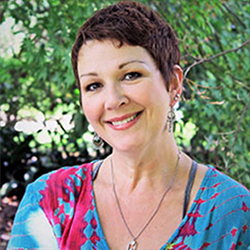
Karla Helbert, LPC, C-IAYT, E-RYT 500 is a licensed professional counselor, yoga therapist, award-winning author, and bereaved mother. Her life was forever changed after her son died of a brain tumor in 2006. Karla’s book Yoga for Grief and Loss is endorsed and used as a teaching tool by leaders, teachers and experts in the fields of yoga, grief and loss. Her most recent book The Chakras in Grief and Trauma is the currently the only book focusing on the ways our energetic bodies are impacted by trauma and grief. Karla is also faculty for the Integral Yoga Therapy 800 hour certification teaching Yoga and Psychology. She lives in Richmond Virginia with her husband and daughter. karlahelbert.com
2022-02-15T18:29:43-08:00October 21st, 2021|

Personal Reflections on an Integral Yoga Ordination

by Rev. Sadasiva (Kurt) Schroeder

Last weekend I was ordained as an Integral Yoga Minister in San Francisco, culminating a process that began twenty five years ago when I was introduced to Integral Yoga by my then partner.  Jai was looking for opportunities to teach in a spiritual and health-related area at a time when the gay community in San Francisco was responding to the HIV/AIDS crisis, a crisis that was to become a pandemic among the most vulnerable and marginalized segments of our society and the world.

In the spring of 2020, when the news about COVID emerged, I was struck by how similar the understandable fear and sense of urgency was to what had arisen in the days of the AIDS pandemic. Integral Yoga, as a system of attaining optimal health, with its emphasis on maintaining peace of mind, is as relevant today as it was then and has been throughout the ages. I am proud to be part of this beautiful lineage that offers an effective and sensible approach to reaching our highest potential for the greatest benefit of all.

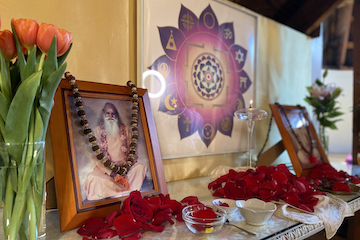
The ordination ceremony began with a Puja to the Light and was attended by a small group (for safety’s sake) of sangha members and friends, many of whom were gathering at the SFIYI for the first time in a long time. There was a general feeling that the ominous COVID cloud was lifting, thanks to an effective vaccine and having closely followed precautions. Swami Ramananda officiated at a beautiful ceremony that included explanations of the significance of the different aspects of the Puja, for those who might be unfamiliar with it. Swami Vimalananda and Reverend Kamala Damaris both spoke about the significance and experience of being a minister. The minister’s vow and certificate were presented and signed.

It all seemed to be going by so quickly and as though I was watching it from a distance. Then, I was given the opportunity to say a few words and suddenly, to my surprise, my heart burst open. As I gazed at the people there and saw the light reflected in their eyes, I felt and watched myself melt away in a moment of pure love and connection.

In the moments that followed I spoke about how, early on in my journey, I had heard Gurudev’s message that ambition and success could be measured by the effort made to maintain one’s peace of mind. Until then, I had taken ambition and success to mean following steps to secure material wealth in a competitive system that rewarded individual accomplishments. I began, instead, to use my state of mind as a barometer to guide me. If my peace of mind was disturbed, that was a signal to examine my own motives and focus instead on understanding what others needed. Gurudev’s words motivated me and gave me permission to travel down the spiritual path. I understood that the greatest ambition one could have was to cultivate and maintain that peace of mind. That made sense to me and made me a better person overall. Imagine how thrilled I was later when I heard Gurudev state, with such strength and conviction, that “Peace is my God!” This was something that I, with a secular background, could completely understand and get behind.

I took a break during my Integral Yoga seminarian training to earn a Master of Divinity degree at Naropa University, in order to become a hospital chaplain. I felt that this Buddhist based university was a good complement to what I had learned and experienced through Integral Yoga. This academic and contemplative journey confirmed and deepened what I had already learned. It struck me that it all boiled down to being kind; kind to myself, to others, and to all of creation. I understood more deeply that this guiding intention of kindness was the best way to maintain my peace of mind. It has become my goal in life.

To me, becoming an Integral Yoga Minister means having an intention to continue along the spiritual path with a commitment to Integral Yoga and the teachings and practices given to us by Gurudev. My plan now is to return to Boulder where I have lived the past nine years, and explore hospice chaplaincy. I aspire to continue digging a deep well, a well that holds the promise of peace and harmony for humanity, the planet, and beyond.

Om Shanthi, Shanthi, Shanthi.

Sadasiva Kurt Schroeder, E-RYT500, got involved in Yoga in the mid-1990’s and began his training at the San Francisco Integral Yoga Institute. He has led beginning and intermediate level teacher trainings, both in San Francisco and Yogaville.  Sadasiva completed his Master of Divinity studies at the Naropa Institute. He was ordained as an Integral Yoga minister in the Fall of 2021, shortly after completing a program in professional chaplaincy residency and a fellowship in palliative care. He now lives in Boulder, CO, where he works as a chaplain.

2021-10-13T15:16:35-07:00October 13th, 2021|

Forgiveness – Freeing the Heart from the Past

by Swami Ramananda

For the last few years, some of us at the Institute here in San Francisco have been grappling with how to respond to the many crises we see worsening in our world. It seems clear that to make any substantial changes, we need to rise above the many ways we have divided ourselves to address these problems together. A very real obstacle to working together is the tendency to harbor ill-will or long term grudges towards those that have harmed us. Toward this end, we decided to practice forgiveness for the month of October.

Forgiveness can be a very difficult process, but it can also be very healing. If we have been deeply hurt, we may have no interest in forgiving or it may seem impossible. But an inability to forgive usually means carrying inside a psychic knot of anger and ill-will that darkens the heart and keeps us connected to the very person from whom we may wish to be free.

Correctly understood, forgiveness is a conscious process of releasing resentful feelings. It frees us from being emotional victims of others, allows our hearts to breathe, and moves us one step closer to experiencing the natural flow of compassion that arises when blockages are removed.

Forgiveness does not mean condoning someone’s behavior, allowing them to be irresponsible or abusive, or letting them back into our lives. It does not mean being nice to the person you forgive–or even talking to them. Because it’s primarily an inner process, we can practice forgiveness and still take appropriate action to correct someone, set boundaries to protect ourselves, or even press charges.

A significant obstacle to forgiveness is the presence of anger, rage, grief or fear that may prevent us from acting skillfully. We may be more comfortable directing our fury toward someone than facing those painful feelings within ourselves. Inflicting suffering on others may feel good or justifiable temporarily, but it won’t heal our wounds or offer real peace to our hearts.

Resolving painful emotions requires that we acknowledge them without shame or self-judgement. Emotions are meant to move through us. In order to feel safe enough to experience them, we may need support, particularly if our own mindfulness is not strong enough to be fully present to our pain without getting lost in it. As we untie these emotional knots, we recover our perspective and clarity, and often see the hard lessons that our suffering has taught us.

This effort to reflect on and release painful feelings lays a foundation for the process of forgiveness. As we learn to face our own impulses and reactions, it becomes easier to understand the actions of others. Forgiveness then becomes a practice of looking beneath the surface of a person’s behavior to acknowledge the deeper spiritual essence that is worthy of our respect.

Looking deeply, we may recognize that many of our interactions with each other are unconsciously based on protecting our self-image, trying to control the ever-changing world around us and win the acceptance of others. We can practice having compassion for the ways that we all suffer from our attempts to arrange for happiness, reminding ourselves of the innate goodness within, like the light beneath a lampshade. We can also acknowledge the ways we may have hurt others when we’ve been preoccupied with our own safety and desires, and in this spirit of compassion, forgive ourselves for these mistakes.

Forgiving ourselves is a significant step toward understanding the actions of others that have hurt us. We can practice looking with eyes of compassion and releasing bitterness from our hearts, seeing both someone’s behavior and their deeper spiritual Self. It may help to envision such person as a child, full of hopes and dreams and shaped by the various traumas of human life.

Forgiveness might become easier when we understand that those who made us suffer are no doubt suffering themselves. And we may need to practice numerous times breathing into our hearts, letting go of our anger and trusting that their own suffering will bring them the lessons they need to heal and be whole.

As we make this effort to forgive, we move from responding to another person’s ego-identity to acknowledging their true nature. We begin to erode the confines of our own ego and release the armor around our hearts, accepting ourselves and others as we are.  We begin to experience a deeper source of happiness—one that comes from knowing our connection with all of life–and to feel the natural impulse to love and give that engenders a profound peace.

Swami Ramananda is the Executive Director of the Integral Yoga Institute in San Francisco and a greatly respected senior teacher in the Integral Yoga tradition, who has been practicing Yoga for over 45 years. Ramananda offers practical methods of integrating the timeless teachings and practices of Yoga into daily life, and transforming the painful aspects of human experience into steps toward realizing one’s full potential.

He leads beginner, intermediate and advanced level Yoga teacher training programs in San Francisco, and offers a variety of programs in many locations in the U.S., Europe and South America. Ramananda co-developed the Stress Management Teacher Training program with Swami Vidyananda, has trained many teachers to bring Yoga into corporate, hospital and medical settings, and has taught mind/body wellness programs in many locations. He is a certified Yoga therapist and founding board member of the Yoga Alliance, a national registry that supports and promotes yoga teachers as professionals. He is a co-founder of The Spiritual Action Initiative (SAI) which brings together individuals committed to working for social justice for all beings and for the care and healing of our natural world. His warmth, wisdom and sense of humor have endeared him to many.

2021-10-01T10:42:12-07:00October 1st, 2021|Tags: , |
Go to Top