About prajna

This author has not yet filled in any details.
So far prajna has created 103 blog entries.

Introduction to Yoga Nidra

by Dr. Mark Halpern

Yoga Nidra is the art of conscious deep relaxation. The body is asleep, but the mind is awake and an active participant in the healing process. In this state, you can access the subtle flow of energy, called prana, in the body. One of the goals of this practice is to identify and remove blockages to its flow.

Yoga Nidra is a powerful healing practice for body, mind, and consciousness. Your body is a densely packed field of energy. Through this field, prana, or life energy, flows through the 72,000 different channels described in Yoga. These channels are called nadi. Every thought, every feeling, produces a change in the flow of prana. Disturbances in the flow define our suffering, both physically and emotionally. Prana controls the functioning of our body. When the flow of prana is disturbed, the systems of the body function less than optimally. The practice of Yoga Nidra restores the proper flow of prana throughout the body and mind, allowing the systems of the body to function properly.

Yoga Nidra maximizes the potential of the body and mind to heal itself and can be practiced to support healing from any condition. In a natural, relaxed state, the mind is calm and the body functions properly. As we engage the world of drama, the mind becomes agitated and the physiology of the body is altered. These changed weaken the body. The immune system fails and the body becomes sick. Yoga Nidra restores the mind to a state of calmness and improves the functioning of the immune system.

The importance of deep relaxation to our health and well-being has its origins in Yoga, the world’s oldest system of quieting the mind. As the knowledge spread out of India, it impacted the systems of healing and spirituality around the world. As Yoga teachers came to the United States during the twentieth century, they emphasized the importance of deep relaxation techniques. This significantly influenced the personal growth field and the field of modern psychology. It also became the foundation of some techniques within a branch of psychology called hypnotherapy. From this state of deep relaxation, suggestions can be implanted in the subconscious. Yogis call these suggestions sankulpa, or intention. It is through sankulpa that our personal world and all of our experiences come into existence. Alternative psychologists, often without knowing the proper name of this technique and its broadest implications, were the pioneers of Yoga Nidra in the West. They modified it and called it by a variety of names, included guided or progressive relaxation. Today, the Yoga Therapy community has reclaimed this technique, bringing it back to the practice of Yoga for healing body and mind, for deepening one’s experience of meditation, and for expanding consciousness.

In 1987, after being crippled by a severe autoimmune illness, I spontaneously entered the state of consciousness known as Yoga Nidra. I was crippled and bedridden with severe arthritis, high fever, and other symptoms. Laying in bed, I began to perceive my subtle body and the flow of energy through it. I noticed blockages to the flow and through a combination of what I can best call awareness and intention, I learned how to release those blockages. I monitored the flow of prana in my subtle body and I practiced removing blockages several times each day. With each practice, I observed how the channels through which energy flows stayed open longer and longer. After two weeks, my fever came down and I worked my way back to a wheelchair and eventually back to walking again.

After my fever came down, I lost much of the acute ability to perceive energy. At the same time, I was introduced to several recordings by a psychologist and teacher named Mary Richards. Her recordings reintroduced me to accessing this level of awareness. I then practiced entering into the state of Yoga Nidra two or three times per day for the next five years as my recovery continued. During this time, I restored my strength overcoming severe chronic fatigue and many mild reoccurrences. Since then I have practiced whenever I am tired, feel run-down, or when any illness affects my body. The healing of my body is greatly accelerated by this process.
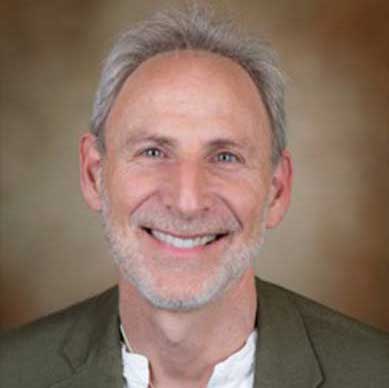
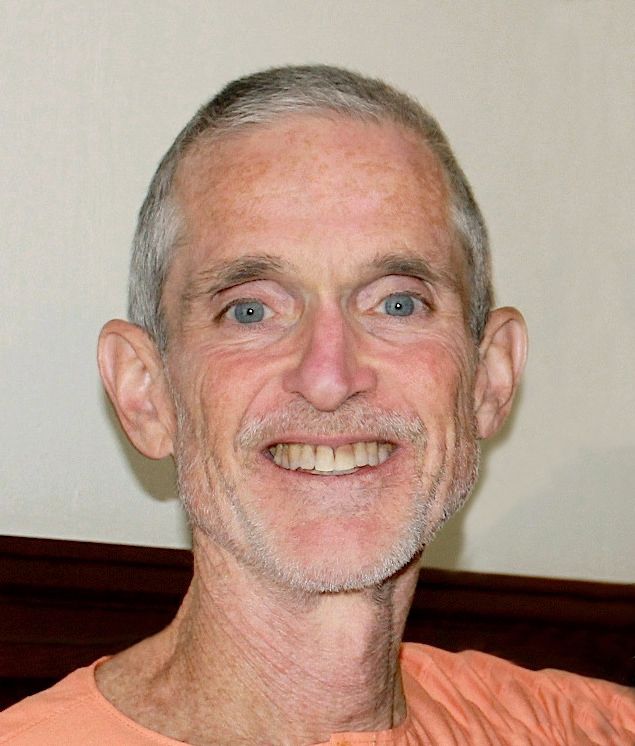
Dr. Marc Halpern is the founder and President of the California College of Ayurveda. An internationally respected expert in the field of Ayurveda, Dr. Halpern received the award for best Ayurveda Physician from the Indian Minister of Health and Family Welfare, Dr. Ramdas. He is the co-founder of the National Ayurveda Medical Association and the California Association of Ayurveda Medicine.


Join Dr. Marc Halpern and Dr. Andrea Deerheart for an incredible 2-day Yoga Nidra Personal Retreat
 Saturday and Sunday March 4 & 5, 2023 from 9:00 am – 4:00 pm PST (with 90 min. lunch breaks). Sign up and reserve your spot today. Space is limited.

“If you would like to experience Dr. Halpern’s Yoga Nidra as he taught it to me, please join us Friday evenings from 6:30-7:15 pm PT, online via Zoom or in-person (please register in advance). I have also experienced many benefits from this practice and it is my great pleasure to offer it to you.” – Abhaya, Yoga Nidra Instructor.
2022-10-28T19:03:27-07:00October 28th, 2022|Tags: |

Teaching of the Month – Loving Kindness

by Swami Ramananda

Loving-kindness is probably known to many as the Buddhist practice of metta. The formal  practice of metta begins beautifully, by directing kindness toward ourselves or to someone to whom we can easily feel goodwill. Once we take a moment to actually feel that energy of genuine care in the heart, we can practice dwelling on it and gradually learn to expand it outward, regardless of how much we like or dislike someone or something.

Swami Satchidananda’s words remind us that our natural inner joy is more clearly recognized and experienced when we think of others: “Don’t ever think that you get joy by giving. When you do everything as a dedicated act for the benefit of humanity, not just for your benefit, you retain your joy.”

We are often so preoccupied with our own ideas and plans that we fail to consider the needs of others. Though the underlying motive for our efforts may be our own happiness, this pursuit can be lonely and fruitless if it obstructs the natural flow of love in our hearts. Who can really find happiness by ignoring, or even harming, someone else? In doing so, we unknowingly rob ourselves of the very happiness we seek.

A simple way to direct kind and loving intention to ourselves is with the body. For example, when we practice asanas, we can respond to the messages of the body as it is, instead of imposing on it how we would like it to be. We can practice nourishing the body with proper rest and healthy food.

Then we can develop that same accepting awareness toward our minds, witnessing its moods and desires without judgment, and without getting swept away by them. For example, when I see how attached I am to my own plan that conflicts with someone else’s, I can observe how that struggle to control things creates tension.

Whenever we see the cause of our suffering clearly, or how our attachment closes our hearts to others, we can choose to let go. We can value the benefit of an open, loving heart instead of getting our own way. There are endless ways to practice loving-kindness with others in our daily lives. Here are a few:

  • When in conversation, we can listen with our full attention, instead of planning our response or jumping in with our comments.
  • When we encounter a store clerk, bus driver, or neighbor, we can be present to them with respect and care.
  • When we disagree with someone, we can practice opening our minds to another point of view that may have equal merit to ours.
  • When we observe the tendency to be critical or unforgiving, we can remember the ways we may have offended someone else during our own struggles, and can practice releasing ill-will, which only harms our own hearts.

Pema Chodron beautifully encapsulates this last practice when she writes in Start Where You Are, “The basic ground of compassionate action is the importance of working with . . . your own unwanted, unacceptable stuff, so that, when the unacceptable and unwanted appears out there, you relate to it based on having worked with loving-kindness for yourself.” This practice can ultimately be applied to almost anything we do by simply having a genuine concern for someone’s well-being in our hearts.

It is so inspiring for me to remember that I can make a difference in our world, one small interaction at a time. Each person’s efforts influence those around them and, ultimately, the collective consciousness of our planet. If more of us are willing to practice loving-kindness, these small steps can go a long way toward positive change. The first benefit happens in our own hearts—when they open to the natural movement of love that is meant to flow and connect us to all of life.

Join Swami Ramananda for Vijaya Dasami: Celebration Honoring the Divine Mother on Weds. OCT 5 @ 6:30 pm – 7:30 pm PDT ONLINE & IN-PERSON.

And for Satsang: Healing the Disease of Busyness on Sat. OCT 15 @ 5:30 pm – 6:30 pm PDT ONLINE & IN-PERSON

Swami Ramananda is leading many Yoga Teacher Trainings both this year and next: Meditation Teacher Training 200-hour Yoga Teacher Training, Yoga Immersion, Yoga Teaching essentials. Click to see all of our online trainings.

Swami Ramananda is the Executive Director of the Integral Yoga Institute in San Francisco and a greatly respected senior teacher in the Integral Yoga tradition, who has been practicing Yoga for over 45 years. Ramananda offers practical methods of integrating the timeless teachings and practices of Yoga into daily life, and transforming the painful aspects of human experience into steps toward realizing one’s full potential.
He leads beginner, intermediate and advanced level Yoga teacher training programs in San Francisco, and offers a variety of programs in many locations in the U.S., Europe and South America. Ramananda co-developed the Stress Management Teacher Training program with Swami Vidyananda, has trained many teachers to bring Yoga into corporate, hospital and medical settings, and has taught mind/body wellness programs in many locations. He is a certified Yoga therapist and founding board member of the Yoga Alliance, a national registry that supports and promotes yoga teachers as professionals. He is a co-founder of The Spiritual Action Initiative (SAI) which brings together individuals committed to working for social justice for all beings and for the care and healing of our natural world. His warmth, wisdom and sense of humor have endeared him to many.

2022-10-12T08:35:25-07:00October 2nd, 2022|

The Teacher and The Teachings

by Swami Vimalananda

As we begin our journey of spiritual discovery, we typically rely on the words of spiritual authorities and teachers. It starts with the intellectual gathering of information.  It seems to be quite usual to investigate many different schools of thought and slowly come to conclusions that feel comfortable and logical for the seeker.  Leslie D. Weatherhead, in The Christian Agnostic, states, “the seeker accepts some of the beliefs system but feels skeptical of others”.

It’s true that the teachings offer a road map to self-discovery and point out the obstacles on the path to inner peace and happiness.  It is also a very safe position, as is often stated, to be committed to the teachings with no need for a commitment or loyalty to a teacher. There are clear reasons for this, due to a long history of fanaticism and the dire consequences of the “true believer”.  When I was just beginning to become involved with Integral Yoga, Jonestown happened.  Jim Jones persuaded his followers to drink a poisoned kool-aid that killed them en masse. It definitely had an impact on my search and I became even more cautious.

It was around that time that I read two books, The True Believer by Eric Hoffer and Erich Fromm’s, Escape From Freedom.  Each of those authors felt that the true believer seeks to give up their personal freedom and not be responsible for themselves.   Thus, they become vulnerable to someone who tells them “don’t worry I will take care of you, just follow me and do as I say”.  Too often the follower’s decision-making abilities weaken, and they lose their ability to make decisions even on mundane matters. They become more restricted in their lives and more dependent on the so-called leader.

How does the spiritual path work with a spiritual teacher?

Just as in The Christian Agnostic, slowly the seeker experientially sees that, with practices to calm the mind, an inner solidness, a new groundedness becomes apparent. There is less reliance on the fulfillment of desires to find peace and happiness.

When students questioned whether the Institute was a cult, I would ask them if through the teachings and their experiences they felt calmer, less dependent on the world, and anyone in it, for peace and happiness.  Freedom is when you can step back, see the options clearly and then make decisions, no longer clinging to attachments and/or desires. As the Hafiz poem says, “It is what all spiritual seekers crave, the precious treasure of freedom”.

Somewhere along the path, an experience happens. As the Yoga Sutras states “When the student is ready, the Guru comes.”  I believe the Guru is not created, the Guru has always been there, but our minds have been so turbulent we haven’t recognized it as such. We all have heard that inner voice of wisdom but usually we just move on and attempt to fulfill our desires.  As for me he spoke to me many times and I didn’t listen, I just did what I was going to do.

If the Guru, a spiritual guide, is in his/her body there is a wonderful dilemma. The natural tendency is the desire to follow the guru around because of his/her wonderful vibrations of love and wisdom. The Guru has the responsibility to transform the followers desire to rely on his/her physical presence.  It’s his/her duty to teach the follower to rely on their own inner voice of wisdom and love.

Also as Sri Gurudev stated, “It is the duty of the follower to question and test the Guru to make sure that the Guru is not motivated by self-interest.”  With this process the follower has the opportunity to learn discriminative discernment.  As Hafiz states in one of his poems, The Guru is one who has “…integrity’s great force, and the profound courage to never relinquish love.”

After I took on the duties of the Institute, my husband retired from his job and observed that I was rarely home. He stated that I should be home with him. I phoned Sri Gurudev and told him what my husband said, and his reply was, “Your first duty is to your family, if he wants you there, stay home.”  I felt there were multiple lessons for me. It was a quiet time at the Institute, but I realized the Institute is really in Sri Gurudev’s hands, it will exist as long as he feels it is beneficial—it sure put a dent in my ego.  I discovered I really wanted to be there and my husband discovered he didn’t know what to do with me when I was home. A few weeks passed and I was back at the Institute.

I also observed that Sri Gurudev was willing to sacrifice how he looked and how the Institute was run for our spiritual growth. He was willing to sacrifice appearances of worldly success, and did not see the Institute as a business.

There seem to be many strategies to free the follower from his or her external form. Many gurus make sure to limit their access, scold the follower for not looking inward for advice and constantly remind the follower that to be independent one needs to cultivate their inner wisdom, inner guru.  The last time I saw my Guru, I went up to where he was seated and put on a girlish grin and looked up at him. He rolled his eyes towards the ceiling, then closed them and shook his head, like ‘you still don’t get it?’ I went back to my seat and after feeling hurt I said to myself, “I have been around long enough to know there must be a message here.” The message was that I still wanted to be dependent, wanting his approval and love externally. That was the last time I saw him in his body, and he died two weeks later.  It is very important to me to have this as his last message.

When the follower has made a commitment to spiritual growth, the Guru has the responsibility of pointing out the obstacles that prevent the follower from calming the mind, and then the process begins of cleansing the ego. It is sure to be a painful journey, as Sri Gurudev stated, “Ego-dectomies are performed often without anesthesia.”

It is also the responsibility of the Guru to appear internally, in one form or another, to the follower, thus slowly weaning the follower from the externals while presenting the opportunity for the follower to trust and connect more with the internal Guru, or inner voice. In one of the last conversations I had with Sri Gurudev, I asked him, “How do I know if I am running the institute correctly?” He replied, “Use your common sense and if you still have doubt, call on me.”  It was clear he meant that the answer was with the inner voice.

There comes a time when, in order to be free from the desirous world and live in the “True Self,” there must be an inner guide. I feel a profound change occurs with trial and error, and we realize that the inner guide does present us with the optimal choice. As we quiet the chatter of the mind, that inner guiding voice becomes more audible.  When we take a chance, we begin to develop faith and trust in the knowing that not only is it the best for ourselves but also for everyone. At that point, our decisions can be made on correctness and not on desires and attachments.  We slowly give up our egoistic will and rely completely on that inner voice.  As we listen to the inner voice, the feeling of being separate is surrendered and the delusion of feeling that we are by ourselves, alone in the world disappears.  This is when there is no separation between the teachings and the teacher.

Yes, we need commitment, trust, and faith—and there are many tests along the path. Just as Peter betrayed Jesus three times before the cock crowed, we must also go through the shakiness of doubt. There will come a time to, as Hafiz says, “Come join the courageous that have no choice”.

A great benefit of listening to this inner teacher, is a sweet intimate, caring relationship, a constant unconditional love that is impossible in the world with its conflicting desires. We become free from the entanglements and imprisonment of our desirous mind and abide in the wondrous, loving, peaceful self.

The Diamond Takes Shape

By Hafiz

Some parrots

Have become so skilled with

The human voice

They could give a brilliant discourse

About freedom and God

And an unsighted man nearby might

Even begin applauding with

The thought:

I just heard jewels fall from a

Great saint’s mouth,

Though my Master used to say,

“The diamond takes shape slowly

With integrity’s great force,

And from

The profound courage to never relinquish love.”

Some parrots have become so skilled

With words,

The blind turn over their gold

And lives to caged

Feathers.

Swami Vimalananda, RYT500, is an Integral Yoga sannyasi – monk. She has been involved with Integral Yoga since 1971 and Director of the San Francisco Integral Yoga Institute from 1992-2011. She specializes in teaching yoga philosophy and spiritual counseling.

2022-09-30T13:20:31-07:00September 22nd, 2022|

My Personal Journey with Karma Yoga

by Swami Asokananda

I don’t know about you, but the spirit of sacrifice and service has never come easy for me. In the early days of my spiritual journey, due to my self-absorption in “taking care of Number 1,” I used to cringe whenever Swami Satchidananda (Gurudev) talked about Karma Yoga—which was pretty much every time he spoke. With reticence, I accepted that service was the dues I needed to pay to join “The Spiritual Seeker Club.” I figured it was the “hazing” that new members were forced to endure to be accepted in the fraternity. Once I was a full-fledged member then I could get down to the “real” practice of Yoga. That was my understanding in those early years and gratefully I outgrew that notion.

Before becoming a monk—now 47 years ago as I write this—I probably should have read the fine-print in the “swami manual”—the part about living for God and serving all the names and forms that are, in essence, God. Thankfully, the truth dawned on me: Karma Yoga is a must for me. While I experience the tremendous benefit of all the teachings of Gurudev—including asana, pranayama, and meditation and would never consider giving them up—I am finally beginning to understand his emphasis on selfless service.

As long as we spend most of our time in the experience of the body/mind being “me,” and the desire for Self-Realization is competing with a bunch of other desires, then tamas and rajas are still prevalent in our heart and mind. I occasionally contemplate the idea that “I am That” (Jnana Yoga). And as best I can, I try to be more devoted to the Supreme Being (Bhakti Yoga). But the ego is a hard nut to crack, and, in my humble opinion, nobody gets established in the Truth of our essential-nature by force of will. This awakens in a sattvic mind.

I see now how Karma Yoga is essential for moving beyond rajas and tamas. Forget about selfless action, just finding any action that pauses our Netflix streaming and gets us off of our couches, begins to shakes off our tamas. It the selfless part that deals with rajas. A good start is being honest about our motivation for our actions. Usually, if I look closely enough, I can uncover some personal reason and benefit that I am looking for. But, at least, now I’m also acting out of care for another person; it is not all about me. I may not be able to “give until it hurts,” as Mother Theresa recommended, but I can feel a good stretch as I move outside my comfort zone.

So, I try each day to live up to Gurudev’s guidance: “The dedicated enjoy Supreme Peace; therefore, live to serve.” The Sanskrit word for dedication is tyagat. It can also be translated at letting go, renunciation, and surrender. Tyagat means first letting go of the result of the action. But, ultimately, tyagat means letting go of the illusion of a self separate from the whole that is performing the action. The separate self—the ego—can never enjoy Supreme Peace; it is what’s in the way of the experience of that Peace.

The way I now understand Gurudev’s teaching is: Those who have let go of the illusion of separateness experience their essential nature as Supreme Peace, and have no other purpose for living but to be of service.

I believe that the practice of Karma Yoga is an attempt to recognize that the one true Self—the one essential nature that we all share—is performing actions through the instruments of the body/mind, which I falsely assume to be “me,” or a separate self. The dissolution of this sense of separate self will result in the experience of pure love and connection— and that is the true inspiration behind Karma Yoga.

Questions for reflection:

  • What is Karma Yoga for you?
  • What obstacles have you found to the practice of Karma Yoga?
  • Have you found any connection between your meditation practice and your capacity to offer pure Karma Yoga?
  • Has the practice of Karma Yoga helped you to move more deeply into Jnana and/or Bhakti Yoga?

Swami Asokananda, a monk since 1975, is the President and Spiritual Director of the New York Integral Yoga Institute, as well as one of its foremost teachers. While he enjoys sharing the practical wisdom of the Yogic philosophy (especially that of the great Indian scripture the Bhagavad Gita), he also loves his practice of Hatha Yoga and is one of our primary instructors for Intermediate and Advanced Hatha Yoga Teacher Training. He has served as president of Satchidananda Ashram–Yogaville and currently serves as co-chair, with Swami Ramananda, of the Integral Yoga Global Network.

2022-09-30T13:21:24-07:00September 2nd, 2022|
Go to Top