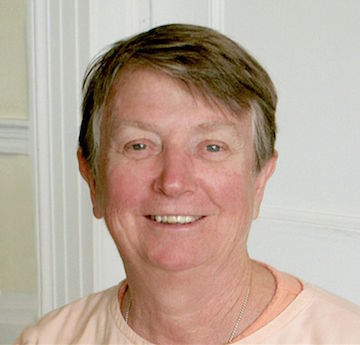
Teaching of the Month – Staying Centered in a Sea of Change

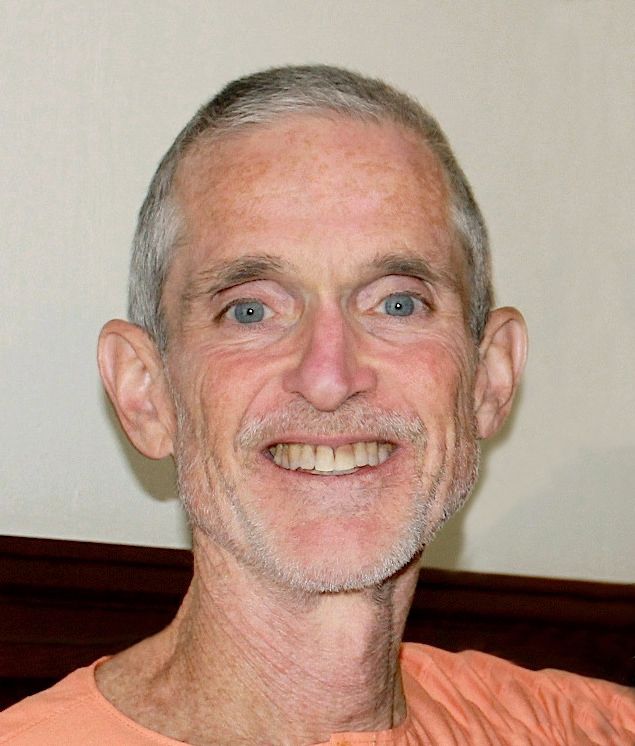
by Swami Ramananda

As the month of March begins, it feels like our world is in a state of upheaval. The seasons are changing and many places in the world are lifting COVID restrictions, trying to transition back to a more “normal” way of life. But the seasons and the pandemic are overshadowed by the war waged by Putin on Ukraine and peoples all over the world are watching the tremendous suffering that war creates. With such tumultuous events and the resulting hyper-alertness that arises, it becomes even more important to stay anchored in a personal center of balance.

The pandemic had already gripped our attention and clarified how interconnected we all are, how we share the same planetary home and the same dangers from life-threatening infection. Now, the invasion of Ukraine has galvanized the world community even more fully as peoples around the world are protesting against what seems like an unnecessary war, grieving their losses, and many countries are uniting to impose sanctions on Russia. No doubt, neighboring countries are anxious about what this might mean for them, and many people with lesser means have no ability to escape the economic effects of such worldwide turmoil.

The first day of March also coincided with the Hindu celebration of Maha Sivaratri, which honors this Hindu deity. Traditionally, Lord Siva is viewed by Hindus as one of the three main deities, each as personifications of three activities: Brahma, the Creator; Vishnu, the Preserver, and Shiva, the Destroyer. Yet, if we go deeper into the classical roots of nondual Shaivism, we learn that in Sanskrit, the name Siva means “Blessing, auspiciousness, Divine Consciousness.” In Siva’s form as “Hara,” he embodies the power by which veils of ignorance are removed.

Lord Siva represents the energy that purifies us of egoism, destroys the obstacles to our awakening, and exposes our essence-nature as Divine Consciousness and inner peace. Honoring Maha Sivaratri is a powerful way to re-commit ourselves to our spiritual growth. Yet the destruction of obstacles on the path often involves challenging ourselves—or being challenged by others and even life itself—in painful ways in order for us to face our selfish behavior and thinking.

Reflecting on all these forms of transition and unrest, reminds me of how important it is to stay rooted in the stable ground of our spiritual nature. In the same way that a boat that is well anchored can remain steady even in stormy waters, a regular spiritual practice can keep us linked to the unchanging sources of stability and peace within. Then, as stressful events take place or the news reflects the violence and suffering perpetrated by greedy minds and armored hearts, we can remain steadfast in our intention to be a presence of peace.

A regular meditation practice trains us to enter into a more skillful relationship with the myriad thoughts that arise and sometimes wreak havoc in the mind. By diving deeper within, we can learn to rest in the depths of the ocean, from which we can view turbulent thoughts as nothing more than waves on the surface. As we gain increasing nourishment from spending time dwelling in the inner cave of the heart, we learn to recognize that reactions to challenging people and situations are only human, yet as spiritual beings we can develop the ability to respond with wisdom rather than being propelled into reactivity.

We can instead be guided by the inspiration found in the well-known serenity prayer, and maintain our equanimity in the face of distressing events over which we have no control. We can reach beyond our comfort zone to give and serve those in most need. We can pause and reflect with clarity on what course of action would bring benefit and cause no harm.

The more established we become in this sense of inner stability, the less we will be thrown off balance by the injustice and suffering around us, and the more we can make conscious choices. And when others react with anger or fear, we can keep our composure, and be an example by responding mindfully with compassion in our hearts.

I don’t practice Aikido but I understand that this martial art instructs practitioners in how to receive the energy of an attacker without resistance, redirecting its force without harm. In the same way, we have the opportunity every day to practice equanimity in the face of the challenging circumstances that arise around us. Only by keeping our internal balance can we hope to serve in ways that make a difference, to stand up against injustice, meet hatred with compassion, and maintain clarity in the confusing chaos of world events.

Please join Swami Ramananda each Friday for Noon Meditation, Inspiration and Guidance. By donation. Visit our online class schedule to sign up and you will receive a Zoom link via confirmation email.

2022-10-12T08:42:12-07:00March 6th, 2022|

An Interview with Leslie Howard

Interview by Prajna Lorin Piper

How did you come to Yoga, Leslie?

I came to Yoga because I had back pain, and Yoga helped my back.

And that was it, you loved it?

Well, it helped my back and I could see that when I didn’t do it, my back would bother me, so I stayed in Yoga and got a little more interested. I was living in New York City at the time, back around 1992, maybe. A friend of mine had discovered Jivamukti Yoga, which was talking about all the spiritual texts and I became very enamored of that style. And then, the same friend said to me that she was going to take a teacher training at Integral Yoga and, did I want to do it?. I did, and that’s how I came to know Swami Ramananda and how I became familiar with the whole Integral Yoga lineage. I hadn’t planned to teach but at the end of the training, Swami Ramananda asked me if I’d like to and I decided to give it a try. It turned out that I really loved teaching and that set my trajectory to become a better teacher, to be able to answer the questions that people asked me and to help them. I knew that I needed more training in order to do that. Swami Ramananda invited Rodney Yee to do a workshop in New York, Rodney seemed to have all the answers. I could see that he was the kind of teacher that I wanted to be, that I wanted that kind of knowledge. I decided to take a training with Rodney in California and moved out here to do that. That’s how I ended up in California.

And when I moved out here, I started teaching full time. I was in my late 30’s and I figured, if not now, when? I gave it a go and I found out I could make a living out of it.

How did the pelvic floor come in?

The pelvic floor teaching came in about ten years later. I was doing a lot of yoga and I ended up having pelvic pain. Sitting was painful, long car rides were horrible and sex with my husband was becoming difficult. I ended up going to an Internal Physical Therapist in San Francisco who diagnosed me with hypertonic pelvic floor.

I was shocked. I thought ‘I’m a yogi, how can my pelvic floor be too tight, I’m so aware of my body.’ But then I thought about it and I realized I was aware of my body everywhere except the pelvis – which is really common for people who have trauma. That set me on my journey of healing myself, and when I shared a bit of it with my students they asked for more. They wanted a workshop and I felt I didn’t know enough, but they told me that I knew more than they did.

That’s kind of how it started. I started with a three hour workshop and then a four hour workshop and then Yoga Journal asked me to do a weekend workshop for their conference, which was triple the material, but I said ‘sure, I’ll do it’ and I came up with it. So I taught the short or the long form of pelvic floor workshops for a couple of years and then people started asking for a teacher training. It all developed very organically.

You have a foot workshop coming up, so let’s talk a little about the feet.

Two things inspired the foot workshop. One is that there’s a strong connection between what your feet are doing and what your pelvic floor’s doing. If you have really flat feet or really high arches, either extreme, often the pelvic floor will elevate in response to that, which means it gets tighter. You can actually release your pelvic floor by working with your feet, doing a lot of massaging or working with balls, rolling, things like that. The other thing that inspired the workshop is working with people privately, and a lot of my clients are over 65. They have crossed toes, or pain in their feet, or completely collapsed arches, and so I started doing more foot things with them and seeing how much it helped them. They would say ’my knee hurts’ and then when we worked on their feet, the knees would be better, or ‘my hip hurts’ and when we worked on their toes, the hips would be better. We work with balls, different sizes and densities, which can be targeted, and I got them all to get toe spreaders and use them, and I teach them to massage their feet. It’s helped them tremendously, and I thought that this is something we all need. We’re all aging and we’ve all been wearing shoes all our lives.

And what about how you spend your spare time?

Well, I do a lot of Yoga, and I read a lot of books about Yoga. I’m very passionate about social justice, so I serve on the board of KPFA, a local radio station, I try to get progressive candidates elected, and I do some fund-raising. And I love to hike in the natural beauty of this area, because the trees give me inspiration.

Is there anything else you’d like us to know?

I could say that Integral Yoga is how I began teaching, which says a lot about your organization, and that Swami Ramananda is very dear to my heart. He’s the reason that I ended up in Rodney’s program in 1988. It’s funny that we can all look back and there were certain people that changed the trajectory of your life. I might not have begun teaching if Swami Ramananda hadn’t asked me to and I might not have known Rodney Yee if he hadn’t invited him to teach at IYI. Studying with Rodney lead me to find my true teacher, Ramanand Patel.

I’d also like to say, after studying Yoga seriously for the last 30 years or so, that where I see my practice, and my interest going now, is to the energy body. I’ve been doing a lot of reading and practicing around the chakras and have become very interested in the nadi system, and that’s something that if you had told me, even 12 years ago, I would have said, ‘yeah, right.’ But now, I can do a mudra and really feel the difference, I can feel the subtle body, which, if you’re lucky, is something that comes after years of practice. So I’d like to put together some workshops around that. I just started teaching one called The Pelvic Floor and the Energy Body, and that’s really about the root chakra and what you can do to help your pelvic floor energetically through yoga practice, through mudras and affirmations.

After Rodney, I was very attracted to the Iyengar method, because I loved the therapeutic and alignment principals. My new interest is generally not practiced in the Iyengar system. So it’s a new direction now.

Please join Leslie for her upcoming 3 part series with Dr. Deborah Feltman called Menarche to Matriarch , each session offered individually:

Part I – Saturday, APR 30: Period is not Just Punctuation ~ Yoga and Physiology for Menstruation

Part II – Sunday, MAY 1: Riding the Tide: Yoga and Physiology of Menopause.

Part III – Saturday, MAY 7: Magnificent Matriarch

Leslie Howard, C-IAYT, specializes in the use of yoga for many issues but specifically for pelvic floor problems. She is currently the director of the Piedmont Yoga 200 Hour Teacher Training program. Her courses are approved as continuing education with Yoga Alliance and the National Certification Board for Therapeutic Massage & Bodywork and she is a certified Yoga Therapist through the International Association of Yoga Therapists.

2022-10-12T08:41:50-07:00March 3rd, 2022|

MahaShivaratri

by Snehan Born

Mahashivaratri, marked by the annual New Moon in late winter (February/March) is one of the most significant dates on the Hindu calendar. Devotees of Shiva observe the occasion with fervor, commitment and intensity, congregating at dusk to begin the long procession of rites: Puja, Homa (fire ceremonies), Arathi (offerings to the light), reading scripture and telling stories about Shiva, chanting Mantra and singing, as in Kirtan, meditation and recitations of the 108 or 1008 names of Lord Shiva, or both. There is definitely an element of Sankalpah (commitment/intention) to stay up until dawn that brings a feeling of comradery and spiritual dedication to the assembled Sangha. The intensity of the spiritual practices is balanced with periods of relaxation, leading the participants into deeper states of spiritual ecstasy. For the Bhakta Yogi (those of devotional nature), this is the way to enter into deep communion with the Lord.

For several years before coming to Integral Yoga, I had regarded Lord Shiva as an Ishta Devita (chosen deity). But my very first exposure to MahaShivaratri was in 1999, during my first year with the Integral Yoga Institute of NYC. I heard that the Institute would be observing a major Hindu Festival. So, already being a long time meditator and devotee of Lord Shiva, I was extra excited (and young enough) to stay up for the all night event. About a dozen of us gathered in the Main Room and were beautifully guided by our own Jayadeva Mandelkorn of the Princeton, New Jersey sangha. Jayadeva was enthusiastic and kept us inspired. He made it fun, interspersing storytelling, some Hatha Yoga and movement games with the mostly meditative and reverent worship practices. The following year I offered to lead the repetition of 108 Names. It was a challenge that I wanted to do. It was a beautiful experience and my love of Shivaratri was established. Our annual observance continues, though I no longer stay up all night.

Later, I was invited by friends I had made in India to attend MahaShivaratri in the Holy city of Lord Shiva, Varanasi. The celebrations of Shivaratri in Varanasi draw enormous crowds of thousands upon thousands down to the very waters of the Holy Ganga River. At the banks of the Ganga are huge concrete structures called Ghats that descend in giant steps right down into the river where people worship and bathe. The Ghats are spaced around the city waterfront for a stretch of a few miles. There are two main Ghats for the city of Varanasi. My dear friend and host, Krishna Misra Chandra surprised me by not showing up until much later, so when the driver dropped me off way upriver with a boatman who didn’t speak any English……well, the adventurous spirit took hold, and the magic began unfolding. The motorless boat drifted quietly downriver with the boatman’s efforts at the oar. We rode for some time, and I got to see preparations for Shivaratri all along Ganga Ma. At sunset, we stopped at one of the smaller Ghats and I was met by a Pujari (Priest) who took me into his temple for a private Homa with full Abhyshakam (worship with ablutions and offering to the deity), in this case to Mahadev, the Meditating Shiva. After this amazing Puja, the boatman and I continued toward the Main Ghats. By this time, we were under a New Moon with a blackened sky, so from a distance we could start to see the lights from the Shivaratri Festival that had already started. I was getting anxious to get there, but it was all so divinely planned. As we approached the two main Ghats, the whole area was lit up in flame light from countless fires and thousands upon thousands of small candles all over the steps of the Ghats and floating everywhere in the river, on leaves with flowers and rice as offerings. When we finally arrived, the Guru of the Ashram came down the steps to greet me and took me up to his platform so I could  view the long night of proceedings from there, surrounded by so many people. I am still perplexed and humbled by the great good fortune of having this experience. It was one of the most spectacularly staged worship services imaginable, with five platforms and five Pujaris all worshipping in perfect synchronization. Magnificent! Yet the greatest blessing by far was being asked to stay and serve the morning meal to the assembled, poorest of the poor devotees, under the proud, loving, watchful eye of the Guru. So much love was exchanged in that moment that my heart bursts in the retelling.

For our observance this year in San Francisco, we will share many of the traditional practices. We will learn about the history of MahaShivaratri, the various names and forms of Shiva, share stories of Shiva, chant, have a Puja, meditate, listen to the recitation of the 108 names in Sanskrit and share in singing Kirtan. Please join us Monday, February 28, 7-9pm PT. Our hope is that you will also open to the magic and power of MajaShivaratri.

Snehan Born has four decades of experience with yoga and has been teaching since 2000. He resides at the Integral Yoga Institute of San Francisco.

2022-02-20T09:29:44-08:00February 20th, 2022|

The Road to Surrender

by Swami Vimalananda and Susan Ford

This is the first of a three part series on Kriya Yoga

The Yoga Sutras of Patanjali with Commentary by Sri Swami Satchinanda – Book 2 Sutra 1. Accepting pain as help for purification, study of spiritual books and surrender to the Supreme Being, constitute Yoga in practice

Accepting Pain as Help for Purification

When love beckons to you, follow him, though his ways are hard and steep. And when his wings enfold you yield to him, though the sword hidden among his pinions may wound you.

And when he speaks to you believe in him. Though his voice may shatter your dreams as the north wind lays waste the garden.

For even as love crowns you so shall he crucify you. Even as he is for your growth so he is for your pruning.

Even as he ascends to your heights and caresses your tenderest branches that quiver in the sun, so shall he descend to your roots and shake them in their clinging to the earth. 

—Love by Kahil Gibran

Our very foundation, everything we rely on, everything we cling to, every way we organize our world will be shaken. Our sacred opinions will be exposed for what they really are, a protection of our ego. The very essence of how we see ourselves will be crushed. As Sri Gurudev stated, “We will lose everything”.

As my friend Vanitha observed, whether we experience an internal feeling of a twitch or a tsunami of pain, the cause is the same, our ego is threatened. I recently was in Hawaii with my daughters and my two grandsons. The trip was their gift to me. One day towards the end of the vacation I was riding in the back seat of the car with my grandsons. I could hear decisions of where we would go and what we would do being made in the front seat by my daughters. I had these feelings rush through me. “Why aren’t they asking me what I want? I’m the parent, I have the decision making powers.”  I even imagined how it must be to be an old lady and having my children making all the decisions about my life. Of course my input is valuable. My ego was definitely dented. As it worked out, it was a nice day. They took care of me along with all the members of the family. My input wasn’t needed. It was clearly an instance of how I organize my life, with my agendas and ego protections.

It is our wanting approval, our agendas, wanting our attachments and desires to be fulfilled – It is wanting our ego to be constantly validated that keeps us in pain.

As we begin to observe our thoughts we see that inner pain is an indicator that acceptance, along with wisdom, is lacking. It is the resistance to observing our selfishness and our unwillingness to change that causes our suffering. I remember one of my aunts telling me, “I feel I have grown enough. I no longer want to explore any more of my personal dynamics. It hurts too much. I don’t want to go there.” She was clearly saying, by closing the window of vulnerability, that she wanted not to be in pain any longer .

We can even judge every interaction by the way it affects our desires and egos. Do I feel superior or inferior to another? Is she prettier than me? Is she older or younger than I? Am I in better shape? Am I smarter or dumber than…?

The degree a person will go to protect their ego, not to grow spiritually, not to look at their pain, led to a book by F. Scott Peck, “The People of the Lie”. He stated that a person of the lie is one who will hurt another person mentally and or physically, deny their selfhood, do whatever damage is necessary to another to protect their own desires and egos.

When I worked in the probation department I was in charge of taking a group of delinquent kids on outings every Saturday. I very often cut the time short so I could go home to my family. I blocked any awareness that this was a time for the kids to experience new horizons. My desire came first, to the detriment of their growth. I had them suffer so I didn’t experience the pain of separation from my family.

We have to ask ourselves to what lengths are we willing to go to maintain our attachments, our desires, and our view of the world?

We can grow, experience the pain, acknowledge our ego’s desires and then accept the pain as help for purification, help in developing selflessness. We can stop blaming others and feeling victimized. We have the ability to change our thoughts. We can nurture thoughts of peace and empowerment. As stated in the Yoga Sutras Book 1, Sutra 15, we can have freedom from our attachments and we can know, “The consciousness of self-mastery in one who is free from craving for objects seen or heard about is non-attachment.”

We can survive the killing off of our egos and see the dawning first of awareness, then accepting the pain for purification. We can change our thoughts to positive ones and increase our ability to abide in our true nature of wholeness, contentment, and peace. It is possible, and it is a must, to live a peaceful life.

Please join Swami Vimalananda for Satsang: Surrender, Sat. February 19 @ 5:00 pm – 6:00 pm PST.

Swami Vimalananda, RYT500, is an Integral Yoga sannyasi – monk. She has been involved with Integral Yoga since 1971 and Director of the San Francisco Integral Yoga Institute from 1992-2011. She specializes in teaching yoga philosophy and spiritual counseling.


Susan Ford, C-IAYT, RYT-500, began practicing yoga when she was 18 years old. Her first yoga teacher training was Accessible Yoga through Integral Yoga Institute (IYI) and began teaching in 2011. Susan has been an assistant trainer for the Basic Yoga Teacher at IYI since 2012. She specializes in Gentle Yoga and working with people with disabilities, heart disease, arthritis, anxiety, depression and asthma. Her focus is to help students to meet their bodies where they are by introducing and incorporating Raja Yoga, Hatha Yoga, Pranayama and meditation. Susan has been certified in Yoga for Arthritis, Therapeutic Yoga, Raja Yoga and Meditation Teacher Training.

Join Susan on the fourth Friday of every month for New Beginnings Writing Group, next gathering is Friday, March 11 from 4:00-6:00pm PT.

Fri. March 11 @ 4:00 pm – 6:00 pm PST

2022-02-18T17:58:11-08:00February 18th, 2022|
Go to Top