The Teacher and The Teachings

by Swami Vimalananda

As we begin our journey of spiritual discovery, we typically rely on the words of spiritual authorities and teachers. It starts with the intellectual gathering of information.  It seems to be quite usual to investigate many different schools of thought and slowly come to conclusions that feel comfortable and logical for the seeker.  Leslie D. Weatherhead, in The Christian Agnostic, states, “the seeker accepts some of the beliefs system but feels skeptical of others”.

It’s true that the teachings offer a road map to self-discovery and point out the obstacles on the path to inner peace and happiness.  It is also a very safe position, as is often stated, to be committed to the teachings with no need for a commitment or loyalty to a teacher. There are clear reasons for this, due to a long history of fanaticism and the dire consequences of the “true believer”.  When I was just beginning to become involved with Integral Yoga, Jonestown happened.  Jim Jones persuaded his followers to drink a poisoned kool-aid that killed them en masse. It definitely had an impact on my search and I became even more cautious.

It was around that time that I read two books, The True Believer by Eric Hoffer and Erich Fromm’s, Escape From Freedom.  Each of those authors felt that the true believer seeks to give up their personal freedom and not be responsible for themselves.   Thus, they become vulnerable to someone who tells them “don’t worry I will take care of you, just follow me and do as I say”.  Too often the follower’s decision-making abilities weaken, and they lose their ability to make decisions even on mundane matters. They become more restricted in their lives and more dependent on the so-called leader.

How does the spiritual path work with a spiritual teacher?

Just as in The Christian Agnostic, slowly the seeker experientially sees that, with practices to calm the mind, an inner solidness, a new groundedness becomes apparent. There is less reliance on the fulfillment of desires to find peace and happiness.

When students questioned whether the Institute was a cult, I would ask them if through the teachings and their experiences they felt calmer, less dependent on the world, and anyone in it, for peace and happiness.  Freedom is when you can step back, see the options clearly and then make decisions, no longer clinging to attachments and/or desires. As the Hafiz poem says, “It is what all spiritual seekers crave, the precious treasure of freedom”.

Somewhere along the path, an experience happens. As the Yoga Sutras states “When the student is ready, the Guru comes.”  I believe the Guru is not created, the Guru has always been there, but our minds have been so turbulent we haven’t recognized it as such. We all have heard that inner voice of wisdom but usually we just move on and attempt to fulfill our desires.  As for me he spoke to me many times and I didn’t listen, I just did what I was going to do.

If the Guru, a spiritual guide, is in his/her body there is a wonderful dilemma. The natural tendency is the desire to follow the guru around because of his/her wonderful vibrations of love and wisdom. The Guru has the responsibility to transform the followers desire to rely on his/her physical presence.  It’s his/her duty to teach the follower to rely on their own inner voice of wisdom and love.

Also as Sri Gurudev stated, “It is the duty of the follower to question and test the Guru to make sure that the Guru is not motivated by self-interest.”  With this process the follower has the opportunity to learn discriminative discernment.  As Hafiz states in one of his poems, The Guru is one who has “…integrity’s great force, and the profound courage to never relinquish love.”

After I took on the duties of the Institute, my husband retired from his job and observed that I was rarely home. He stated that I should be home with him. I phoned Sri Gurudev and told him what my husband said, and his reply was, “Your first duty is to your family, if he wants you there, stay home.”  I felt there were multiple lessons for me. It was a quiet time at the Institute, but I realized the Institute is really in Sri Gurudev’s hands, it will exist as long as he feels it is beneficial—it sure put a dent in my ego.  I discovered I really wanted to be there and my husband discovered he didn’t know what to do with me when I was home. A few weeks passed and I was back at the Institute.

I also observed that Sri Gurudev was willing to sacrifice how he looked and how the Institute was run for our spiritual growth. He was willing to sacrifice appearances of worldly success, and did not see the Institute as a business.

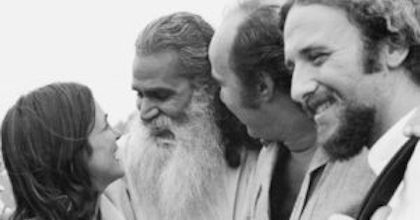
There seem to be many strategies to free the follower from his or her external form. Many gurus make sure to limit their access, scold the follower for not looking inward for advice and constantly remind the follower that to be independent one needs to cultivate their inner wisdom, inner guru.  The last time I saw my Guru, I went up to where he was seated and put on a girlish grin and looked up at him. He rolled his eyes towards the ceiling, then closed them and shook his head, like ‘you still don’t get it?’ I went back to my seat and after feeling hurt I said to myself, “I have been around long enough to know there must be a message here.” The message was that I still wanted to be dependent, wanting his approval and love externally. That was the last time I saw him in his body, and he died two weeks later.  It is very important to me to have this as his last message.

When the follower has made a commitment to spiritual growth, the Guru has the responsibility of pointing out the obstacles that prevent the follower from calming the mind, and then the process begins of cleansing the ego. It is sure to be a painful journey, as Sri Gurudev stated, “Ego-dectomies are performed often without anesthesia.”

It is also the responsibility of the Guru to appear internally, in one form or another, to the follower, thus slowly weaning the follower from the externals while presenting the opportunity for the follower to trust and connect more with the internal Guru, or inner voice. In one of the last conversations I had with Sri Gurudev, I asked him, “How do I know if I am running the institute correctly?” He replied, “Use your common sense and if you still have doubt, call on me.”  It was clear he meant that the answer was with the inner voice.

There comes a time when, in order to be free from the desirous world and live in the “True Self,” there must be an inner guide. I feel a profound change occurs with trial and error, and we realize that the inner guide does present us with the optimal choice. As we quiet the chatter of the mind, that inner guiding voice becomes more audible.  When we take a chance, we begin to develop faith and trust in the knowing that not only is it the best for ourselves but also for everyone. At that point, our decisions can be made on correctness and not on desires and attachments.  We slowly give up our egoistic will and rely completely on that inner voice.  As we listen to the inner voice, the feeling of being separate is surrendered and the delusion of feeling that we are by ourselves, alone in the world disappears.  This is when there is no separation between the teachings and the teacher.

Yes, we need commitment, trust, and faith—and there are many tests along the path. Just as Peter betrayed Jesus three times before the cock crowed, we must also go through the shakiness of doubt. There will come a time to, as Hafiz says, “Come join the courageous that have no choice”.

A great benefit of listening to this inner teacher, is a sweet intimate, caring relationship, a constant unconditional love that is impossible in the world with its conflicting desires. We become free from the entanglements and imprisonment of our desirous mind and abide in the wondrous, loving, peaceful self.

The Diamond Takes Shape

By Hafiz

Some parrots

Have become so skilled with

The human voice

They could give a brilliant discourse

About freedom and God

And an unsighted man nearby might

Even begin applauding with

The thought:

I just heard jewels fall from a

Great saint’s mouth,

Though my Master used to say,

“The diamond takes shape slowly

With integrity’s great force,

And from

The profound courage to never relinquish love.”

Some parrots have become so skilled

With words,

The blind turn over their gold

And lives to caged

Feathers.

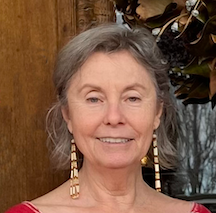
Swami Vimalananda, RYT500, is an Integral Yoga sannyasi – monk. She has been involved with Integral Yoga since 1971 and Director of the San Francisco Integral Yoga Institute from 1992-2011. She specializes in teaching yoga philosophy and spiritual counseling.


2022-09-30T13:20:31-07:00September 22nd, 2022|

My Personal Journey with Karma Yoga

by Swami Asokananda

I don’t know about you, but the spirit of sacrifice and service has never come easy for me. In the early days of my spiritual journey, due to my self-absorption in “taking care of Number 1,” I used to cringe whenever Swami Satchidananda (Gurudev) talked about Karma Yoga—which was pretty much every time he spoke. With reticence, I accepted that service was the dues I needed to pay to join “The Spiritual Seeker Club.” I figured it was the “hazing” that new members were forced to endure to be accepted in the fraternity. Once I was a full-fledged member then I could get down to the “real” practice of Yoga. That was my understanding in those early years and gratefully I outgrew that notion.

Before becoming a monk—now 47 years ago as I write this—I probably should have read the fine-print in the “swami manual”—the part about living for God and serving all the names and forms that are, in essence, God. Thankfully, the truth dawned on me: Karma Yoga is a must for me. While I experience the tremendous benefit of all the teachings of Gurudev—including asana, pranayama, and meditation and would never consider giving them up—I am finally beginning to understand his emphasis on selfless service.

As long as we spend most of our time in the experience of the body/mind being “me,” and the desire for Self-Realization is competing with a bunch of other desires, then tamas and rajas are still prevalent in our heart and mind. I occasionally contemplate the idea that “I am That” (Jnana Yoga). And as best I can, I try to be more devoted to the Supreme Being (Bhakti Yoga). But the ego is a hard nut to crack, and, in my humble opinion, nobody gets established in the Truth of our essential-nature by force of will. This awakens in a sattvic mind.

I see now how Karma Yoga is essential for moving beyond rajas and tamas. Forget about selfless action, just finding any action that pauses our Netflix streaming and gets us off of our couches, begins to shakes off our tamas. It the selfless part that deals with rajas. A good start is being honest about our motivation for our actions. Usually, if I look closely enough, I can uncover some personal reason and benefit that I am looking for. But, at least, now I’m also acting out of care for another person; it is not all about me. I may not be able to “give until it hurts,” as Mother Theresa recommended, but I can feel a good stretch as I move outside my comfort zone.

So, I try each day to live up to Gurudev’s guidance: “The dedicated enjoy Supreme Peace; therefore, live to serve.” The Sanskrit word for dedication is tyagat. It can also be translated at letting go, renunciation, and surrender. Tyagat means first letting go of the result of the action. But, ultimately, tyagat means letting go of the illusion of a self separate from the whole that is performing the action. The separate self—the ego—can never enjoy Supreme Peace; it is what’s in the way of the experience of that Peace.

The way I now understand Gurudev’s teaching is: Those who have let go of the illusion of separateness experience their essential nature as Supreme Peace, and have no other purpose for living but to be of service.

I believe that the practice of Karma Yoga is an attempt to recognize that the one true Self—the one essential nature that we all share—is performing actions through the instruments of the body/mind, which I falsely assume to be “me,” or a separate self. The dissolution of this sense of separate self will result in the experience of pure love and connection— and that is the true inspiration behind Karma Yoga.

Questions for reflection:

  • What is Karma Yoga for you?
  • What obstacles have you found to the practice of Karma Yoga?
  • Have you found any connection between your meditation practice and your capacity to offer pure Karma Yoga?
  • Has the practice of Karma Yoga helped you to move more deeply into Jnana and/or Bhakti Yoga?

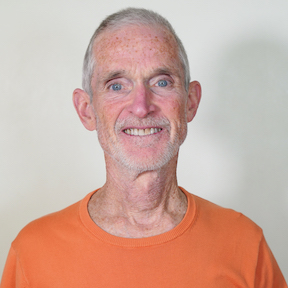
Swami Asokananda, a monk since 1975, is the President and Spiritual Director of the New York Integral Yoga Institute, as well as one of its foremost teachers. While he enjoys sharing the practical wisdom of the Yogic philosophy (especially that of the great Indian scripture the Bhagavad Gita), he also loves his practice of Hatha Yoga and is one of our primary instructors for Intermediate and Advanced Hatha Yoga Teacher Training. He has served as president of Satchidananda Ashram–Yogaville and currently serves as co-chair, with Swami Ramananda, of the Integral Yoga Global Network.

2022-09-30T13:21:24-07:00September 2nd, 2022|

Seasonal and Sattvic

by Prajna

Sattvic food is seasonal food and seasonal and local eating is pretty much a given in the food world of California. But I’m often surprised to find out that many people don’t really pay attention to it in their own kitchens, and that a lot of people can’t quite make the connection between a food and its season.

The poet and writer Wendell Berry says that “Eating is an agricultural act.” It’s an action and it has an effect. A big reason for eating in attunement with the season is that when we put ourselves outside of the cycle of crops and seasons, we take another step back from the natural world. We hurt ourselves and we hurt our planet. But when our eating flows naturally from what is seasonal, we find ourselves celebrating nature in the most elemental of ways, as something that we are a part of, in relationship to.

Sattvic and seasonal go hand in hand, so that when people talk about Satvic in terms of food, they’re talking about foods that soothe the system, that are vegetarian, fresh, nutritious, light, healthy and seasonal. Seasonal because the lighter foods of summer are the foods we would naturally want to enjoy in the warmer weather, just as the heartier, earthier crops of winter sustain and comfort us in their season. According to the Ayurvedic system, satvic foods represent balance and harmony, and are believed to increase energy, happiness, calmness and mental clarity.

When the seasons begin to change and different foods begin to arrive in the market, it gives us the opportunity to welcome the arrival of each new crop. In the summer, it’s time to make the corn dishes we wait for all year, cook zucchini a hundred ways, make the fresh tomato recipes that everyone loves and end meals with desserts made of berries and stone fruits.

In that spirit, I’m enclosing a recipe that we always enjoy in the summertime at San Francisco IYI, out of the Fields of Greens Cookbook by Annie Somerville.

Corn and Bulgar Salad with Sage and Lime

½ cup bulgar
½ cup boiling water
1T olive oil
3 ears of corn, taken off the cob, about 3 cups kernels
Salt
¼ medium red onion, diced small
1 jalapeno, seeded and thinly sliced  (check for heat and use less if you like)
1 T lemon juice
1 T lime juice
Pinch of cayenne
1 T chopped fresh sage
1 T cilantro

  1. Place the bulgar in a medium size bowl and pour the boiling water over it. Cover and let it sit for 20 minutes.
  2. Heat oil, add corn, 1 tsp salt, and sautée for 5 minutes. Add the onion and sautée for another 3 minutes, or until the corn and onion are tender.
  3. Let the mixture cool for a few minutes and then toss with the bulgar, chilies, lemon and lime juices, ½ t salt and the pinch of cayenne. Taste for salt. A few minutes before serving, toss in the chopped herbs.

I’ve been making that salad for many years. Sometimes I substitute a cup of cooked quinoa for the bulgar.

As cookbooks go, almost the only new cookbook I’ve gotten in a long time is the book Six Seasons, by Joshua McFadden. I love his approach to food and there are some real keepers in there, as far as recipes go. But what I want to include here is something that Joshua has to say about seasonal food.

“I want to show you how to eat tomatoes in August, peas in April, butternut squash only when there’s frost on your car windshield. Cherish the vegetables when they’re at their best and then wait until their season rolls around again. The impact will be profound, in your own kitchen and in the community at large.”

And remember, ‘Eating is an agricultural act.’ May we all have the joy of it.

Join Prajna for her upcoming workshop: Seasonal and Sattvic – The Bounty of Summer
Sat. August 20 @ 11:00 am – 2:00 pm PDT

Prajna has cooked for years in restaurants, cafes and retreat centers. She currently lives, practices and cooks at the Integral Yoga Institute in San Francisco.

2022-08-14T14:49:15-07:00August 14th, 2022|

Teaching of the Month – Healing the Disease of Busyness

by Swami Ramananda

HEALING THE DIS-EASE OF BUSYNESS

I know so many people, that when I ask how they are doing, respond with something about how busy they are. It has become the status quo for our lives to be filled to the maximum and beyond, so that we’re not really aware of how driven we are, how stressed our lives have become, and how it is affecting us. Even when we are aware of it to some degree, we may feel unable to do much about it. We seem to value “doing” many things over “being” well and at peace. Our sense of self-esteem has become so strongly associated with being busy and stacking up accomplishments that we sacrifice self-care to create an impressive image that will make us look good.

So many of the ways that we hurt ourselves seem to be rooted in this need to win the love or admiration of others (and even ourselves) so that we can be happy. Yoga teaches us that our effort to find happiness by controlling things outside ourselves, such as the opinion of others, will never bear lasting fruit. Our endless efforts to prove worthy of love may bring temporary results, but as we probably all know from current relationships, the affection of others comes and goes; demanding it or holding it too tightly is generally counterproductive. Keeping busy may help us feel good about ourselves, but this feeling will also prove temporary when the pain of pushing so hard catches up with us. There is true irony in discovering that we are hurting ourselves in our attempt to feel good, to be happy.

It’s well known now that a number of the physical problems we experience in western society are caused, or complicated, by stress, and that many ailments can be improved significantly by proper rest, diet, exercise, and self-acceptance. Of course these lifestyle changes take time. It is rewarding to see how popular Hatha Yoga has become, but even in these classes, the engrained belief that “more is better” can dominate the experience, and straining to get a better pose can be the norm. I know I’ve hurt myself more than once from wanting to be—or look—“better” than what I am. I remember really overdoing it with fasting during my younger fanatic days, and rebelling afterward with equally zealous overeating.

What to do? I can’t pretend to have mastered this issue. I still get caught up a workaholic fervor, so clearly, I have a lot to learn. I can share what I’m learning and what Sri Swami Satchidananda, my Guru, has taught me. We can address this tendency by both reflecting on the root cause in the mind and by undertaking step-by-step changes in our daily habits.

We can consciously begin to value our physical and mental health by taking small steps to make time for self-care. Preparing healthy meals, getting a massage, taking a Hatha class, spending time in nature or with loved ones, and time alone to be quiet or creative, are all things that will help maintain a balance of giving out and restoring energy.

In the midst of busy days, with even a few extra minutes (i.e., if someone is late for an appointment), we can relax and reflect on how we’re feeling. A few minutes of stretching, deep breathing and consciously relaxing the abdomen, neck and shoulders, and especially the eyes, can have a marvelous renewing effect. When we eat, we can make it a habit to stop for a moment, calm ourselves with a few breaths and bless the food, then chew it well. When we answer the phone, we can pause for a few seconds to be present for that call.

An even more powerful change, with much deeper benefits, is to reserve one evening per week as unscheduled time that you can devote to caring for yourself. The idea is to turn off the TV and the phone, and cook, take a bath, do a deep relaxation, read, and/or go to bed early—whatever would refresh you. Sri Gurudev has often encouraged us to spend some time each week practicing silence. If you have a family, such an evening might be important time apart from them, but it might also be planned as an evening to have meaningful time together to play, relax, and appreciate each other.

A similar practice that has been so helpful to me is to fast one day per week, giving a rest to the body and giving me some extra time to rest from doing. I always sleep better that night and feel rejuvenated the next morning. In addition, my practice of meditation and Hatha the next morning is inevitably more alert and focused, their effects often lasting through that whole day. Some may find it difficult to fast the whole day and could try eating only fruit for a day or skipping the evening meal, which provide similar benefits.

When we experience the benefits of any of the above ideas, even a small one, we will be inspired to continue it and perhaps to take another step toward the same goal. We may even be inspired enough to try a bigger step, like attending a weekend retreat dedicated to rest and reflection, communing with nature, or spiritual practice. Such a retreat can very effectively relieve built up stress and help establish new habits, like a regular practice of Hatha Yoga and meditation.

The practices of asana, pranayama and meditation, more powerfully than any other suggestions I’ve made, can heal the harmful effects of stress and restore balance to the body and mind. And the other remarkable benefit they offer is teaching us how to prevent a stressful response to life’s difficulties in the first place. By developing an inner awareness of our physical and mental condition, we learn to notice tension or anxiety when it first appears; to respond to that situation, mindful of our capacity at that moment and equipped with the effective tools for relaxing that those practices bring us.

As a meditative practice bears fruit, we begin to have moments of real contentment that are not contingent upon completing tasks. A deeper examination of such moments reveals that this experience is the result of letting go of our preoccupation with making things happen, with trying to create happiness. Instead, as the mind begins to quiet down, we approach a natural completeness and fulfillment that is already there, a feeling that is wonderfully relieving and healing.

Though these glimpses of our true nature may not last as we move on with our day, they can help in several ways. One is to inspire us to continue making time for the practices that have quieted the mind. Secondly, we can create an affirmation based on that experience that reminds us of what we have found to be true in ourselves. We can use that affirmation regularly to assert that truth, to counter the old patterns of thought we have held that still arise. As our practice enables us to repeat this experience of inner peace and that deepens, our old ways of thinking about achieving happiness begin to erode and we can create a new relationship to “doing” things. Our doing can become a joyful expression of “being,” with the wells of light and love that bubble up from within.

When we approach life with a sense of lack, clutching for something to make things right and bring fulfillment, that narrow vision of who we are can only serve to close the heart. When we nourish ourselves with moments of peace, our hearts overflow and we can truly serve others, supporting them on their journeys to recognizing their own inner peace and joy.

Join Swami Ramananda this month for Practicing Freedom: Hatha Yoga Series 

August 10 – This session will focus on opening the heart, honoring the Spirit within and allowing ourselves to connect to and be guided by a higher intelligence.

August 17 – This session will focus on feeling our connection to each other and the web of life, and understanding our practice as a means to bring healing to ourselves and others.

Swami Ramananda is the Executive Director of the Integral Yoga Institute in San Francisco and a greatly respected senior teacher in the Integral Yoga tradition, who has been practicing Yoga for over 45 years. Ramananda offers practical methods of integrating the timeless teachings and practices of Yoga into daily life, and transforming the painful aspects of human experience into steps toward realizing one’s full potential.
He leads beginner, intermediate and advanced level Yoga teacher training programs in San Francisco, and offers a variety of programs in many locations in the U.S., Europe and South America. Ramananda co-developed the Stress Management Teacher Training program with Swami Vidyananda, has trained many teachers to bring Yoga into corporate, hospital and medical settings, and has taught mind/body wellness programs in many locations. He is a certified Yoga therapist and founding board member of the Yoga Alliance, a national registry that supports and promotes yoga teachers as professionals. He is a co-founder of The Spiritual Action Initiative (SAI) which brings together individuals committed to working for social justice for all beings and for the care and healing of our natural world. His warmth, wisdom and sense of humor have endeared him to many.

2022-08-12T10:44:49-07:00August 10th, 2022|
Go to Top