About Sevika Ford

This author has not yet filled in any details.
So far Sevika Ford has created 251 blog entries.

Promoting Diversity and Inclusivity in Yoga
by Kamala Itzel Hayward

My first Yoga teacher was my mother. I still remember her lavender tights. She still remembers that my favorite part of class was hissing like a snake as I raised up into cobra pose. I was five years old. And there was no reason to question that I belonged or that the peace and joy, love, and light that we wished for everyone included me, regardless of who I was, what I looked like, or what my body could do.

My practice has changed a lot over the years—I’m less flexible and I don’t hiss in bhujangasana anymore—but one guiding principle has remained the same: perpetuating systems of oppression and living in liberation are mutually exclusive.

The teachings of Yoga identify ignorance in all of its forms as the root cause of suffering. This ignorance includes systems of white supremacy, the gender binary, capitalism, and other concepts that lead to the systemic oppression of individuals. However, this truth isn’t always reflected in the spaces where Yoga teachers are trained or teach. Nor is it reflected on social media or in Yoga publications that elevate one stereotype of “the Yoga teacher” over all others in their cover images, stories, and advertisements: the young, flexible, thin, heteronormative white woman.

So in 2016, after I had been teaching Yoga for 6 years and practicing it for decades more, I was thrilled to hear Lakshmi Nair talk about her work. Lakshmi is the creator of the Satya Yoga Cooperative in Denver, Colorado, which is one of the first Yoga cooperatives for people of color.

I couldn’t help but wonder what it would be like to be a part of a Yoga community where I saw myself reflected in the eyes of my teachers. One that shared my values and my commitment to the liberation of all people, while also having in its deep awareness the context in which we are learning and practicing Yoga: a society that does not share that commitment.

A society that is actively operating contrary to that commitment.

A society that was built on—and, in so many deeply rooted and systemic ways—sustained by the oppression of people based on their race, class, gender, and more. A society that isn’t always aware of or willing to acknowledge its biases, privileges, and limiting beliefs, in direct contradiction to Yogic principles of self-awareness and self-study.

I wondered, “What would it be like to practice and learn in a community intentionally focused on Yoga as a tool for dismantling such beliefs and oppressive systems in service of the liberation of all beings everywhere?”

Then I had my chance.

Four years later, I had the opportunity to attend the Black Orchid Yoga Teacher Training, a prenatal/postnatal Yoga Teacher Training offered by Melylah Smith, Alexandra Rossi, and Jane Austin. In an effort to address the devastating racial disparities in prenatal care, they offered the training completely free to Black women.

When I heard about it, I registered immediately. I, along with over 250 Yoga teachers, doulas, pregnant women, and more … all Black. Not only did I love the program, I fell completely in love with the community that was created in the process.

And I loved knowing that, together, we could make a difference to improve outcomes for Black newborns and pregnant Black folks everywhere on the level of body, mind, and spirit.

The experience was so meaningful and powerful, I knew that I wanted to be a part of bringing something like that to IYI. So I went to Swami Ramananda, Director of IYI SF, told him my idea, and asked if he’d be willing to bring it to IYI. Without a moment’s hesitation, he said yes.

So under his leadership, Integral Yoga’s 100% scholarship-based Black, Indigenous, People of Color 200-hour Basic Yoga Teacher Training was born.

When I imagined this training, I imagined a space where not only all of the students were BIPOC, but so were all of the lead teaching team members, the monitors, and the support staff. I also wanted there to be folks of a wide variety of ages, body types, genders, sexual orientations, and physical abilities. I dreamed of a teaching curriculum that acknowledged the ways in which the teachings of Yoga have been offered that have harmed others, and how we as teachers could do things differently. I wanted to talk about racism, the gender binary, capitalism, xenophobia, cultural appropriation, colonialism, spiritual bypass, intersectionality, and other forms of oppression that we and our students come to Yoga to heal from. And I dreamed of a panel of guest speakers composed of those BIPOC Yoga teachers who most deeply influenced me and my thinking of Yoga in this way.

It was a big dream. And I knew that experienced Integral Yoga Lead Teacher Trainer Mukunda Marc Morozumi shared this vision, so I went to him first. What I didn’t know was that many, many other people in the Integral Yoga sangha also shared this vision and the passion to bring it into fruition. A full teaching team was assembled in no time, including Integral Yoga teacher Mia Velez and anatomy teacher Arturo Peale. A team of Integral Yoga sangha members interested in serving as monitors and guest trainers fell quickly into place, including Amie, Atman Adolfo Velasquez, Bodhi Bryahnna Trice, Devatman Daniel Givens, Dharani Diana Diaz, Kayko Watanabe, Kusuma Aralere, Jaya Gen McDonough, Lakshmi Angelica Gutierrez, Muktidevi Demafeliz, Shanti Nucharin Songsasen, Rasmi Lorette Angue, Renda Dabit, Rukmini Ando, Tinuola Bello, and Shankari Goldstein. And other luminaries in the field of Yoga agreed to serve as guest presenters including Anthony Williams, Dia Joyce Penning, Dianne Bondy, Dr. Gail Parker, Jasmin Leyva, Jordan Smiley, Lakshmi Nair, Reggie Hubbard, Regina, and Saeeda Hafiz.

And the Integral Yoga sangha supported us every step of the way in the form of donations, spreading the word, and love and encouragement.

They also made it possible for us to make the teacher training 100% scholarship-based, which allowed for the elimination of any financial barriers to participation. Many students paid for the training at the highest level–reinforcing the notion that, while money is a very real obstacle to participating in teacher trainings that many BIPOC face, it’s not the only obstacle. BIPOC also need safe spaces to learn, explore, make mistakes, ask questions, practice, and simply be. Trainings like these help to create those safe spaces. They also increase the diversity of Yoga’s teaching community, which allows for the creation of more inclusive and welcoming Yoga spaces, makes the teachings of Yoga more accessible, and affirms Yoga as a teaching and practice for the liberation of all beings everywhere.

Congratulations to the 27 graduates of Integral Yoga’s first BIPOC teacher training: Amanda Abhaya Vigil, Andreina Maldonado, Ankita Chawla, Arpita Roy, Azza Gasmelseed, Candi Reddick, Cleopatra Eve Altieri, Dannhae Amba Maya Herrera Wilson, Durba Chatterjee, Evelyn Sita NG, Akama Gautam Tirath Mulchandani, Grace Shakini Sunny Munch, Isha Rosemond, Jennifer Webb, John Youngblood, Khadijah Okoh, Kiara Dailey, Marilyn Vaani Pagán-Banks, Mateo Ilarina, Meenakshi Wojtczak, Melissa Montez, Mercy Ramani Mungwadzi, Monica Andrea Ferrey, Anjali Rachel Porraspita, Srishti Satya Roy, Ummkhair Kalyani Brown, and Vatasha Davis.

May you all shine as examples of the glorious science of Yoga.
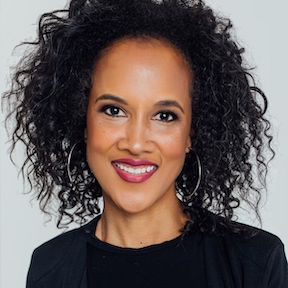
Kamala is a yoga teacher, a radical self-love coach, a mindful communication trainer, and a fierce and compassionate advocate for love. After serving as a public policy lawyer for 13 years, Kamala left her legal career and founded Attuned Living, a mindfulness and wellness organization working at the intersection of love and social justice. Her unique work is based on the teachings of yoga, mindful communication, and social justice studies.]
2022-10-12T08:53:32-07:00December 5th, 2021|

It’s All His Name

by Swami Vimalananda

“It’s All His Name, It’s all His Form, It’s all His Deed, and It’s All For Good” – Sri Swami Satchidananda

It may seem like the world is going to hell very quickly. The natural and the human created disasters seem to be growing exponentially. It looks like many of us are just barely holding on. Pain seems to be everywhere.


So how could Sri Gurudev state,”It’s all His name, it’s all His form, it’s all His deed, and it’s all for good”?


I feel we have to reach back to remember the purpose of our lives.

Do we believe the world’s agenda of competition and grabbing all that we can get in spite of hurting others? Or do we believe that we are born to grow spiritually; to become selfless, and not depend on the world for our happiness?


The pain of the world is so easy to get caught up in. It is so easy to slip into an angry/depressed state of mind. The 24 hour news cycle spews out all the disasters of the world and the commentators repeat the same negatives over and over.


The world feels frantic and chaotic right now. As I drive on the freeway there are many angry speeding drivers. One of my cousins shouted at another driver in a parking lot. The man came up to my cousin and socked him in the face through the window.


 How can we have mastery over our lives instead of feeling that we are victims of the world’s agenda?


I have seen Sri Gurudev and how he lived in the world. He maintained his calm centeredness, and was not swayed by the turbulence of the world. As he said, “we are in the world but we don’t have to be of the world.” This could be interpreted as not caring, but it really means that the world is our classroom. Are we learning to manipulate the world for our selfish ends or see the world as a place to learn to give selflessly? Through selfless behavior and formal practices to calm our minds, we realize we are the source of our own happiness. We are free from the world’s turbulent hurricanes and at the same time we can be of service for the peace of the world. As Sri Gurudev stated, “The world is our university.” He also stated, “as in all universities people are at different stages or grades, the freshman, who is still in the dark, to grad students who are working at advanced degrees.” He gave many other examples of the process of spiritual growth. One is the fritter that is just put in the hot oil in the frying pan, that makes a lot of noise and feels abused, to the completely fried fritter that is quiet and is taken out of the pan, well done.


We can be vigilant by being kind to everything that we encounter, take personal responsibility in doing the things we can do. We can deeply understand the purpose of the world—the humanities university. For example, my friend spends a morning each week picking up trash. We can begin to consume less. We can simplify our lives. We can cultivate harmlessness for all things. We can open our hearts, realizing our oneness and treating everyone and everything with love. We can open our hearts to feel pain with compassion. We can be open to the process of experiencing personal pain as a wakeup call, a signal that more growth is still needed.


The other night, on the way to the symphony, I was at a street corner, waiting for the signal to turn green.  I was planning on pressing the pedestrian button when I realized that there were deep holes surrounding the area. There was a heavy yellow safety fencing that was very askew and no longer covered the dangerous areas. The signal turned and I started to cross but I thought to myself that it would be so easy for someone to fall, and it would probably be pretty disastrous. I decided to go back and adjust the fencing. I relearned a few things from this one situation. It felt good—it reinforced the idea that we can be of service to the world in very practical ways. We can learn to be an instrument of our Guru. It is possible to live in our hearts. We are truly empowered by serving.


 My prayer is that we may all join together and experience the feeling of empowerment and joy that service provides. May we know in our heart of hearts that there is a purpose. It is to realize that, “It’s all His name, it’s all His form, it’s all His deed, and it’s all for good.”


Swami Vimalananda Ma, RYT500, is an Integral Yoga sannyasi – monk. She has been involved with Integral Yoga since 1971 and was Director of the San Francisco Integral Yoga Institute from 1992-2011. She specializes in teaching yoga philosophy and spiritual counseling.

2022-02-15T18:27:42-08:00November 22nd, 2021|

Climate Emergency – What We Can Do Now

Dear Friends, 

Have you been feeling overwhelmed by all of the issues we are facing in our world at this moment? So many crises call for our attention. The care and repair of our precious Earth is one of the most pressing issues that must be addressed now.  We can feel overwhelmed or we can ACT. Each one of us has agency. Everyone can make a direct contribution to express our concern and compassion for our fellow humans and our beautiful Earth and all its inhabitants. 

If we take steps to address an issue, we often find that our frustration and grief over that suffering diminishes. Please join us for an uplifting workshop, Climate Emergency: What We Can Do Nowon November 20th from 11-12:30 PT.  

Together we’ll consider the impact of our personal choices, discuss specific steps we can each take to make a difference, and explore actions that challenge political, corporate, and systemic policies that threaten our earth. By taking personal responsibility now, we can together help alleviate much suffering and experience the peace that comes from compassionate action.

Here are a couple things you can do now to make a difference. We are  including the PDF for the Spiritual Action Initiative’s Daily Green Checklist – see below. This is a tool to help you identify steps toward living mindfully, with compassion and care for our Earth and all of its inhabitants. 

You can also visit spiritualactioninitiative.org for additional resources and support for addressing the climate crisis and other social justice issues. 

Om Shanti,

Swami Ramananda, Director of the Integral Yoga Institute, San Francisco

Sarani Fedman, Co-founder of Spiritual Action Initiative 

2021-11-12T08:45:38-08:00November 12th, 2021|

The Embrace of Gratitude

By Swami Ramananda

Imagine waking up in the morning with a palpable sense of gratitude for being alive and having another opportunity to engage in life. Imagine what it would be like to approach your whole life with gratefulness as the foundation from which you encountered each moment.

With all the injustice and suffering we are witness to in our world, this may be hard to envision. We may find ourselves losing hope, growing cynical, and circling our wagons in defense. All the more reason we need a practice to help us keep perspective, sustain our intentions for personal growth, and be a part of changing this doomsday picture.

Practicing gratefulness can transform one’s life by embracing the belief that each day provides us with another opportunity to learn and grow, to awaken more fully. Each interaction is an opportunity to expose our limitations and selfishness, and open our hearts wider to love more fully.

It is an approach to life that includes enough present moment awareness to appreciate the daily miracles we tend to ignore: the way the sun rises gloriously each day, the smile of a baby, a hummingbird pausing midair to drink, the embrace of a true friend.

But the practice of gratefulness can go beyond noting down a few things we are grateful for in a given day. It implies an appreciation for all that life offers us, the highs and lows, the moments of bliss and the inevitable losses that veil the heart with sadness.

Rather than resisting painful experiences, we can practice embracing the way they call our attention to something in need of healing. Even if it doesn’t come naturally, it’s worth experimenting with the belief that everything that comes to us is for our highest good, a teaching that is found in many wisdom traditions.

In the poem, The Guest House, the Sufi mystic and poet Jalaluddin Rumi wrote:

“The dark thought, the shame, the malice,
meet them at the door laughing,
and invite them in.

Be grateful for whoever comes,
because each has been sent
as a guide from beyond.”

Gratefulness also implies a willingness to be content with the plateaus of life, where we may feel no progress being made, but persist in our efforts nonetheless. We may unintentionally reserve gratitude for moments of success or completion without realizing its potential to support us in sustaining our efforts to serve and make a difference even when no “thank you” appears.

This practice includes reflecting on the efforts of our parents and ancestors to provide and pave the way for us. And what about all the spiritual masters that devoted their lives to make the teachings of Yoga accessible to us, especially the founder of Integral Yoga, Sri Swami Satchidananda?

This is why gratefulness is not only an inner appreciation of life’s journey and all we’ve received. It calls for a response. Whenever we sincerely pause to contemplate the magnitude of such blessings and feel the resulting fullness in our hearts, we will naturally be inspired to give back in some way.

One obvious response is to offer heartfelt thanks to those that have bettered our lives. On a larger scale, we can never repay the gift of life itself, the earth and its abundance that feeds and shelters us, the path to awakening offered to us, and the luxury of pursuing the spiritual path instead of simply struggling to survive.

But we can commit ourselves every day to a regular spiritual practice that erodes the confines of the me-centered ego and allows the natural peace of our essence-nature to emerge in its fullness. We can pay attention to the messages of our conscience in the choices we make and we can serve our communities in whatever ways we are prompted.

In these ways, gratefulness can become an underlying source of nourishment that inspires us to persist on the spiritual path despite the prevailing messages of our culture, and to act courageously by embodying the values that are so desperately needed in our world.

Swami Ramananda is the Executive Director of the Integral Yoga Institute in San Francisco and a greatly respected senior teacher in the Integral Yoga tradition, who has been practicing Yoga for over 45 years. Ramananda offers practical methods of integrating the timeless teachings and practices of Yoga into daily life, and transforming the painful aspects of human experience into steps toward realizing one’s full potential. He leads beginner, intermediate and advanced level Yoga teacher training programs in San Francisco, and offers a variety of programs in many locations in the U.S., Europe and South America.

2022-02-15T18:28:58-08:00November 6th, 2021|
Go to Top