MahaShivaratri
by Snehan Born
Mahashivaratri, marked by the annual New Moon in late winter (February/March) is one of the most significant dates on the Hindu calendar. Devotees of Shiva observe the occasion with fervor, commitment and intensity, congregating at dusk to begin the long procession of rites: Puja, Homa (fire ceremonies), Arathi (offerings to the light), reading scripture and telling stories about Shiva, chanting Mantra and singing, as in Kirtan, meditation and recitations of the 108 or 1008 names of Lord Shiva, or both. There is definitely an element of Sankalpah (commitment/intention) to stay up until dawn that brings a feeling of comradery and spiritual dedication to the assembled Sangha. The intensity of the spiritual practices is balanced with periods of relaxation, leading the participants into deeper states of spiritual ecstasy. For the Bhakta Yogi (those of devotional nature), this is the way to enter into deep communion with the Lord.
For several years before coming to Integral Yoga, I had regarded Lord Shiva as an Ishta Devita (chosen deity). But my very first exposure to MahaShivaratri was in 1999, during my first year with the Integral Yoga Institute of NYC. I heard that the Institute would be observing a major Hindu Festival. So, already being a long time meditator and devotee of Lord Shiva, I was extra excited (and young enough) to stay up for the all night event. About a dozen of us gathered in the Main Room and were beautifully guided by our own Jayadeva Mandelkorn of the Princeton, New Jersey sangha. Jayadeva was enthusiastic and kept us inspired. He made it fun, interspersing storytelling, some Hatha Yoga and movement games with the mostly meditative and reverent worship practices. The following year I offered to lead the repetition of 108 Names. It was a challenge that I wanted to do. It was a beautiful experience and my love of Shivaratri was established. Our annual observance continues, though I no longer stay up all night.
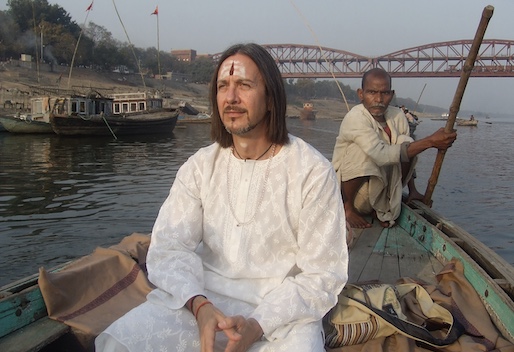
Later, I was invited by friends I had made in India to attend MahaShivaratri in the Holy city of Lord Shiva, Varanasi. The celebrations of Shivaratri in Varanasi draw enormous crowds of thousands upon thousands down to the very waters of the Holy Ganga River. At the banks of the Ganga are huge concrete structures called Ghats that descend in giant steps right down into the river where people worship and bathe. The Ghats are spaced around the city waterfront for a stretch of a few miles. There are two main Ghats for the city of Varanasi. My dear friend and host, Krishna Misra Chandra surprised me by not showing up until much later, so when the driver dropped me off way upriver with a boatman who didn’t speak any English……well, the adventurous spirit took hold, and the magic began unfolding. The motorless boat drifted quietly downriver with the boatman’s efforts at the oar. We rode for some time, and I got to see preparations for Shivaratri all along Ganga Ma. At sunset, we stopped at one of the smaller Ghats and I was met by a Pujari (Priest) who took me into his temple for a private Homa with full Abhyshakam (worship with ablutions and offering to the deity), in this case to Mahadev, the Meditating Shiva. After this amazing Puja, the boatman and I continued toward the Main Ghats. By this time, we were under a New Moon with a blackened sky, so from a distance we could start to see the lights from the Shivaratri Festival that had already started. I was getting anxious to get there, but it was all so divinely planned. As we approached the two main Ghats, the whole area was lit up in flame light from countless fires and thousands upon thousands of small candles all over the steps of the Ghats and floating everywhere in the river, on leaves with flowers and rice as offerings. When we finally arrived, the Guru of the Ashram came down the steps to greet me and took me up to his platform so I could view the long night of proceedings from there, surrounded by so many people. I am still perplexed and humbled by the great good fortune of having this experience. It was one of the most spectacularly staged worship services imaginable, with five platforms and five Pujaris all worshipping in perfect synchronization. Magnificent! Yet the greatest blessing by far was being asked to stay and serve the morning meal to the assembled, poorest of the poor devotees, under the proud, loving, watchful eye of the Guru. So much love was exchanged in that moment that my heart bursts in the retelling.
For our observance this year in San Francisco, we will share many of the traditional practices. We will learn about the history of MahaShivaratri, the various names and forms of Shiva, share stories of Shiva, chant, have a Puja, meditate, listen to the recitation of the 108 names in Sanskrit and share in singing Kirtan. Please join us Monday, February 28, 7-9pm PT. Our hope is that you will also open to the magic and power of MajaShivaratri.
Snehan Born has four decades of experience with yoga and has been teaching since 2000. He resides at the Integral Yoga Institute of San Francisco.