About Sevika Ford

This author has not yet filled in any details.
So far Sevika Ford has created 148 blog entries.

Take your final bow, 2020

by Jaymie Meyer

As a young girl, I spent part of my summers with my grandparents in Deal, NJ. My days were spent at the beach, where I reveled in the violent surf. The undertow on the Jersey shore can be quite dangerous, so there were lifeguards on duty. Even on days when it was safe, the waves would crash towards the shore and I would charge into them, being the reckless and resilient tomboy I was. I’d squeal with laughter as the waves slammed into me again and again. Even as I was tossed about and more often than not ended up with a bathing suit full of sand and a mouthful of saltwater, I loved it. I went back for more.

2020 has reminded me of those beach days—only it’s not fun. I feel like we’re being slammed again and again and again, not just nationally, but on a global scale. We are in a collective mess right now. Pick your cause, as there are no scarcity of topics to choose from. 

 In midst of so much havoc, I am comforted by the words of the late great Ruth Bader Ginsberg, “We are not experiencing the best of times, yet I am optimistic in the long run. A great man once said that the true symbol of the United States is not the bald eagle. It is the pendulum. And when the pendulum swings too far in one direction, it will go back.”

And so, there is light at the end of the tunnel. 

We have a new administration. Even as we remain separated on many issues, it seems there will be an attempt to bridge disparate points of view and cultivate collaboration instead of separation. We have a vaccine on the horizon, however long it may take to roll out and however complicated the process may be (and it’s plenty complicated).

As strange as it is for me to wrap my brain around, I am filled with gratitude. Please don’t take that to mean I’m putting on the Pollyanna and glossing over social unrest, political divides, environmental imperatives, or the obscene and tragic loss of life from COVID-19.

I’m grateful because I think I’ve learned more this year than I have at any time in my adult life. I’ve learned how much I don’t know and how much I still have to learn. While I was raised in a home where values of equality and tolerance were taught, I learned that I was still missing the mark. I’m refining my own understanding, and no doubt will be doing so for the rest of my life. I’m honest to god thrilled to be living in a time where I can see how far we’ve come as a society, and how much farther we have to go.

I don’t know how I would have survived this year as well as I have without a personal practice. There’s a saying among the ancient eastern sages that we learn breathing and meditation techniques during the good times so we can use them in challenging times. Well, hello challenge! I’ve been meditating for 27 years and am deeply committed to a daily practice of yoga, breathing, and meditation. It’s non-negotiable.

My practices are vital in helping me practice detachment. In the ancient Vedic and Buddhist scriptures, practicing detachment doesn’t mean we don’t care; it means we are able to witness our concern and caring and not be controlled by it. When we are informed by it rather than pummeled by it, we can make conscious, informed decisions.

While the waves of uncertainty and conflict continue to crash around us and will no doubt be daunting for the near future, I am so very grateful for the tools that have helped me stay healthy, be of service, and remain vital.

I wish you and yours a healthy holiday season and the resilience to stay the course as we anticipate better times ahead. Let us keep those who are working so hard in hospitals and other healthcare environments the world over in our thoughts and prayers. They are the collective heroes of our time.


Jaymie is the founder of Resilience for Life®. Over the past 19 years, she’s educated thousands of people in stress reduction and resilience. A National Board-Certified Health & Wellness Coach, Jaymie is a licensed HeartMath provider with certifications in Ayurveda, and yoga therapy (C-IAYT). A veteran yoga therapist and educator, Jaymie most frequently serves those in mid-life who have any combination of concerns including stress, anxiety, back pain, poor sleep, balance issues, heart disease, insomnia, osteoarthritis, osteoporosis and chronic pain. In addition to teaching the Therapeutic Class on Wednesdays, Jaymie serves as a Yoga for Arthritis mentor. As a Health and Wellness coach, she works online with clients, focusing on stress reduction, weight control and optimal sleep. www.resilienceforlife.com

2020-12-15T15:14:11-08:00December 15th, 2020|Tags: |

What the Practice of Kirtan Means to Me

by Snehan Born

The practice of chanting the Holy names of Gods and Goddesses in Sanskrit is known as Sankirtan or simply Kirtan, as we’ve come to know it in the West.

This practice of singing the names in song form has the distinct ability to center us in our hearts. When we chant together in this way, we begin to lessen our self-consciousness and our hearts feel safe to open more fully. As we all know, music itself has the power to touch our hearts and evoke so many emotions. Imagine being free to sing unselfconsciously from your heart in a deeply spiritual practice, and in communion with other like-minded seekers; this is just a taste of what Kirtan can do for us. Repeating these Sanskrit names over and over produces internal vibrations that can be peaceful, healing, enlightening, relaxing and/or energizing.

I love to sing and in my own way I’ve been trying to learn to sing my whole life, though my natural voice is not great. I’ve imitated all kinds of singers; some even became friends. Eventually I decided that I would just keep practicing and in some future life I might have a voice that could be good enough to inspire minds and heal hearts. I still feel that way, that I am practicing in order to become a real singer next time around. But I’ll tell you something, when I came to love Kirtan in my 40s and after practicing for some time, I secretly discovered that my voice seemed to be slowly improving, little by little. I’m still pretty insecure about my voice, but I receive so much benefit and enjoyment from chanting together with others that I keep with it. And now it’s an inspiration and surprise to receive encouragement from friends who perform Kirtan professionally. 

Presently, I’m practicing the Hanuman Chalisa with an online sangha that meets every morning at 8am for an hour. This is so much fun and it furthers my awe of the effects of Kirtan on myself and others. Try it out. But be aware that it’s addictive to the soul. You might not just like it, you might love it!     

Our beloved kirtanist, Astrud Castillo, will be leading an online kirtan here at the Institute this Saturday, December 12th, at 7pm.  Steeped in the Bhakti Yoga tradition, Astrud will lead us in chanting the names of the divine, opening and attuning the heart to the spiritual ground of being we all share. We hope you will join us.  https://integralyogasf.org/event/integral-yoga-kirtan

Snehan Born has four decades of experience with yoga and has been teaching Integral Yoga since 2000. Snehan resides at the Integral Yoga Institute of San Francisco. He serves as assistant to Swami Ramananda and is a lead teacher trainer. He has also led Hatha Yoga trainings at Satchidananda Ashram, Yogaville, Virginia, The Integral Yoga Institute in New York City and privately in Hawaii where Snehan co-created the Metamorphous Yoga Studio. Snehan is certified in all levels of Integral Yoga Hatha and has received additional certifications in Pranayama, Meditation, Raja Yoga and Stress Management from Integral Yoga and “Life of a Yogi” certification from Sri Dharma Mittra. Snehan has taught yoga all over the US as well as in India, Nepal, South America, Australia, New Zealand, Mexico, Japan and Europe.

2020-12-12T18:57:41-08:00December 7th, 2020|Tags: , , |

Self-reflection as a Spiritual Practice

by Swami Ramananda

As the daylight hours shorten in the northern hemisphere this time of year, it’s natural to spend more time indoors. Plant and animal life alike pause from growing and withdraw from activity. We too benefit from periods of rest and reflection as a preparation for the next seasons of growth, and with the surges in COVID-19 cases, retreating from interactions has become critical to our health.

As spiritual aspirants, pausing to reflect on our behavior, and the thoughts and motives behind it, are an essential part of the spiritual path. Increased self-awareness enables us to disentangle ourselves from the habitual thought patterns that cloud our vision. Then we can uncover the roots of our suffering and expose the unconscious beliefs that are the seeds for frustration and struggle. 

There are significant obstacles to reflecting this way. Taking an honest look at the difficult moments in our lives can be challenging. Allowing ourselves to feel the sorrow or anxiety in our hearts is painful and can make us feel ashamed or depressed. For many of us, acknowledging our struggles threatens the image we are trying to live up to and project to others.

Instead of stopping to reflect on a moment of discomfort, we may simply divert our attention to some form of entertainment or escape, like checking messages or social media. In this digital age, our senses are constantly drawn outward by our numerous devices, making it easy to ignore feelings of angst or upset, and leaving no time to understand the reasons behind them.

One way to support an effort to sincerely look at ourselves is to talk with a trusted friend, someone with whom we can be completely honest. We may need the safety of their genuine care to allow ourselves to look in the dark corners of our hearts and allow ourselves to explore painful emotions. When we are able to release our anger or grief, we can often see the unhealthy expectations or desires that gave rise to it.  

For example, we all like compliments and it can be insightful to see how easily we become angry or hurt when we are criticized. Looking objectively, we can see how our desire to be liked or admired compels us to go to great lengths to make ourselves look good or protect our self-image.

Writing regularly in a journal is another beneficial practice for self-reflection. Knowing it is only for our eyes, we can train ourselves to bare our souls without fear. We can experiment with giving a voice to our confusing feelings to see what lies beneath the compulsive behaviors that even we may not understand. What hidden need might compel me to twist the truth, fall again into an addictive habit, take more than my share, or blurt out some hurtful words?

A regular meditative practice makes it possible to stand apart from our own minds with enough mental strength and clarity to ask such questions. Meditation develops the neutral awareness needed to analyze our behavior without identifying with or rationalizing it. Only with such mindfulness will we be able to catch ourselves before reacting on impulse and slow down enough to make a conscious choice instead.

Making conscious choices is the only way we can expect to keep our balance and maintain a positive frame of mind in a world full of ever-changing circumstances beyond our control. We empower ourselves not by successfully controlling things around us, but by choosing to think and act guided by the deeper voice of the Self that keeps our hearts open and free of selfishness.

Taking time to reflect need not only apply to difficulty. Reflecting on the many gifts we have received keeps the difficulties in perspective and reminds us of how blessed we are. Keeping the big picture in mind – knowing we are safe, relatively healthy, and have more than adequate food and shelter – exposes the petty nature of many of our problems.

And if we are serious about wanting to experience the unchanging peace that is our birthright, we must welcome the suffering that challenges us to seek it. Looking deeply, we have the opportunity to see how much of our pain is self-inflicted. Letting go of our efforts to arrange for some form of external happiness, we are free to experience the natural joy that comes from accepting what life brings us and learning how to love each other more fully.


Swami Ramananda is the President of the Integral Yoga Institute in San Francisco and a greatly respected senior teacher in the Integral Yoga tradition, who has been practicing Yoga for over 35 years. Ramananda offers practical methods of integrating the timeless teachings and practices of yoga into daily life, and transforming the painful aspects of human experience into steps toward realizing one’s full potential.

He leads beginner, intermediate and advanced level yoga teacher training programs in San Francisco, and offers a variety of programs in many locations in the U. S., Europe and South America. Ramananda trains Yoga teachers to bring Yoga into corporate, hospital and medical settings and has taught mind/body wellness programs in many locations. He is a founding board member of the Yoga Alliance, a national registry that supports and promotes yoga teachers as professionals. His warmth, wisdom and sense of humor have endeared him to many.
2020-12-01T14:07:06-08:00December 1st, 2020|Tags: |

Contemplating Oneness

by Swami Ramananda

The unspoken messages of our culture convincingly compel us to see ourselves as bodies and minds, separate from one another, and from nature.  The saints and sages of many traditions have experienced the opposite – that we are essentially and deeply interconnected with each other and all of nature.

The scriptures of Yoga clearly articulate that the divisions we experience are created in our minds that perceive only the gross levels of reality.  We draw a circle around ourselves, defining who we are and limiting our ability to feel connection.  The practice of meditation, when practiced steadily enough, gradually erases these boundaries, exposing our oneness with the world around us.

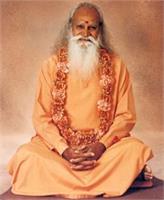
Sri Swami Satchidananda expresses this in his commentary on the Yoga sutras:  “Behind all these differences, in the Self, we never differ.  That means behind all these ever-changing phenomena is a never-changing One.  That One appears to change due to our mental modifications.”

The actual experience of this truth is not hidden from us.  If we contemplate how the plant life around us absorbs the carbon dioxide we exhale and gives off oxygen, we can see each breath as an exchange with our environment.    Consider how we so easily give the possessions we treasure to those we love—our hearts equating our own happiness with theirs.

We can expand this experience beyond our small circle of friends and family if we consciously practice looking deeply at others to see the essential nature underneath the superficial appearance and actions. Try taking a compassion walk during which you see everyone, regardless of their behavior, as doing the best they can in that moment. Instead of judging others, try assuming they are struggling in the same ways you have, and send a silent prayer for them to suffer less, to have opportunities to learn and grow.

We can expand that thinking even further by reflecting on how the conditions of the world’s rich and poor are interdependent, and how the earth is suffering from so much human carelessness and greed. We may not be able to solve world problems, but we can look for and take steps toward healing our immediate communities, and understand our efforts as significant contributions to the collective consciousness of our planet.

During the coming holy days, many of us will make time to connect with those close to us.  Do we connect only through the purchase of gifts and sharing meals? Are we able to let down defenses when the opportunity is there? Can we open our hearts a little wider and accept points of view that differ from our own? If we do practice regularly to quiet the habitual thoughts that divide us, we will begin to diminish those boundaries and sense our place in the web of life.


Swami Ramananda is the President of the Integral Yoga Institute in San Francisco and a greatly respected senior teacher in the Integral Yoga tradition, who has been practicing Yoga for over 35 years. Ramananda offers practical methods of integrating the timeless teachings and practices of yoga into daily life, and transforming the painful aspects of human experience into steps toward realizing one’s full potential.

He leads beginner, intermediate and advanced level yoga teacher training programs in San Francisco, and offers a variety of programs in many locations in the U. S., Europe and South America. Ramananda trains Yoga teachers to bring Yoga into corporate, hospital and medical settings and has taught mind/body wellness programs in many locations. He is a founding board member of the Yoga Alliance, a national registry that supports and promotes yoga teachers as professionals. His warmth, wisdom and sense of humor have endeared him to many.
2020-11-18T16:45:51-08:00November 18th, 2020|Tags: |
Go to Top