About prajna

This author has not yet filled in any details.
So far prajna has created 103 blog entries.

Practice of the Month: Non-Attachment
Practice and Non-Attachment: A Two Pronged Approach to Liberation

by Swami Ramananda

If you want to see well through a window, you have to clean both sides.  Practice (Abhyasa) and Non-Attachment (Vairagya) work much the same way.  They are the complimentary practices given in Patanjali’s Yoga Sutras as a means to quiet the movement of thought in the mind so that we can experience our true nature — a source of unchanging peace within.

In order to see clearly, we must remove anything that would cloud or color our vision. Practice implies a steady effort to calm any thoughts, emotions or prejudices that might prevent clear, neutral perception. For example, if you shake a glass ball with imitation snowflakes inside, and then hold it still, the snowflakes will gradually settle, leaving an unobstructed view.  We may think primarily of sitting meditation as a means to still the mind, but practice can include anything done with meditative focus or mindfulness, creating a steady flow of attention.

But only learning to calm the disturbances in the mind does not insure our vision stays clear since we are so often disturbed by the difficulties that we encounter in daily life.  Non-attachment works perfectly as a compliment to practice by preventing disturbances from arising. While practice may be pursued by pausing from activity to meditate or quietly focus the mind, non-attachment is meant to help us relate in healthy ways to all the activity we engage in.

Non-attachment guides us to learn that we cannot depend on anything outside of ourselves for our peace of mind.  Non-attachment towards our goals means not depending on the results for that peace.  We work with less tension and more clarity when we are not anxious about the outcome. Non-attachment towards the things we enjoy simply means that we can remain at peace even when those things are not available to us.  In relationships, we can love more freely if we are not afraid of losing someone’s love or approval.

These two approaches to creating and maintaining a clear and focused mind support each other perfectly.  Any effort to develop non-attachment becomes much easier if we begin to experience a natural sense of internal contentment as a result of a regular practice.  Feeling this innate peace within, we more readily let go of desires and expectations as the source of our happiness.  And if we learn to let go of attachment to the results of our meditative practices, we can pursue them steadily without becoming discouraged or disappointed.

­­­­­­­­­We can develop practice by meditating regularly with sincere effort and by performing any action with one-pointed attention.  Non-attachment can be a little trickier to cultivate.  If we look deeply into any situation that causes us to suffer, we can usually find that we are wanting something so much (recognition, admiration or some experience that we enjoy), that we become disturbed by not getting it.  We unintentionally make our peace of mind dependent on acquiring or achieving something.

It can be difficult to observe and analyze our struggles with the clarity and neutrality to see the underlying motives that give rise to suffering.  Here again, practice compliments the effort to free ourselves from attachment by calming and strengthening the mind sufficiently to look deeply and objectively at our desires.  When we are able to see clearly what we are holding onto in an unhealthy way, we then have the choice to let go.

These two elements of spiritual life empower us to free ourselves from the illusion that we can gain happiness by arranging the people and events around us make our lives happy.  It is ultimately our choice.  We can all gradually build the mental strength to focus our minds in selfless ways that align our behavior with the Cosmic Will and reveal the natural peace that has always been there.
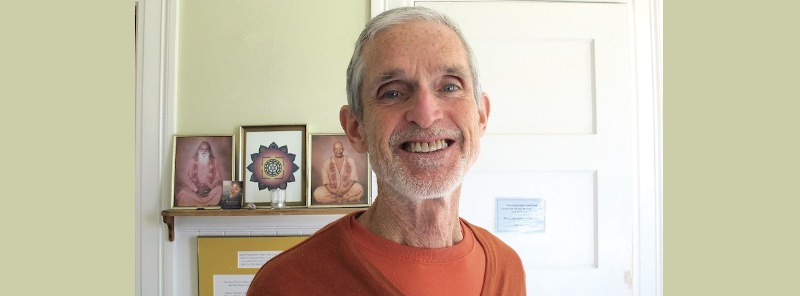
Swami Ramananda, C-IAYT, E-RYT 500, is the Executive Director of the Integral Yoga Institute in San Francisco, C-IAYT, and a greatly respected senior teacher in the Integral Yoga tradition who has been practicing Yoga for over 45 years. Ramananda offers practical methods of integrating the timeless teachings and practices of Yoga into daily life and transforming the painful aspects of human experience into steps toward realizing one’s full potential.
He leads beginner, intermediate and advanced-level Yoga teacher training programs in San Francisco and offers a variety of programs in many locations in the U.S., Europe and South America. Ramananda co-developed the Stress Management Teacher Training program with Swami Vidyananda, has trained many teachers to bring Yoga into corporate, hospital and medical settings, and has taught mind/body wellness programs in many locations. He is a certified Yoga therapist and founding board member of the Yoga Alliance, a national registry that supports and promotes yoga teachers as professionals. He co-founded The Spiritual Action Initiative (SAI), which brings together individuals committed to working for social justice for all beings and for the care and healing of our natural world. His warmth, wisdom and sense of humor have endeared him to many.
2024-06-28T11:28:48-07:00June 7th, 2024|

The Last Savasana

by Leslie Howard

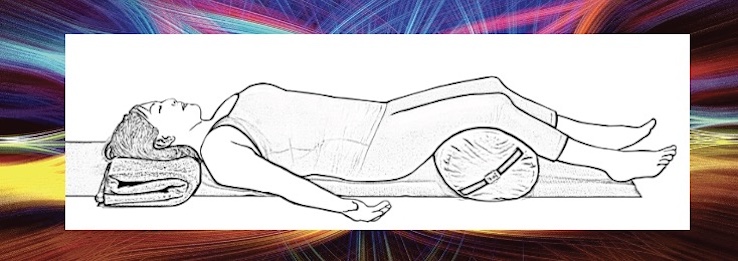
Most of us spend our days trying to extend our lives, i.e. looking both ways before crossing a street, putting our seatbelt on and checking expiration dates on our food.  Nonetheless, nothing we do, not even yoga, can help us escape life’s inevitable end.  But Yoga can help prepare us to face our fear of the inevitable, and maybe even embrace it so that we come to appreciate the preciousness of each day we are alive.

I have always been interested in the subject of death, and even as a child I read every book i could on Near Death Experiences.  I think it is a natural thing to do if one is reflective.  What happens?  Where do we go?  Having been a yogi for over thirty years, I’ve been drawn to the books of yoga and of samadhi, including the samadi that is supposed to be assumed by a holy person or yogi at their death.

Last year, a long time student was diagnosed with stage 4 ovarian cancer and I found myself thinking about what I could do to assist her.  And so i took two different end of life trainings totaling sixty hours and found out about Death Cafes.  Now I run monthly Death Cafes in Oakland and Sea Ranch, CA.  Death cafe is a concept of getting together with other folks that are interested in having authentic conversations about anything pertaining to our own finitude.  I know to some of you that doesn’t sound like fun but i can assure you it is always a mixture of laughter and tears.

At the same time, I have been working with the indomitable Richard Rosen on a book about savasana. (Richard is the author of many yoga books, most notably two on pranayama.)  We are doing an examination of the savasana pose, its history and how it relates to our actual acceptance of death and dying.  This in turn got me thinking about how to apply all that i am learning about death and how to weave this together in a way that can best serve others.

Yoga is meant to bring us more awareness and give us tools to manage the challenges of being human.  to manage the anxiety we all have around dying and to be more comfortable with these types of conversations.  Ever since I began teaching, I’ve always wanted to be able to answer the questions that people asked me and to help them. And now, I’ve developed this workshop on Savasana.

Join Leslie for The Last Savasana: Yoga, Breathwork & Inquiry to Help Prepare You for the Final Exit on Saturday, May 18 @ 1:30 – 5:00 pm PDT, Online & in-person

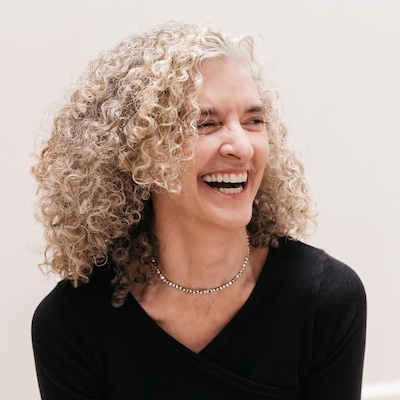
Leslie Howard is an Oakland-based yoga teacher, specializing in all things pelvic. She leads workshops and trainings nationally and has written a book about caring for the female pelvis, Pelvic Liberation. In 2022, after losing a long time student, she took a deep dive into the subject of death. She has 60 hours of Death Doula training, runs a regular Death Café (a place to come and talk about death) and is volunteering in hospice for Kaiser Oakland. Her teaching is informed by over 3500 hours of yoga study with senior Iyengar yoga teachers. She considers Ramanand Patel her most important influence and mentor. She has designed two very successful studies for UCSF on how to use yoga to alleviate incontinence and pelvic pain. To learn more about Leslie or for some online education opportunities visit: www.lesliehowardyoga.com

2024-05-06T09:12:13-07:00May 5th, 2024|

Tending the Hearthfire During Cultural Turbulence

by Kristie Dahlia Home

Swami Ramananda has asked me several times to join him in holding space for satsang in moments of cultural turbulence and pain. In those moments there are two things that bring me the greatest comfort: one is taking action outwardly and the other is turning inward. In our satsangs I have spoken mostly of the former. I’d like to try to share the latter: how the inward space of energetically-oriented meditation brings me comfort and keeps my hearthfire lit.

The experience of the energy body, the pranamaya kosha, came to me like a bolt of lightning. I’d been studying yoga for a few years when I went to Burning Man for the first time in 1997. A friend was feeling sad as we waited for the burn. I wrapped my arms around him and  imagined a green light flowing between our hearts. He turned around and said, “How are you doing that?”

“Doing what?” I asked.

“Making that green light in the middle of my chest.” he said.

You could have knocked me over with a feather!

The visualization I was doing was improvisational. The rational and mystical aspects of me had not yet made the friendship that they have now. My inner mystic was overjoyed that he could feel this; my rational parts were shaken! This was a pivotal moment in my life. That man has been by my side ever since, and the hunger within me for understanding of this experience was lit.

When I came home I asked my mentors at the IYI for more information about how energy moves between bodies. They heard me kindly but said this wasn’t part of our teachings, so I studied in other places. I have become a reiki master and studied intuitive healing, Thai Yoga Massage, and Chi Nei Tsang. Each has offered more experience and understanding, layers which enrich the yogic home base of my heart.

As a nondualist, I understand the koshas as different lenses through which we can view the experience of ourselves as the cosmos in human form. Through the meditation and healing techniques of energy work we can engage all of the koshas. Symbolic visualization helps access the manomaya and pranaymaya koshas, our mental-emotional and life force aspects. Changes on those levels affect the annamaya kosha, the physical aspect of our being. Contemplation and insight connects to the vijnanamajakosha, the higher mental realms or wisdom body. Often this kind of experience offers invites us to experience the anandamayakosha, the bliss body – and the wider body of the cosmos. In the state of energy we may experience ourselves as the life of the universe, dancing. As the Upanishads teach us: Tat Twam Asi. Thou Art That. We are the life of the cosmos.

Having access to the experience of self-as-life through meditation can be a profound comfort. It gives us deep roots from which to view the tumult of human existence, with all of its beauty and all of its suffering. It can provide ready access to awe, gratitude, and compassion. This can help us weather storms with more grace.

As yoga’s benefits for physical health and mental wellbeing have been popularized, its spiritual dimension is often moved away from its rightful place at center. The spiritual aspect of yoga may even be deliberately obscured in hopes of making practice more accessible. In difficult times, though, spiritual comfort is that which we need most. Yoga and meditation offer us intimate access to the experience of ourselves as the life of the universe. What a gift this is as we live our human lives.

Join Dahlia this Saturday for Energetic Refreshment for Summer, Saturday, May 4 @ 12:00 pm – 1:30 pm

Kristie Dahlia Home has been devoted to the sharing of spiritual arts since 1995. With training in Instinctive Meditation, Yoga, Thai Massage, Reiki, Intuitive Healing, and Chi Nei Tsang. Dahlia has served as a Yoga Therapist at the UCSF School of Nursing, Dr. Dean Ornish’s Preventive Medicine Research Institute, and at UCSF’s Osher Center for Integrative Medicine, where her work included both public classes and medical research. She has taught Reiki for CPMC’s Institute for Health and Healing and Thai Massage at Lighthouse for the Blind and Visually Impaired. Her students say that they appreciate her warmth, precision, contagious love of life, and keen attention to the unique needs of each individual. She has recently returned to life on land after five years at sea and looks forward to sharing practice with the IYI sangha once again. For more information, visit beloved.org

2024-05-01T20:25:16-07:00May 1st, 2024|

Teaching of the Month: Generosity

by Swami Ramananda

Real generosity springs from the heart not from the pocket.  Real generosity arises easily from the sense of deep connection that we experience when we practice Yoga and free ourselves from the limiting thoughts that divide us.  It can take many forms:  a warm smile, taking time to appreciate someone or a silent prayer offered with sincerity to uplift a friend.  Simply listening to someone with full attention can be a powerful way to offer support and care.

Sharing the gifts and blessings we have received with others is a natural impulse when we acknowledge our abundance and escape the self-centered messages of our culture.  Sharing generously opens our hearts to the love and compassion that is our true nature and is ultimately more fulfilling than keeping things for ourselves.

In her book, The Secret Power of Yoga, Nischala Devi comments on the teaching of Astheya:  “In our lives we have many occasions to give.  In the simplest way, Astheya tells us not to steal.  As it expands your heart, it says, give.  For maximum benefit, do not even wait for someone to ask, be alert, and never miss an opportunity to give, give, give.  Sri Swami Sivanandaji’s students, who hoped to emulate his most generous nature, gave him the nickname of Swami Give-ananda (the bliss of giving).”

Join Swami Ramananda for his 3 part Scripture Studies: The path to freedom, 3 consecutiuve Mondays: June 3,10 & 17,  6:00-7:00 pm (offered individually). Or deeply explore Raja Yoga in Raja Yoga Teacher Training Online starting June 20th.

Swami Ramananda C-IAYT, E-RYT 500, is the Executive Director of the Integral Yoga Institute in San Francisco and a greatly respected senior teacher in the Integral Yoga tradition, who has been practicing Yoga for over 45 years. Ramananda offers practical methods of integrating the timeless teachings and practices of Yoga into daily life, and transforming the painful aspects of human experience into steps toward realizing one’s full potential.

He leads all levels of Yoga teacher trainings and programs around the globe. Ramananda co-developed the Stress Management Teacher Training program and has trained many teachers to bring Yoga into corporate, hospital and medical settings. He a founding board member of Yoga Alliance and is a co-founder of The Spiritual Action Initiative which brings together individuals committed to working for social justice for all beings and for the care and healing of our natural world. His warmth, wisdom and sense of humor have endeared him to many.

2024-05-01T10:23:03-07:00May 1st, 2024|
Go to Top