About prajna

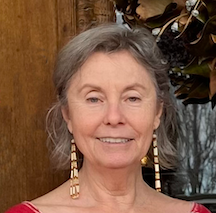
This author has not yet filled in any details.
So far prajna has created 103 blog entries.

The Road to Surrender

by Swami Vimalananda and Susan Ford

This is the first of a three part series on Kriya Yoga

The Yoga Sutras of Patanjali with Commentary by Sri Swami Satchinanda – Book 2 Sutra 1. Accepting pain as help for purification, study of spiritual books and surrender to the Supreme Being, constitute Yoga in practice

Accepting Pain as Help for Purification

When love beckons to you, follow him, though his ways are hard and steep. And when his wings enfold you yield to him, though the sword hidden among his pinions may wound you.

And when he speaks to you believe in him. Though his voice may shatter your dreams as the north wind lays waste the garden.

For even as love crowns you so shall he crucify you. Even as he is for your growth so he is for your pruning.

Even as he ascends to your heights and caresses your tenderest branches that quiver in the sun, so shall he descend to your roots and shake them in their clinging to the earth. 

—Love by Kahil Gibran

Our very foundation, everything we rely on, everything we cling to, every way we organize our world will be shaken. Our sacred opinions will be exposed for what they really are, a protection of our ego. The very essence of how we see ourselves will be crushed. As Sri Gurudev stated, “We will lose everything”.

As my friend Vanitha observed, whether we experience an internal feeling of a twitch or a tsunami of pain, the cause is the same, our ego is threatened. I recently was in Hawaii with my daughters and my two grandsons. The trip was their gift to me. One day towards the end of the vacation I was riding in the back seat of the car with my grandsons. I could hear decisions of where we would go and what we would do being made in the front seat by my daughters. I had these feelings rush through me. “Why aren’t they asking me what I want? I’m the parent, I have the decision making powers.”  I even imagined how it must be to be an old lady and having my children making all the decisions about my life. Of course my input is valuable. My ego was definitely dented. As it worked out, it was a nice day. They took care of me along with all the members of the family. My input wasn’t needed. It was clearly an instance of how I organize my life, with my agendas and ego protections.

It is our wanting approval, our agendas, wanting our attachments and desires to be fulfilled – It is wanting our ego to be constantly validated that keeps us in pain.

As we begin to observe our thoughts we see that inner pain is an indicator that acceptance, along with wisdom, is lacking. It is the resistance to observing our selfishness and our unwillingness to change that causes our suffering. I remember one of my aunts telling me, “I feel I have grown enough. I no longer want to explore any more of my personal dynamics. It hurts too much. I don’t want to go there.” She was clearly saying, by closing the window of vulnerability, that she wanted not to be in pain any longer .

We can even judge every interaction by the way it affects our desires and egos. Do I feel superior or inferior to another? Is she prettier than me? Is she older or younger than I? Am I in better shape? Am I smarter or dumber than…?

The degree a person will go to protect their ego, not to grow spiritually, not to look at their pain, led to a book by F. Scott Peck, “The People of the Lie”. He stated that a person of the lie is one who will hurt another person mentally and or physically, deny their selfhood, do whatever damage is necessary to another to protect their own desires and egos.

When I worked in the probation department I was in charge of taking a group of delinquent kids on outings every Saturday. I very often cut the time short so I could go home to my family. I blocked any awareness that this was a time for the kids to experience new horizons. My desire came first, to the detriment of their growth. I had them suffer so I didn’t experience the pain of separation from my family.

We have to ask ourselves to what lengths are we willing to go to maintain our attachments, our desires, and our view of the world?

We can grow, experience the pain, acknowledge our ego’s desires and then accept the pain as help for purification, help in developing selflessness. We can stop blaming others and feeling victimized. We have the ability to change our thoughts. We can nurture thoughts of peace and empowerment. As stated in the Yoga Sutras Book 1, Sutra 15, we can have freedom from our attachments and we can know, “The consciousness of self-mastery in one who is free from craving for objects seen or heard about is non-attachment.”

We can survive the killing off of our egos and see the dawning first of awareness, then accepting the pain for purification. We can change our thoughts to positive ones and increase our ability to abide in our true nature of wholeness, contentment, and peace. It is possible, and it is a must, to live a peaceful life.

Please join Swami Vimalananda for Satsang: Surrender, Sat. February 19 @ 5:00 pm – 6:00 pm PST.
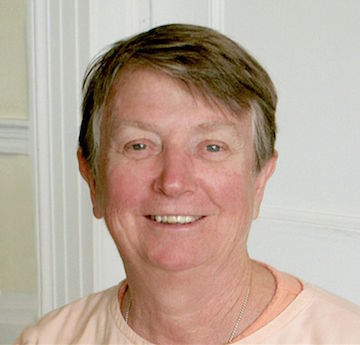
Swami Vimalananda, RYT500, is an Integral Yoga sannyasi – monk. She has been involved with Integral Yoga since 1971 and Director of the San Francisco Integral Yoga Institute from 1992-2011. She specializes in teaching yoga philosophy and spiritual counseling.


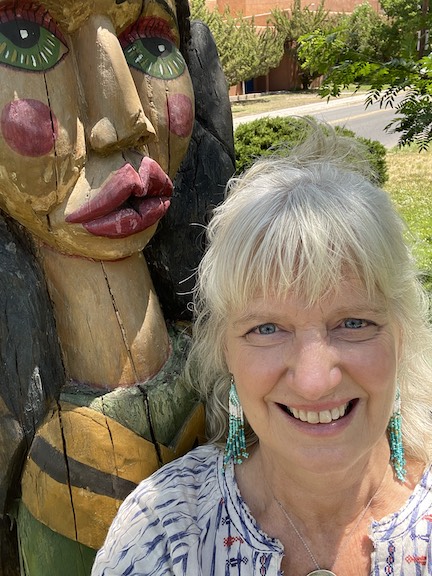
Susan Ford, C-IAYT, RYT-500, began practicing yoga when she was 18 years old. Her first yoga teacher training was Accessible Yoga through Integral Yoga Institute (IYI) and began teaching in 2011. Susan has been an assistant trainer for the Basic Yoga Teacher at IYI since 2012. She specializes in Gentle Yoga and working with people with disabilities, heart disease, arthritis, anxiety, depression and asthma. Her focus is to help students to meet their bodies where they are by introducing and incorporating Raja Yoga, Hatha Yoga, Pranayama and meditation. Susan has been certified in Yoga for Arthritis, Therapeutic Yoga, Raja Yoga and Meditation Teacher Training.

Join Susan on the fourth Friday of every month for New Beginnings Writing Group, next gathering is Friday, March 11 from 4:00-6:00pm PT.

Fri. March 11 @ 4:00 pm – 6:00 pm PST

2022-02-18T17:58:11-08:00February 18th, 2022|

Teaching of the Month – The Impulse to Love and Serve

by Swami Ramananda

As we celebrate Black History Month in the U.S., and reflect on the actual meaning of Valentine’s Day, let us be inspired to answer the call to serve those in need. Saint Valentine’s life is just one enduring example of selfless service. Roses and chocolates aside, St. Valentine was one of many saints and sages who exemplified a natural impulse to love and serve humanity.

He, and many of these great beings, were so moved by a profound experience of interconnection with all of life that they devoted their lives to relieving the suffering of others. While they came from diverse faith traditions, they recognized the importance of serving as one of the primary means by which one grows on the spiritual path – aligning one’s self-centered will with the Divine Will.

During this month, let us also be keenly mindful of the service of many great African Americans who selflessly dedicated their lives to awaken us to the light of truth that we are all loved, interconnected and equal in the eyes of God. Where would we be today without Martin Luther King, Jr., Maya Angelou, James Baldwin, Ruby Bridges and countless others who helped shape our nation through their lives, writings, leadership and sacrifices?

As we witness so many crises and so much injustice in our world today, how are we called to serve? How can each of us look beyond our own comfort-zone to allow the light of love to shine through our hearts?

The teachings of Yoga offer us a path—Karma Yoga—a practice of service in which selfless actions are performed with a focused mind, a caring heart, and without concern for self-serving gain. This intention can be incorporated into literally anything we do and as it deepens, we become less dependent on the outcome of our efforts and experience a new-found freedom from tension and expectations.

An equally powerful approach to service is through the practice of Bhakti Yoga — service as an offering to God. We may not easily recognize the Divine in each other, but some symbol, saint, or even a glorious sunset can inspire us to feel a very real spiritual presence behind the workings of the universe. Meditating, chanting mantras, and/or praying for guidance can attune us to this presence as a source of wisdom and strength much greater than our own.

When we strive to see ourselves as instruments of this Divine Will—the hands of God at work in the world—we access and allow ourselves to be guided by a concern for the well-being of everyone. We more easily let go of our personal desires, without force or denial, and find fulfillment in serving a higher purpose.

The intention to dedicate ourselves to a higher purpose inevitably leads us to serving our families, neighbors, and communities. As Mother Teresa beautifully experienced and taught, we serve God by serving the Divinity in each other, in all of nature. Serving this way is a practice, and if we practice seeing and serving God in all, we gradually erase the imaginary boundaries we have come to believe in.

We have countless opportunities to practice service in everyday life, whether we are mentoring someone, listening to a friend, checking out at the grocery store, or actively fighting for social justice. Clearly, the best motivation for serving others comes from experiencing the natural compassion flowing through our hearts and the natural sense of joy that arises from giving freely. Ultimately, we are all learning, one act of kindness at a time, that pursuing our spiritual growth also means nurturing the impulse to selflessly love and serve as instruments of the Divine Will.

Join Swami Ramananda on Saturday, March 5th from 5pm-6:30pm PT for Satsang: Brining Yoga to Life where we will explore how our personal practice and our daily actions support each other in awakening the inner Light that dwells in everyone.

2022-02-18T17:58:58-08:00February 11th, 2022|

Student of the Month, Jennifer Burghart

Interviewed by Dayalan Clark

Jen started in-person classes with Integral Yoga Institute several months ago. She began coming regularly to yoga as well as some of the meditations and special events offered. We are glad to have the opportunity to feature her as Student of the Month for January.

Jen: I’m 57 now, so somewhere in my 30’s I was introduced to meditation. I had heard that meditation was the latest and greatest cool thing to do. I was a really crazy busy professional and single mom. I did not have much money then and noticed I could go as a student to Tassajara Zen Meditation Center to clean and prepare for their guest season. I didn’t know anything at all, so it was a real full on experience to a fairly restrictive Zen meditation practice. This introduced me to the idea of visiting Ashrams and the fact that people actually live or spend extended amounts of time there.

Due to some fairly significant depression, I had started to study Positive Psychology – Martin Seligman. He said that 3 things can bring greater happiness. 1. Volunteering, 2. Being part of Community, 3. Spiritual basis or belief. Ashrams really fit all these categories.

In following this advice, I ended up living in Grass Valley, CA in co-housing. There were a couple of ashrams in the area that I started to visit off and on, a Yogananda Ashram and I also visited the Sivananda Ashrams a couple of times as well.

I lived in Australia and New Zealand for a long time and again, I essentially went to where there was access to spiritual places. The Bihar School of Yoga with two associated ashrams in the Sivananda Lineage, became a favorite there. I would go off and on as the two ashrams were fairly remotely located. Bihar School of Yoga has a publishing company that has great books and a teaching and research institute at the main ashram in India.

Two years ago, I returned to the United States and spent time in North Carolina. I’d hoped to go to Yogaville, but they weren’t open due to Covid-19. I became interested in Integral Yoga as it was close to Sivananda lineage and tradition. I then arrived in the Bay Area and found Integral Yoga Institute, San Francisco.

Another reason for being drawn to Yoga and Meditation, was that it was helpful in combating episodes of depression and alcohol use.

I cautiously want to come out about how helpful the Ashram experience was for me with depression and alcohol problems. I think the longer you can spend in an immersive environment in an Ashram, the better. I would also like to say that I see alcohol problems and depression more as occurring aspects of the human condition than as negative ‘permanent conditions’.

I remember attending one extended retreat at an ashram and the swami that ran the ashram “noticed” I was sad and she said, “You just do everything on that schedule and tell me how you feel.” During my time in the ashram, I found that I didn’t crave alcohol at all nor did I feel particularly depressed. Spiritual institutions have a way of keeping you occupied while giving you purpose, interaction, guidance, sustenance, exercise and breath. I feel part of a greater whole and have found sangha to be important.

I wish to start a foundation to support folks around depression. I think about offering scholarships to students who may have interest in going to an Ashram to address depression through workshops, student immersion, etc.

Dayalan: Tell me about your studio in the Dogpatch and your art that you’ve mentioned to me.

Jen: With art, it is a process with all different mediums for me. I am mostly painting in the studio. I copied other artists first to learn. I now have one of my first original paintings in the surrealist tradition. I do this mostly for enjoyment and engagement. I have made lots of objects such as books and letterpress, furniture, glass objects, musical instruments, masks and many other things. I have also started to illustrate a book of Sanskrit terms and meanings as well and hope to get it completed one day

Dayalan: What else would you like to share?

Jen: I love to travel. I also recently bought a co-housing unit in Ashland, OR, and may move there or travel in between San Francisco and there. I actually met an Integral Yoga Teacher from New Zealand, currently teaching in Ashland, which I thought was quite a coincidence. It seemed almost like a bit of divine intervention to meet a kiwi IYI teacher in my new home. It certainly makes me more comfortable knowing sangha is there and that she is from New Zealand, a place I will miss.

2022-02-18T17:59:25-08:00January 20th, 2022|

Reflections on Leading a Monthly Meditation Workshop

by Prajna

At the beginning of the description of my monthly workshop, there’s a quote from Chogyam Trumpa.

“You begin with ambition of some kind. Then, at a certain stage, meditation becomes instinctive. Then you cannot not meditate – it happens to you.”

This is actually true. The cultivation of mindfulness becomes pervasive. If you’re sincere, at some point you’ll see that you can’t not know what you’re doing. But the refinement of a meditation practice, of wise mindfulness, of wise concentration and of wise effort, doesn’t stop. It seems to be an evolution that’s ongoing. There’s always space to deepen, soften, clarify, always the new moment to open to.

I’ve been meditating regularly since around 1974, which is closing in on 50 years, so I have a lot of experience and have accumulated a lot of technique. I practiced in two very different traditions before settling into a Buddhist Insight Tradition about 34 years ago and I’ve been fortunate to be with great teachers. Some of the most helpful things I’ve learned about meditation have been from other meditation students, from the questions they’ve asked teachers, or from hearing what people shared during group discussions. This was my basic motivation in leading a meditation group, the hope that we could share our practices and support each other in deepening.

Surprisingly, this isn’t an easy thing to do.  The ability to articulate personal practice is something that has to be learned, something that there aren’t always words for.  How do we talk about what’s happening when we sit down and try to restrain the modifications of the mind stuff?  How do we discuss the interior landscape? It’s much easier to try and discuss some aspect of practice than to share this ongoing space out, feel something, go away, come back, start again, drop in deeper, what’s that, bring in some kindness, get lost, see clearly, rest in the body, heart opening, get sidetracked, feel gratitude, touch something huge, obsess on an itch, on and on with a million variations sometimes deepening and sometimes skittering on the surface – this experiential thing that happens when we sit down to meditate.

I’ve spent a good amount of time on meditation retreats. And during retreat, one of the valuable things that can happen is getting to meet privately with a teacher every few days, usually for 10 or 15 minutes. Unfortunately, this tradition is becoming rarer, but, fortunately for me, it was the norm for my first 20 or so years of practice.  You’d come in to see the teacher, sit down and eventually they’d say something like, ‘well, how’s it going’ and then you’d talk about how it was going. They’d make sure you weren’t getting lost, but mainly they shared the territory, maybe gave a little advice or feedback, articulated something for you or not. Once I went in to see Phillip Moffitt – there had been a kind of blockage in my sitting- almost like something in my energy body was in the way and I told him, in a kind of stutter – ‘there’s something there, in the way, I don’t know what’ and we both closed our eyes for a minute and meditated together and he said, ‘oh yeah I can feel it.’ And he didn’t really give me any advice but to let it be there and sit with it without making up a story. And of course, eventually, one day, it was gone. But he validated my reality and knew I could handle it and I felt supported. You can learn a lot from 10 minutes with a teacher, even though it might not be something you can put into words.

So, there’s not always a vocabulary and there’s also not always the need for one. But sometimes it can help to not be alone with our experience. I think there’s a real value in people coming together and talking about their practice, both on and off the cushion. I know, with our friends, with our real sangha of like minded people, we talk about our practice off the cushion. We try to find ways to navigate this life, this world, with moral and spiritual values. That’s real friendship. And I want to encourage us to really try and bring what we sit with in meditation out and share that too. We can learn from and support each other by sharing our sitting practices.

Because the older schools of meditation have thousands of years of watching what happens, there are techniques and ways of dealing with almost anything. We don’t exactly have to re-invent the wheel. But we do have to develop enough skill to know what’s going on in an interior landscape that can sometimes feel like a jungle, and this is cultivated one moment at a time, usually incrementally. One of the reasons I wanted to lead a practice group was because it just seemed like it could be so helpful to share our wisdom, to pool our resources. There are many things that took a long time to become clear to me. Sometimes things that I heard people say twenty or thirty years ago became clear because I was finally able to recognize the landscape of what they were referring to. “Just sit” was something I heard early on, but it’s something that I think requires quite a bit of skill. Just sitting without much skill was kind of how I’d already lived a lot of my life. I had to wait a long time before letting go of technique was feasible. There needs to be some real intuitive feel for the territory before letting go of the map.

This January will be my last 3rd Wednesday for a while. On one level, I don’t really feel like I’ve been successful in the workshop. We haven’t found a way to talk regularly, or deeply, about our individual sitting practices, but I am very grateful to the people who’ve come and been part of the workshops and to IYI for providing the space. It’s given me a way to take a close look at various facets of practice and to share them through the lens of my own experience and to then interact with people through their own experience. And we did get to share our wisdom, and at times, to open our hearts and minds.

So a big thank you to the IYI community and may we all practice sincerely, for our own benefit and for the benefit of all beings.

Prajna lives, practices, cooks and teaches as San Francisco IYI

Please join Prajna for her Deepening into Meditation workshop on Wed. January 19 @ 6:30 pm – 7:30 pm PT.

2022-02-18T18:00:12-08:00January 11th, 2022|
Go to Top